FCMB Group released its first-quarter 2026 results on June 8, and between January and March, the group posted ₦76.5 billion in profit after tax, its strongest quarterly performance on record.
FCMB Group released its first-quarter 2026 results on June 8, and between January and March, the group posted ₦76.5 billion in profit after tax, its strongest quarterly performance on record. In the same three months, it reduced the amount of money it lent to customers by ₦94.7 billion.
Both things are true at once. That is the story.
Gross loans and advances to customers stood at ₦2.475 trillion at the end of December 2025. By the end of March 2026, that figure had fallen to ₦2.381 trillion. The bank did not suffer a dramatic wave of repayments. It simply extended less new credit than the old credit that matured or was repaid, and the net result was a loan book that shrank by roughly ₦95 billion in 90 days, even as the group celebrated record earnings.
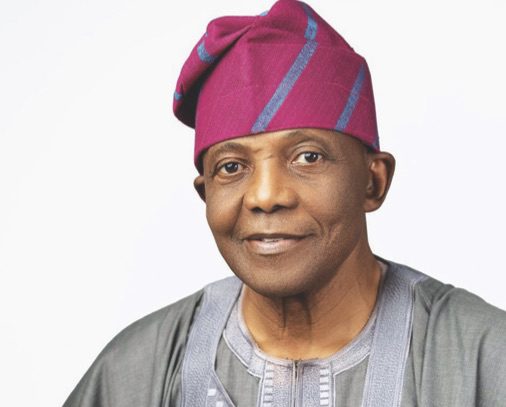
Oladipupo Jadesimi – FCMB Group Chairman
Where did the money go instead? Into government securities and cash. Investment securities grew from ₦2.036 trillion to ₦2.170 trillion over the same period, a jump of ₦134 billion. Within that, FCMB’s holdings of Federal Government of Nigeria (FGN) bonds classified at fair value through other comprehensive income alone surged from ₦317 billion to ₦589 billion, an increase of ₦272 billion in a single quarter. Cash and cash equivalents, separately, ballooned from ₦1.299 trillion to ₦1.810 trillion.
The pattern is deliberate, not accidental. Nigerian banks have spent the better part of two years rotating their balance sheets away from customer lending and toward risk-free government paper, and FCMB’s Q1 2026 numbers show that rotation is accelerating rather than reversing.
The logic from the bank’s perspective is straightforward. Government bonds carry no credit risk, require no loan officers, generate no impairment charges, and, in a high-rate environment, pay handsomely.
FCMB’s net interest income nearly doubled year-on-year, from ₦87.5 billion in Q1 2025 to ₦168.3 billion in Q1 2026, and a significant portion of that expansion came from the investment securities portfolio rather than from lending. Interest earned on cash and cash equivalents alone reached ₦62.4 billion in Q1 2026, compared to ₦3.7 billion in the same quarter last year, a figure that reflects both the rate environment and the sheer volume of liquidity the group is now sitting on.
Against this backdrop, the impairment charge of ₦12.3 billion for the quarter becomes instructive. The bank provisioned ₦12.3 billion against a loan book that was simultaneously shrinking. Asset quality is deteriorating even as the bank lends less, which suggests the existing book carries meaningful stress and the institution is making a rational, if uncomfortable, decision to let it run down rather than extend further into that risk.
In case we are speaking ‘too much English’…think of a landlord who owns 10 apartments, all rented out. Over time, as tenants leave, he stops replacing them, not because he cannot find new tenants, but because he has discovered that putting his money in treasury bills pays him more reliably than chasing rent, handling repairs, and absorbing the risk of tenants who stop paying.
By the end of the year, he has six empty apartments, four paying tenants, a larger treasury bill portfolio, and more money in his account than he has ever had. He is richer. His neighbourhood has fewer available homes. Both things are true at once.
FCMB’s FY ’25/Q1 ’26 reports make us ask, ‘Who are banks for?’
The question this raises sits beyond FCMB’s quarterly results and inside a broader conversation about what Nigerian banks are actually for.
A financial institution that posts record profit in a quarter, and also cuts lending, is not doing anything illegal. It is responding rationally to the incentive structure in front of it: government paper is safe, profitable, and administratively simple, while customer lending in a high-inflation, naira-volatile economy is expensive, risky, and operationally demanding.
 Yemisi Edun
, FCMB MD
But the cumulative effect of this rational behaviour, replicated across the Nigerian banking sector, is a credit gap that someone else has to fill. Fintechs like Moniepoint disbursed ₦1 trillion to 70,000 small businesses in 2025 while traditional banks reduced their SME exposure. That is a structural handoff, and FCMB’s Q1 numbers are one more data point confirming it is still underway.
FCMB Group also raised ₦223.4 billion in fresh equity during the quarter, injecting ₦233.99 billion into First City Monument Bank to secure an international banking licence under the CBN’s recapitalisation directive. The ambition is outward-facing and real. But the balance sheet tells a quieter, more domestic story: a bank growing its capital base and its government bond portfolio in the same breath it shrinks its loans to the economy it operates in.
Record profit and reduced lending are not contradictions. In Nigerian banking right now, they are a strategy. We have seen this with Fidelity Bank.