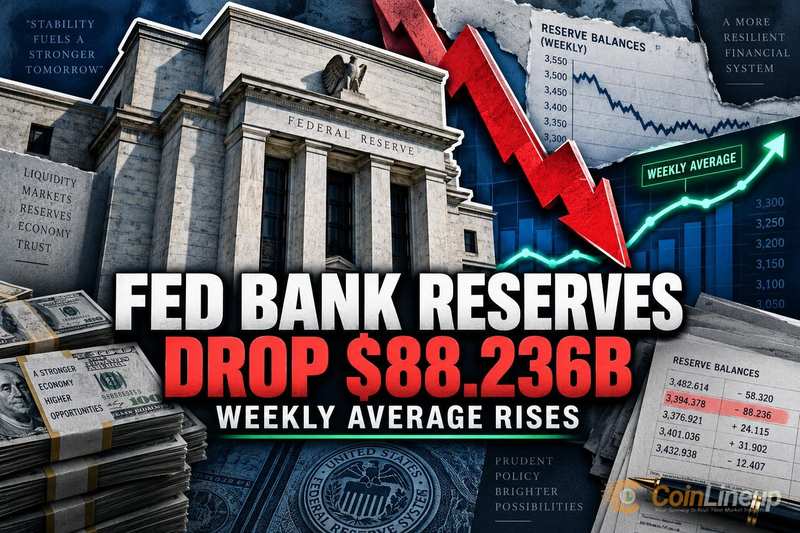
Federal Reserve bank reserves dropped by $88.236 billion between the Wednesday snapshots of September 23 and September 30, 2025. At the same time, the weekly average for reserves actually mov
Federal Reserve bank reserves dropped by $88.236 billion between the Wednesday snapshots of September 23 and September 30, 2025. At the same time, the weekly average for reserves actually moved higher. That split reading matters for anyone watching whether banks have enough cash on hand to keep lending and liquidity flowing.
What the $88.236 billion snapshot decline actually shows
The Federal Reserve publishes a weekly statistical release called the H.4.1, which tracks assets and liabilities on the Fed's balance sheet. One measure it captures is the level of bank reserves, which is the money commercial banks hold on deposit at the Fed. For related coverage, see What Is USDC? Reserves, Minting, Redemption, Supported Chains, and Depeg History.
Between the September 23 snapshot and the September 30 reading, that reserve level fell by $88.236 billion. A snapshot comparison means the data captures a single point in time on each Wednesday, not a smoothed average of the full week. For related coverage, see SEC Grant Hiatus Pauses New Crypto ETF Reviews.
Single-day readings can swing sharply around quarter-end dates, tax payment deadlines, or Treasury settlement days. The September 30 date falls at the end of a calendar quarter, which is a period when large cash movements between banks, corporations, and the government are common. That context is important before drawing conclusions from a single snapshot. For related coverage, see Evernorth Targets 473M XRP as Largest Public Treasury.
Why the weekly average rose at the same time
Despite the snapshot-to-snapshot decline, the weekly average of bank reserves rose over the same period. The weekly average smooths out the daily swings by blending readings across the full week, including days before and after the Wednesday snapshot date.
This means that while reserves appeared lower on the specific Wednesday of September 30 compared to September 23, the broader pattern across the week was actually higher. These two measures can move in opposite directions, and neither one alone tells the complete story.
Liquidity watchers, including those tracking conditions relevant to Bitcoin ETF inflows and risk-asset demand, often focus on reserve trends because tighter bank liquidity can reduce appetite for speculative assets. A rising weekly average suggests the underlying reserve cushion remained intact even if the Wednesday reading looked weaker.
What this means if you follow crypto markets
Bank reserves are a proxy for financial system liquidity. When reserves are high and rising, banks tend to lend more freely and investors are more willing to take on risk. When reserves tighten sharply and stay lower, borrowing costs can rise and investors often pull back from higher-risk assets like Bitcoin.
The $88.236 billion drop in the Wednesday snapshot is large on its face. But the rising weekly average is a signal that the underlying trend was not as tight as the single-day figure suggests. As CryptoSlate reported, an $88 billion reserve drop in a snapshot reading does not by itself prove a liquidity squeeze is underway.
Regulatory developments affecting how banks interact with digital assets, such as the ongoing legal disputes over OCC crypto trust-bank rules, add further complexity to how reserve conditions translate into crypto market liquidity.
The practical takeaway: watch the weekly average trend over several weeks rather than reacting to a single Wednesday snapshot. One data point, even a large one, is not a reliable signal of where liquidity is heading.
KEY TAKEAWAYS
- Fed bank reserves fell $88.236 billion between the September 23 and September 30 Wednesday snapshots, per the Fed's H.4.1 release.
- The weekly average of reserves rose over the same period, showing snapshot and average measures can point in opposite directions.
- Quarter-end dates like September 30 regularly produce large short-term swings in reserve levels; the weekly average provides a more stable read on the underlying trend.
Disclaimer: This article is for informational purposes only and does not constitute financial or investment advice. Cryptocurrency and digital asset markets carry significant risk. Always do your own research before making decisions.
Read original article on coinlineup.com