Federal Reserve Bank of San Francisco President Mary Daly signaled that bringing inflation back to target will take longer because of an oil shock, a stance that keeps Bitcoin's much-discusse
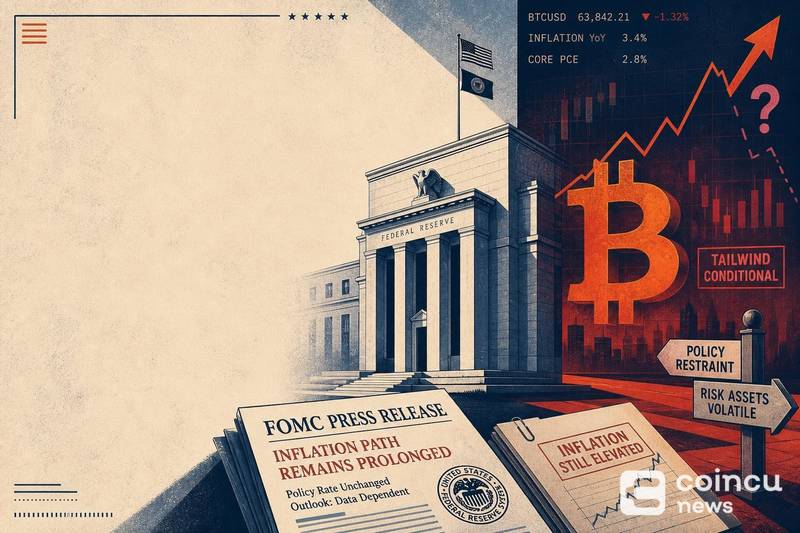
Federal Reserve Bank of San Francisco President Mary Daly signaled that bringing inflation back to target will take longer because of an oil shock, a stance that keeps Bitcoin's much-discussed rate tailwind conditional on how policy actually unfolds rather than guaranteed by it.
What Daly's Longer Inflation Path Means for the Fed
In remarks reported as a Reuters exclusive, Daly said an oil shock means getting inflation down takes longer, according to the San Francisco Fed's account of the interview. For related coverage, see Fed's Daly on Rate Cuts Amidst Inflation Challenges.
Inflation path
A longer disinflation path does not automatically imply new rate hikes. It points instead to a more patient timeline, in which the central bank waits for firmer evidence before declaring the job done. Daly has previously weighed the case for easing against inflation risks, a tension covered in her earlier comments on rate cuts amid inflation challenges. For related coverage, see Fed's Daly Highlights Job Growth Slowdown Due to Demand.
Rate-cut expectations
If inflation is slower to normalize, confidence around near-term rate cuts tends to soften. That is the core of a "conditional tailwind": the supportive backdrop for risk assets depends on policy follow-through, not on a single official's outlook. Daly's stance echoes her prior signaling that easing remains possible but data-dependent. For related coverage, see Market Overview (August 19 – August 26): Bitcoin Holds Strong at $64K as Bullish Momentum Builds in August.
Why a Slower Easing Cycle Matters for Bitcoin
Bitcoin frequently trades as a liquidity-sensitive risk asset during macro-driven periods, so the pace of Fed easing feeds directly into its bull case.
Liquidity channel
Higher-for-longer rate expectations restrain the liquidity and speculative demand that typically support Bitcoin during easing cycles. A delayed cut path narrows that channel without necessarily closing it.
Risk sentiment channel
Treasury yields and the U.S. dollar act as intermediary signals: firmer yields and a stronger dollar tend to pressure risk appetite, while the reverse loosens it. The distinction that matters is between a delayed tailwind and an outright bearish regime shift; Daly's comments describe the former, not the latter.
The Market Signals That Will Confirm or Challenge the Thesis
Rate-cut expectations are usually reflected in market pricing before any policy change occurs, giving readers markers to watch rather than a headline-only read.
Macro indicators
Watch how markets reprice the timing and number of Fed cuts, alongside the direction of Treasury yields and the dollar. Analysts remain divided on the path after the Fed's most recent hold, which several read as hawkish, as CoinDesk reported.
Bitcoin confirmation signals
On the crypto side, the tone of momentum, defended support zones, and spot ETF flow direction offer confirmation without requiring precise forecasts. These loosening or tightening in tandem with macro signals is what would validate or challenge the conditional-tailwind thesis.
Bullish and Bearish Bitcoin Scenarios From Here
Bull case
If inflation cools faster than Daly's cautious framing suggests, easing expectations revive, liquidity conditions ease, and Bitcoin's macro tailwind strengthens.
Bear case
If the oil-driven inflation pressure proves sticky, liquidity expectations stay restrained for longer, keeping the supportive backdrop out of reach. This aligns with the debate over whether the Fed will cut rates amid persistent inflation worries.
Range-bound case
With macro data mixed, the most neutral outcome is Bitcoin trading in a range while markets wait for the inflation trajectory to clarify.
FAQ
How can one Fed official's inflation view affect Bitcoin?
A single official does not set policy, but comments like Daly's shift how markets price the future rate path, which in turn influences liquidity conditions relevant to Bitcoin.
Does a longer inflation path automatically mean no rate cuts?
No. It points to a more patient timeline and less certainty around near-term cuts, not to new hikes or a permanent hold.
Why is Bitcoin's rate tailwind described as conditional instead of bullish?
Because the supportive backdrop depends on the Fed actually easing. Daly's longer inflation path makes that follow-through uncertain, so the tailwind is contingent rather than assured.
Disclaimer: This article is for informational purposes only and does not constitute financial or investment advice. Cryptocurrency and digital asset markets carry significant risk. Always do your own research before making decisions.
The post Fed's Daly Flags Longer Inflation Path, Bitcoin Tailwind Still Conditional was initially published on Coincu.