The Federal Reserve's preferred inflation gauge came in below market expectations, according to data released by the Bureau of Economic Analysis, prompting Goldman Sachs to withdraw its forec
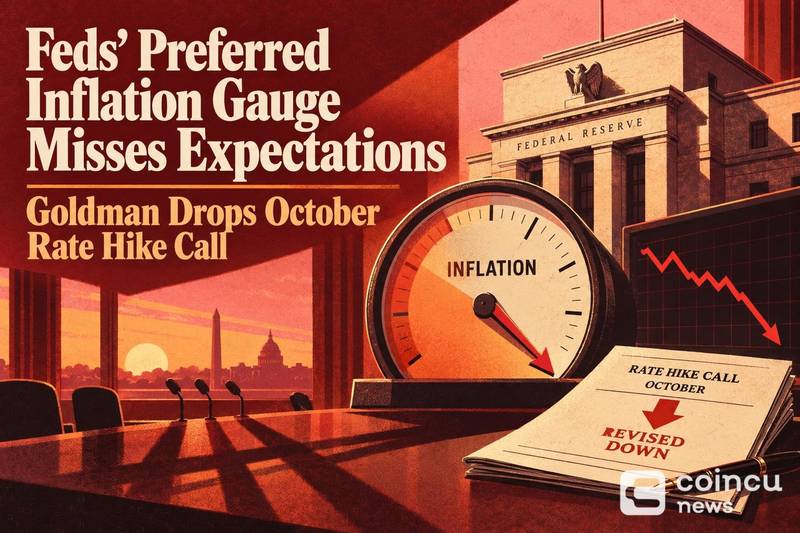
The Federal Reserve's preferred inflation gauge came in below market expectations, according to data released by the Bureau of Economic Analysis, prompting Goldman Sachs to withdraw its forecast for an October rate hike as traders reassessed the pace of monetary tightening heading into the final months of the year.
Inflation Reading Undershoots Forecasts
The Bureau of Economic Analysis personal income and outlays report showed the Fed's preferred price measure printing below consensus estimates. The softer-than-expected result immediately shifted rate-path probabilities, as markets interpreted the miss as evidence that the Fed's tightening campaign is making measurable progress against inflation. For related coverage, see The Smarter Web Company Wins Approval for UK BTC-Backed Preferred Shares.
When the Fed's preferred gauge undershoots forecasts, it reduces the perceived urgency for additional rate increases, since the central bank has repeatedly stated that policy decisions remain data-dependent. A single below-consensus print does not guarantee a policy pause, but it does narrow the case for further near-term tightening while the prior hikes continue to work through the economy. For related coverage, see DeFi Development Corp Launches Solana-Backed Preferred Stock CHAD.
The Fed has navigated a volatile path on its inflation gauge over recent months, with readings alternating between progress and setbacks that have complicated the forward guidance signaled at each policy meeting.
Goldman Sachs Withdraws October Rate-Hike Call
Goldman Sachs revised its rate-policy forecast, dropping its prior call for a hike at the October Federal Open Market Committee meeting. The move represents an analyst forecast revision, not a Federal Reserve announcement, and reflects the bank's updated interpretation of incoming economic data rather than any change in the Fed's stated intentions.
Goldman's withdrawal is notable because the bank had been among the more hawkish voices on Wall Street regarding the pace of remaining tightening. Dropping an October call in direct response to a single inflation print signals that even forecasters who expected further hikes are finding the evidence for near-term tightening less compelling. As Fed Governor Michael Barr has previously warned, external price shocks retain the capacity to destabilize inflation expectations, meaning Goldman's revised base case remains conditional on the absence of new supply-side disruptions.
What the Shift in Rate Expectations Means for Risk Assets
Changes in rate-hike expectations carry broad implications across asset classes. When the probability of additional Fed tightening falls, risk appetite tends to improve as the discount rate applied to future cash flows softens and dollar-denominated funding costs become less punishing for leveraged positions. For digital asset markets, this dynamic matters because crypto valuations are sensitive to global liquidity conditions and the relative attractiveness of yield-bearing alternatives.
Fed commentary has consistently tied the pace of cuts to confirmed disinflation rather than a single data point, as Fed official Austan Goolsbee has emphasized, framing inflation progress as a prerequisite rather than a sufficient condition for any policy pivot. That framing means market participants should treat Goldman's forecast revision as one data point in an evolving picture rather than a definitive signal that the tightening cycle has ended.
What to Watch Before the October Fed Decision
The October FOMC meeting remains the immediate policy milestone. Between now and that decision, additional inflation readings, labor market data, and Fed communications will shape whether other major banks follow Goldman in stepping back from October hike forecasts. A single below-consensus print creates conditional pressure against further tightening, but the Fed retains full discretion to respond to new information as it arrives.
Traders and institutional investors watching the rate path should monitor whether the next inflation releases confirm the deceleration trend or reverse it, since Goldman's withdrawal of its October call was explicitly tied to the current data backdrop, which can shift before the committee meets.
Frequently asked questions: The Fed's preferred inflation gauge refers to the personal consumption expenditures price index tracked by the Bureau of Economic Analysis. Goldman Sachs dropping its October rate-hike call means the bank's economists revised their internal forecast to no longer anticipate a rate increase at the upcoming October FOMC meeting; the Federal Reserve itself has made no such announcement. These two developments together suggest that the case for near-term additional tightening has weakened, though the final policy outcome depends on data and Fed deliberations that have not yet concluded.
Additional source references: source document 1.
Disclaimer: This article is for informational purposes only and does not constitute financial or investment advice. Cryptocurrency and digital asset markets carry significant risk. Always do your own research before making decisions.
The post Fed's Preferred Inflation Gauge Misses Expectations; Goldman Drops October Rate-Hike Call was initially published on Coincu.