For years, Nigerian fintechs built their businesses by helping people transfer money, pay bills, and get loans without going to a bank. Now, some of them are moving closer to the traditional
For years, Nigerian fintechs built their businesses by helping people transfer money, pay bills, and get loans without going to a bank. Now, some of them are moving closer to the traditional financial institutions they once challenged.
In January 2026, Paystack acquired Ladder Microfinance Bank. In May, digital lender Sycamore announced that it had acquired a microfinance bank in Kano. Moniepoint also completed its purchase of a 78% stake in Kenya’s Sumac Microfinance Bank in March.
These deals do not involve Nigeria’s biggest commercial banks. Instead, they focus on smaller, licensed institutions. Still, they point to an important shift: fintechs that once depended on banks now seek more control over how money is stored, moved, and lent.
The bigger question is whether these fast-growing fintechs can build better banks than the institutions they once set out to disrupt.
Why fintechs want banking licences
The attraction is straightforward: payments move money, but banking gives companies more opportunities to earn from it.
Fintechs can process transactions without necessarily holding customer deposits themselves. They often depend on partner banks for parts of the settlement process. That arrangement works, but it can limit their control over how quickly money moves and what additional services they can offer.
A licensed microfinance bank gives a fintech the ability to accept deposits and provide loans within the rules governing that institution. It can also develop business accounts and other financial products around its existing customer base.

Paystack
Paystack’s acquisition of Ladder Microfinance Bank illustrates this strategy. According to reports, Paystack processes trillions of naira monthly for around 300,000 Nigerian businesses. Its new banking arm plans to offer working capital loans, merchant cash advances, overdrafts and banking infrastructure for other businesses.
The logic is straightforward: Paystack already sees money moving through merchants’ businesses. That transaction history can help it understand their cash flow and assess whether they can repay loans.
For a small business that struggles to secure credit from a traditional bank, this could open another route to financing. But payment records do not automatically make every business a safe borrower: sales can fall, expenses can rise, and loans can go unpaid.
Also read: Flutterwave’s Wendy Akomolafe-Kalu on why trust, not attention, will transform fintech marketing
Paystack is not alone. Sycamore, which built its business around digital lending, acquired an unnamed Kano-based microfinance bank as it prepared to expand into deposits and payments. Its chief executive, Babatunde Akin-Moses, told TechCabal in May that the company wanted to build a deposit base exceeding ₦40 billion. That was a target, not an achieved balance.
However, Sycamore’s experience also shows why acquiring a bank is not a shortcut to success. In July, the CBN revoked the licences of 46 microfinance banks, including the institution Sycamore had acquired. Sycamore subsequently clarified that the revocation affected the acquired bank, not its existing lending and investment businesses. The episode highlights the importance of checking a bank’s regulatory standing and liabilities before buying it.
Moniepoint has taken a similar route beyond Nigeria. In March, it completed the acquisition of a 78% stake in Kenya’s Sumac Microfinance Bank. The deal gives the Nigerian fintech access to a deposit-taking institution as it expands into East Africa. Moniepoint processed more than $294 billion in annualised transaction value in 2025.
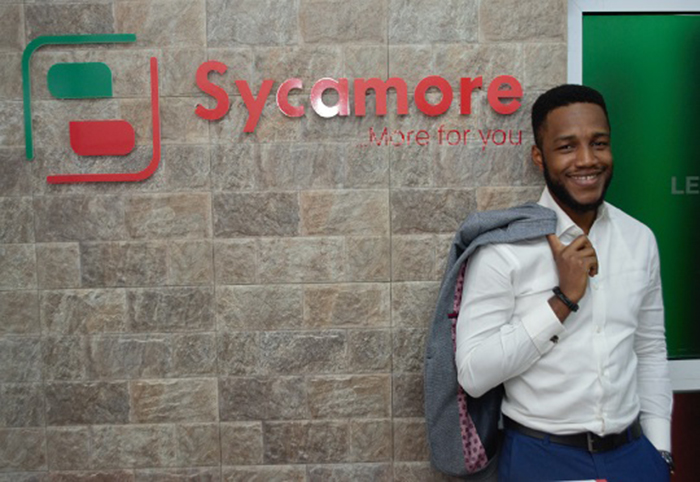
Sycamore, Founder Babatunde Akin-Moses
Flutterwave has also moved into banking, although its route is different. It acquired Nigerian open-banking startup Mono in January and announced in April that it had secured a Nigerian microfinance banking licence. Mono was not a bank acquisition; the subsequent licence gives Flutterwave greater control over deposits and settlement. The company says it has processed more than $40 billion in payments.
A banking licence comes with a responsibility fintechs cannot afford to get wrong
The case is very much in favour. Deposits can underpin lending, payment data can be used in credit decisions, and customers can end up managing a lot more of their own finances through one platform.
But running a bank is not just another feature you can add to an app. A bank has to protect deposits, manage liquidity, assess borrowers and comply with the myriad of regulations. It also has to ensure that people’s money is accessible when they need it.
Customers should understand which licensed institution holds their funds and what protection applies. The Nigeria Deposit Insurance Corporation covers eligible deposits up to ₦2 million per depositor in microfinance banks, compared with ₦5 million in deposit money banks and mobile money operators. The applicable limit depends on the type of institution.
For fintechs, acquiring an existing bank can also mean inheriting operational weaknesses, compliance problems or other liabilities. Sycamore’s experience is a reminder that the licence is only part of what a buyer is purchasing.
Nigerian fintechs are looking for new ways to make money and gain more control over their financial systems, instead of relying only on transaction fees. This shift could give customers easier access to credit, quicker settlements, and more connected services.
However, having larger platforms does not always lead to better banking. These companies need to show they can keep customers’ money safe, lend in a responsible way, and fix issues when transactions go wrong.
The real test is not how many banking licences fintechs acquire. It is whether they can handle the responsibilities that come with them. When a startup becomes a bank, it inherits more than an opportunity. It inherits the public’s trust and the obligation not to lose it.
See also: What Nigeria’s 14.63% September inflation rate means for fintechs, banks