Greenlane built its legacy business selling vaporizers and smoking accessories. Now, the Nasdaq-listed company is warning about its ability to keep operating while the value of its cryptocurr
Greenlane built its legacy business selling vaporizers and smoking accessories.
Now, the Nasdaq-listed company is warning about its ability to keep operating while the value of its cryptocurrency holdings falls.
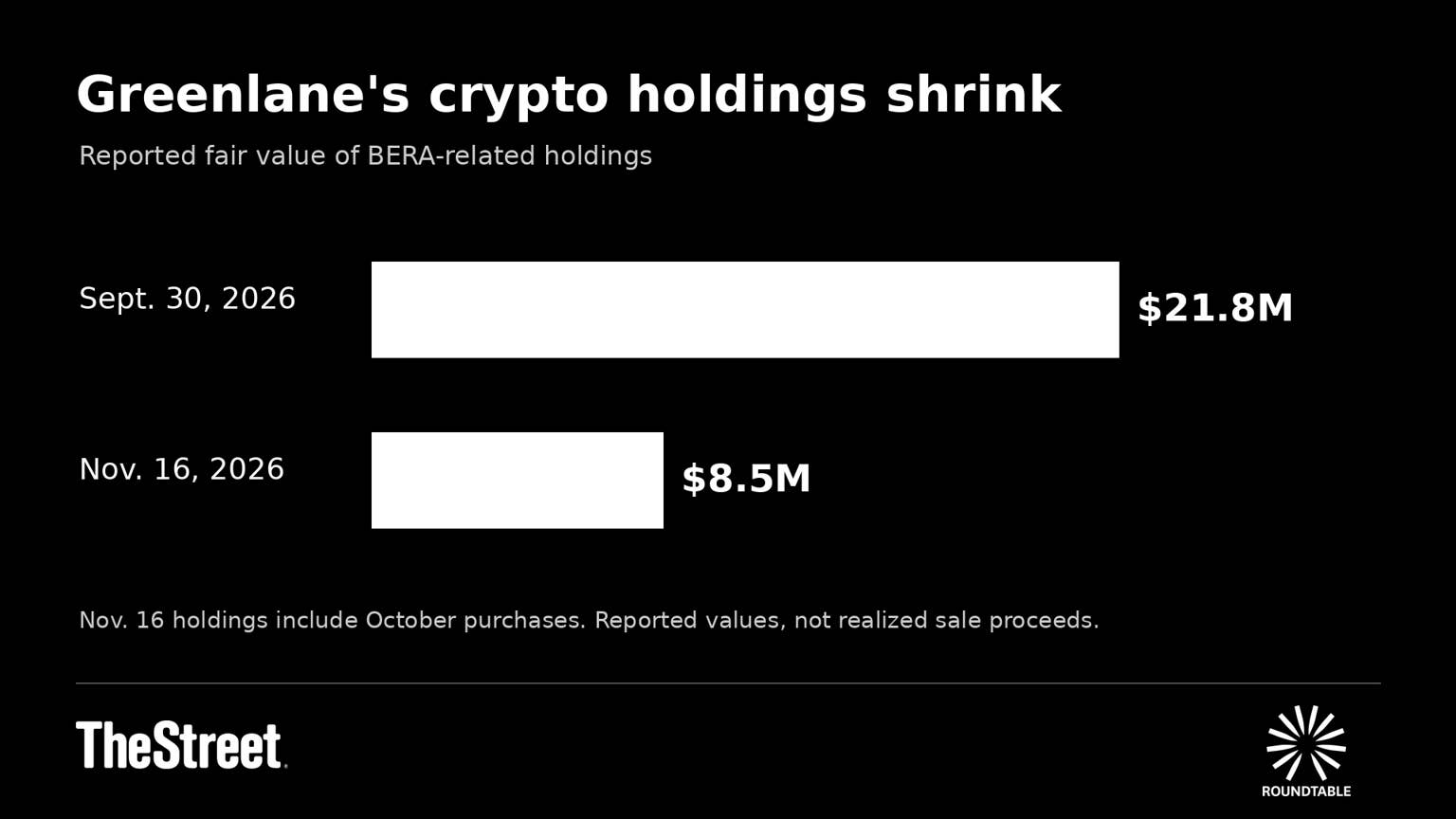
The former operator of Vapor.com said its BERA-related digital assets were worth about $8.5 million on Nov. 16, down from $21.8 million at the end of September. That is a $13.3 million decline in reported value, even after additional token purchases in October.
Greenlane said its roughly $7.9 million in cash, cash equivalents and stablecoin-related protocol instruments was approximately equal to its estimated cash needs for the following 12 months. Higher costs or additional legal payments could leave it short.
Management said those conditions, taken together, raised substantial doubt about the company's ability to continue as a going concern.
Greenlane has identified a serious risk that it will not have enough resources to meet its obligations over that period.
Related: Beloved whiskey seller warns of $92.5M loss, crypto risk
How Greenlane transitioned from vapes to crypto
Greenlane's accessories business dates to 2005, according to its historical company materials. Its brands included Higher Standards and Groove, a lower-priced accessories line it launched in 2022 with products including pipes, grinders and vaporizer batteries.
Vapor.com was included on USA Today's 2024 America's Top Online Shops list, according to Greenlane's announcement at the time.
But selling accessories is no longer its primary strategy.
Greenlane adopted a digital-asset treasury strategy in October 2025. Its latest quarterly filing says the related private placement provided approximately $109.9 million in gross consideration, consisting of dollars, stablecoins and BERA.
A crypto treasury company uses its corporate balance sheet to acquire and manage digital assets. Someone buying its stock is buying shares in a company with expenses, liabilities and management decisions, rather than simply buying the cryptocurrency itself.
TheStreet has previously examined the risks surrounding that business model. Greenlane's latest results show how quickly the value of the holdings and the cash needed to run the company can become very different questions.
Its chosen cryptocurrency is BERA, not Bitcoin.
Berachain's own documentation describes BERA as the network's native gas and staking token, meaning it is used to pay transaction fees and help secure the blockchain.
Greenlane is trying to accumulate BERA and earn income by putting digital assets to work in that ecosystem. The strategy depends on more than owning a growing number of tokens. What those tokens are worth still matters.
The holdings grew. Their value did not.
- Approximately 85.8 million BERA and BERA-equivalent units at Sept. 30, up from a revised approximately 60.4 million at the end of 2025
- Cost basis: about $80.4 million
- Fair value at Sept. 30: about $21.8 million, already $58.6 million below cost
- Fair value by Nov. 16: approximately $8.5 million, including BERA bought in October
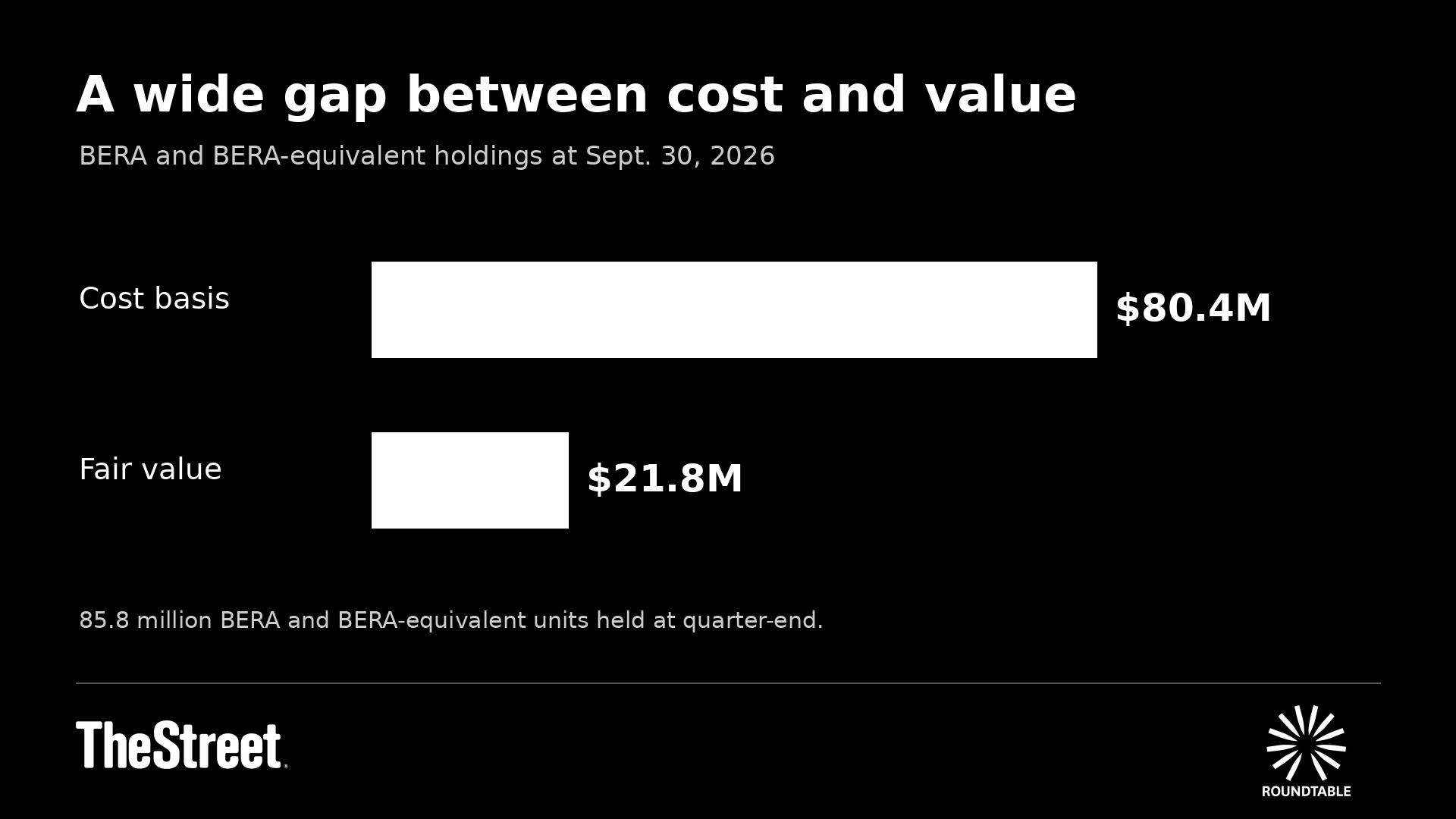
The equivalents include assets tied to BERA rather than only the freely traded token. Cost basis is the accounting amount associated with acquiring the assets, while fair value estimates their market value at the reporting date.
The November figure is not a comparison of an unchanged portfolio, because it included tokens bought in October. It is also not evidence that Greenlane sold its holdings and realized a $13.3 million cash loss. The company described a decline in the value of assets it held.
A larger token balance does not guarantee a more valuable portfolio. The number of tokens owned also does not show how much cash is available to pay bills, particularly when some holdings cannot be sold immediately. Approximately 28.8 million of the Sept. 30 units, worth about $7.3 million then, remained subject to vesting terms that limited when they became available.
The per-share claim needs context
Greenlane emphasized that BERA per share rose about 13% to approximately 113 at Sept. 30, compared with approximately 100 at the end of 2025.
That measures how many BERA and BERA-equivalent units the company held for each outstanding Class A share. It does not measure the dollar value of those units.
Including shares issuable through outstanding pre-funded warrants and other warrants, Greenlane said BERA per share was approximately 19 at Sept. 30. Warrants give holders the right to acquire shares under specified terms. Including the additional shares changes the calculation substantially, which is why the 113 figure needs to be read alongside the company's broader disclosure.
Neither calculation removes exposure to BERA's price. You can own more units per share and still have a holding worth less in dollars if the cryptocurrency falls far enough.
Why crypto treasuries survived the drawdown: BNB Standard CEO Alex Odagiu (3:30)
Yes, Greenlane reported a profit
There was an apparently encouraging number in the quarterly results. Greenlane reported $4.4 million in net income attributable to the company for the three months ended Sept. 30, but it included:
- A $4.5 million noncash gain from changes in the fair value of digital assets
- A $3.1 million noncash gain from removing legacy subsidiaries from its consolidated accounts after their assignments for the benefit of creditors
Neither gain was cash received from customers. The digital-asset gain reflected price changes during the quarter, before the subsequent decline reported in November.
Greenlane still recorded a quarterly operating loss of approximately $3.3 million. It earned roughly $400,000 in staking and yield revenue, income generated through its digital-asset activities, while its legacy wholesale and distribution business produced just $66,000 in net revenue, down 91% from a year earlier.
The longer reporting period was less flattering than the quarterly profit. Greenlane reported a net loss attributable to the company of approximately $38.8 million for the first nine months of 2026, including a $27.5 million loss from changes in the fair value of digital assets.
The cash math is tight
As of Nov. 16, its approximately $7.9 million in cash, cash equivalents and stablecoin-related protocol instruments roughly matched management's estimated requirements for the 12 months after the financial statements were issued. That estimate included settling its liabilities.
Stablecoin-related protocol instruments are not simply dollars sitting in a bank account. Greenlane lists them separately from cash and cash equivalents.
The company said its resources would be insufficient if costs exceeded management's estimates or if an indirect-purchaser legal matter involving CCELL, or other contingencies, required payment.
As of the Nov. 16 disclosure, the board had not authorized, and management had not decided, to sell digital assets to fund company obligations. So while Greenlane reported digital assets with an estimated fair value, there was no decision or board authorization to sell those holdings to cover its bills.
A going-concern warning does not mean the company has announced an immediate shutdown. It means management has disclosed substantial doubt about its ability to continue operating over the stated period.
The old business has unfinished business
Four legacy subsidiaries entered Florida assignments for the benefit of creditors on Sept. 30. In that process, assets are transferred to an assignee to be administered for creditors.
Greenlane removed approximately $3.5 million in liabilities from its consolidated balance sheet after those entities were deconsolidated. But the assignments did not erase the subsidiaries' obligations, and creditors retained claims against the assignment estates.
The company also warned that creditors or the assignee could assert claims against the parent or its continuing subsidiaries. The disclosure concerns assignments by former subsidiaries, not an announcement that the publicly traded parent filed for bankruptcy.
In its Nov. 16 disclosure, Greenlane said a continuing subsidiary had signed a term sheet to buy the Vapor.com domain and related assets from the assignee for $100,000 in cash. It paid a $25,000 refundable deposit on Nov. 2.
The company said the purchase would not become binding without a court order approving the sale, required by Nov. 24. That disclosure described a proposed purchase, not a completed relaunch.
The filing leaves investors comparing the value of Greenlane's BERA-related holdings with its cash requirements. Management's estimates leave little room for higher costs or additional payments on the legal matters it identified. The company has accumulated more cryptocurrency; its latest disclosure shows why that alone is not an answer to a survival warning.
This article is for informational purposes only and does not constitute financial advice. Cryptocurrency investments are highly volatile and risky. Always conduct your own research before making any investment decisions.