Over the weekend, nationwide protests across France against rising living costs and proposed government budget cuts erupted into extreme violence, forcing President Emmanuel Macron into emerg
Over the weekend, nationwide protests across France against rising living costs and proposed government budget cuts erupted into extreme violence, forcing President Emmanuel Macron into emergency security talks.
The trigger for this wave of unrest is a recently announced government plan to cut 54 billion euros from the 2027 national budget. France is currently drowning in public debt, which now sits near 120 per cent of its total economic output. To prevent a national financial collapse, lawmakers proposed severe spending reductions, including capping pension increases and slashing funding for public schools.
Demonstrators clashed heavily with police in central Paris and other major cities, setting fire to public property, looting local businesses, and throwing rocks at riot control officers. In response, police deployed tear gas and stun grenades, leading to the arrest of more than 2,400 people.
With the situation rapidly deteriorating, the government is now actively discussing the implementation of strict curfews and even a potential state of siege to regain control of the streets. However, these proposed cuts hit the public at a time when everyday citizens are struggling to afford basic groceries and housing, creating economic frustration that quickly spilt into the streets.
READ ALSO: Macron Backs NVIDIA Investment to Boost France’s AI Startups and Research
Frenchmen frown upon the protests and the cost of welfare, say the riots are pointless
France had similarly witnessed highly destructive uprisings during the 2018 Yellow Vest movement, where citizens shut down the economy for months to protest rising fuel taxes and the shrinking purchasing power of the middle class. Today, the grievance is that everyday workers feel they are suffocating under high taxes while the state cuts the very social safety nets they pay for.
However, the destructive nature of these riots has started a debate about who actually benefits from burning down the local economy. Social media commentator @Shentonwrites expressed extreme frustration with the rioters, arguing that increasing public spending on social benefits is pointless when the money goes to individuals who skip school, lack proper education, and actively seek to disrupt the nation’s Christian foundation.
Another user, @MartinezYsais, supported this anger, pointing out that many of the unassimilated immigrants destroying the city already rely heavily on state-funded welfare, free education, and child care for multiple wives, all paid for by the exact same working-class Frenchmen they are currently terrorizing.
Beyond the social division, the physical destruction directly worsens the economic crisis it is protesting. Online observer @USDisillusion questioned the basic logic behind the violence, asking how forcing the state to spend millions of euros repairing smashed storefronts and burned infrastructure will actually help lower the daily price of living.
The protests could drive more people to crypto
Continuous social instability and rising national debt act as real-world advertisements for decentralized digital assets and the global cryptocurrency sector. An example of this scenario is the recent financial collapse in Lebanon. By late 2019, years of severe government debt led to hyperinflation, devaluing local paper money.
The Lebanese government implemented extreme capital controls to prevent a total bank run. Traditional banks locked their doors and refused to let citizens withdraw their own life savings. Realizing their money was trapped by the state, everyday people bypassed the traditional banking sector entirely. Citizens turned to underground, over-the-counter brokers in Beirut, handing over physical cash in exchange for stablecoins like Tether (USDT) deposited directly into their mobile digital wallets.
By early 2020, the number of registered crypto portfolios in the country had exploded by nearly 1,800 per cent. Because the local currency had devalued, citizens started using digital dollars to buy everyday groceries, while young professionals demanded that international clients pay their freelance salaries exclusively in crypto to bypass the broken state banks.
If the French government is forced to implement emergency capital controls or print more fiat money to cover the massive physical damage from the riots, the euro’s purchasing power may drop. Digital assets operate entirely outside central bank control, so they become the only safe, functioning place to protect personal wealth and conduct business when physical streets are locked down.
In another development, French crypto platform Coinhouse has received authorization under the EU’s Markets in Crypto-Assets (MiCA) framework through France’s financial regulator Autorité des Marchés Financiers, placing it among the early firms operating under the new European rulebook.
Enjoyed this? BookmarkDeFi Planet, explore related topics, and follow us onTwitter,LinkedIn,Facebook,Instagram,Threads, and CoinMarketCap Community for seamless access to high-quality industry insights.
Take control of your crypto portfolio with DEFI PLANET PRO, DeFi Planet’s suite of analytics tools.
The post France’s Cost-of-Living Protests Turn Violent, Could Lead to More Crypto Use appeared first on DeFi Planet.

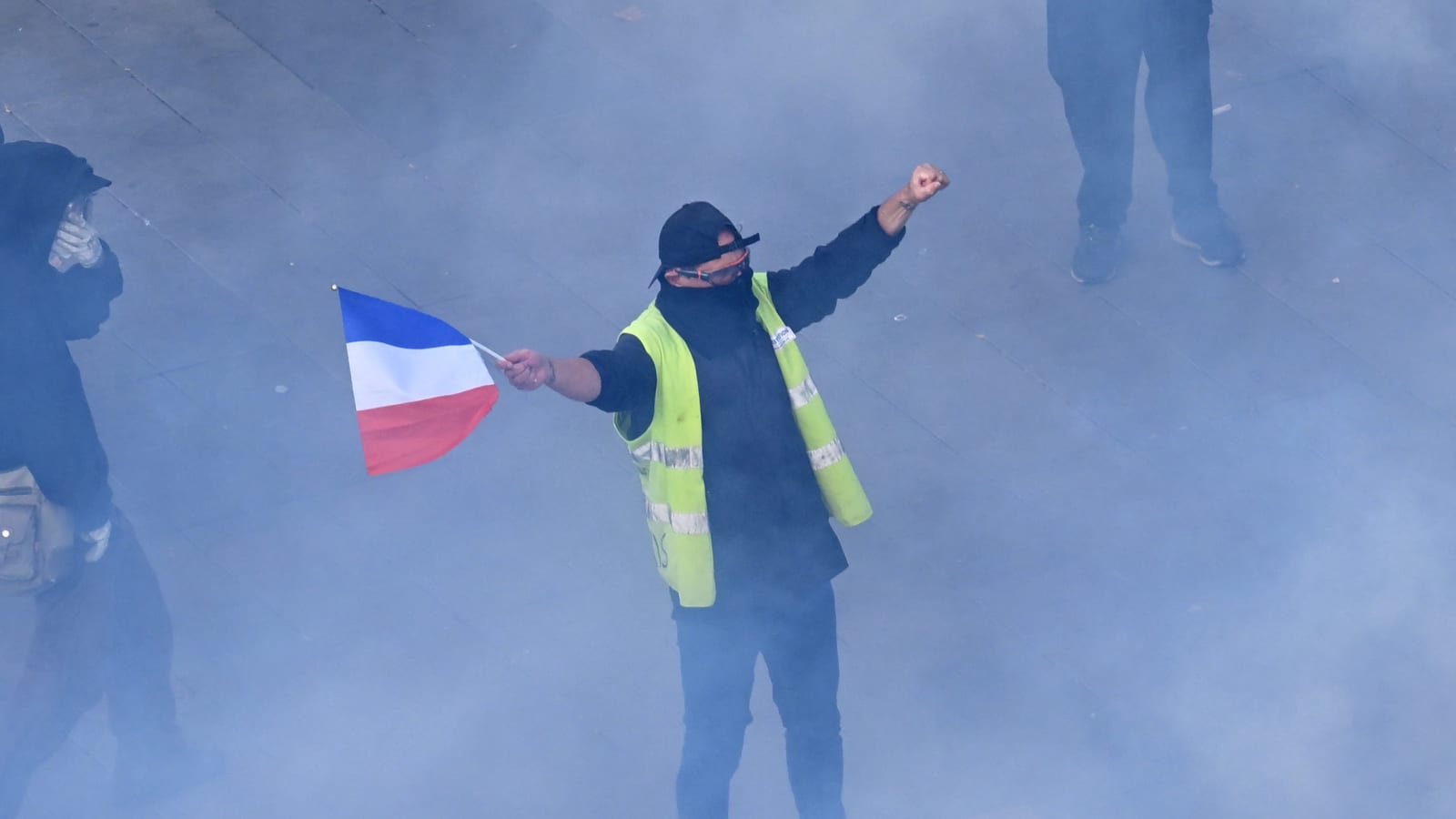
 Protests and riots are ERUPTING across Europe amid anger over living costs, housing, and public services…
 France: Mass protests over living costs and public services escalated into looting, arson, and RIOTS, with more than 1,800 arrests reported.
 Belgium: Student protests over education reforms turned violent, with police deploying tear gas and water cannons.
 Italy: Cost-of-living demonstrations in Milan and Bologna escalated into clashes, fires, and property damage.
 Spain: Housing protests reflect growing anger over soaring rents, unaffordable homes, and evictions.
 Portugal: Tens of thousands reportedly marched in Lisbon over stagnant wages and rising housing costs.
 Albania: Student-led protests in Tirana rallied against corruption, unemployment, and education, with clashes reported.