TLDR FreeCast stock drops as its PaaS targets new telecom media revenue streams. FreeCast aims to help 5G, fiber and satellite providers monetize media services. CAST expands its platform str
TLDR
- FreeCast stock drops as its PaaS targets new telecom media revenue streams.
- FreeCast aims to help 5G, fiber and satellite providers monetize media services.
- CAST expands its platform strategy across streaming, advertising and payments.
- FreeCast targets telecom customers with a unified media and transaction platform.
- Recent funding supports FreeCast as it expands its global telecom media strategy.
FreeCast (CAST) shares closed 6.96% lower at $1.47 before slipping another 1.36% to $1.45 pre-market. The decline came as FreeCast outlined a broader strategy for its streaming media platform. The company aims to help connectivity providers generate revenue after customers connect to their networks.
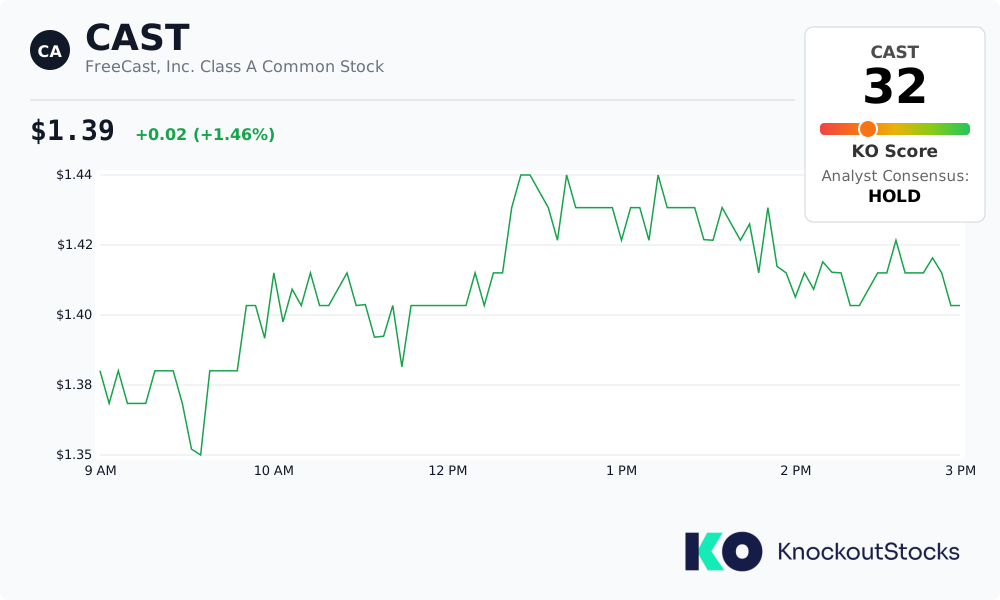
FreeCast, Inc. Class A Common Stock, CAST
FreeCast Expands PaaS Strategy Across Connectivity Networks
FreeCast plans to place its Platform-as-a-Service technology between connectivity networks and digital media services. The model targets mobile operators, internet providers, satellite companies, broadcasters, and other communications businesses. These companies could offer branded streaming services without building large media technology systems internally.
The platform combines several media functions within one system for participating providers. FreeCast supports ad-funded programming, FAST channels, premium subscriptions, sports, movies, advertising, and payment services. Therefore, connectivity companies can extend their customer relationships beyond internet or mobile access.
FreeCast sees an opportunity as global telecommunications infrastructure continues expanding across several technologies. Fiber, 5G, fixed wireless, satellite broadband, and direct-to-device services continue increasing available connections. Consequently, more connected devices could create additional distribution points for digital entertainment and related transactions.
Telecommunications companies have spent significant capital building wireless networks, fiber infrastructure, spectrum, towers, and other connectivity systems. FreeCast wants those operators to capture more value from customers after establishing network access. Its technology focuses on media consumption rather than replacing existing connectivity infrastructure.
Consumers spend about 2.78 hours daily watching video, according to industry estimates cited by FreeCast. The company views that viewing time as a potential commercial market for multiple digital services. Streaming subscriptions, advertising, premium content, sports, and payments could support additional revenue opportunities.
FreeCast also designed its platform to support different markets without requiring separate systems for every country. Providers can adjust programming, languages, commercial terms, and branding for regional requirements. As a result, telecom companies can maintain direct customer relationships while using FreeCast infrastructure behind their media offerings.
FreeCast Builds Global Strategy Following Nasdaq Listing
FreeCast enters this expansion phase after becoming a Nasdaq-listed company and raising additional capital. In July 2026, the company completed a private placement with institutional and existing long-term shareholders. The transaction generated about $23.7 million in gross proceeds before expenses and related fees.
The company expects to use the private placement proceeds for working capital and general corporate purposes. FreeCast also maintains a $50 million equity line of credit under applicable terms. That funding structure gives the company additional capital options while developing its media platform strategy.
FreeCast already maintains commercial relationships involving connectivity services and premium television distribution. These relationships include Starlink Business and several initiatives connected with global content partners. The company plans to use those relationships while expanding its platform across multiple network categories.
Connectivity Growth Creates More Distribution Opportunities
FreeCast does not rely on one connectivity technology winning the global network market. Instead, its strategy can operate across fiber, satellite, 5G, MVNO, broadcasting, and direct-to-device systems. Each expanding network could introduce more connected customers and potential media distribution opportunities.
The company also sees next-generation broadcasting as another route into the broader media economy. Technologies such as ATSC 3.0 can expand connected viewing options alongside mobile and broadband services. FreeCast aims to support those channels through one adaptable media and transaction platform.
The strategy shifts FreeCast’s focus toward monetizing activity that happens after a customer gains connectivity. That approach could give network providers another way to participate in streaming and digital commerce. FreeCast now positions its PaaS between global connectivity infrastructure and the expanding online media economy.
The post FreeCast (CAST) Stock: Drops 6% as PaaS Model Targets New Revenue Across 5G Fiber and Satellite Networks appeared first on Blockonomi.