Galaxy Digital returned to profitability in the third quarter of 2026, reporting $323 million in net income as gains on its investment portfolio and rising contributions from AI data centers
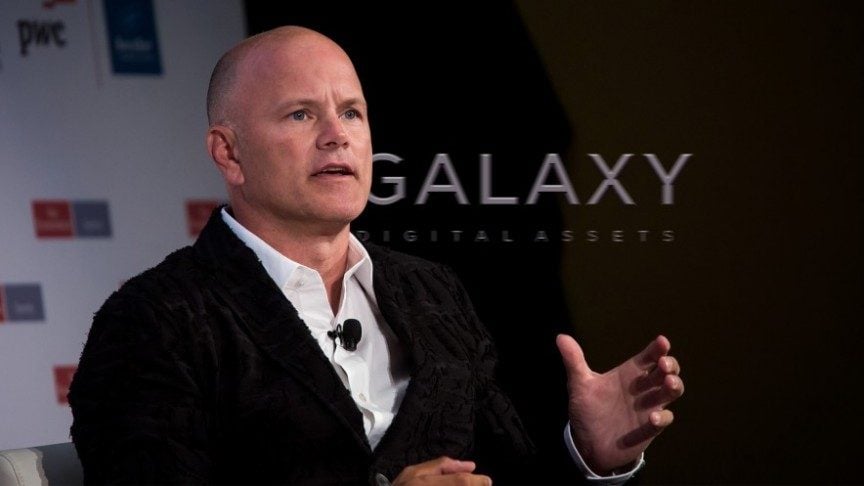
Galaxy Digital returned to profitability in the third quarter of 2026, reporting $323 million in net income as gains on its investment portfolio and rising contributions from AI data centers offset continued pressure in its digital-assets operating business. The company also authorized another $200 million share buyback, reinforcing its capital-return strategy as it expands its Helios infrastructure campus in Texas. The Mike Novogratz-led firm recorded $569 million in adjusted gross profit and $455 million in adjusted EBITDA for the three months ended September 30, compared with $43 million and a $77 million loss, respectively, in the second quarter. Net income nevertheless remained below the $505 million reported a year earlier. The results show a business benefiting from three different earnings drivers: cryptocurrency trading and lending, investment portfolio valuations, and data-center infrastructure. Their relative contributions matter because the sustainability of Galaxy's earnings depends on how much profit comes from recurring operations rather than changes in asset values.
How Much of Galaxy's Profit Came From Operating Businesses?
Galaxy's Treasury & Corporate segment generated $419 million in adjusted gross profit, reversing a $42 million loss in the previous quarter. Adjusted
EBITDA reached $395 million, with management attributing much of the improvement to higher valuations of digital-asset holdings and private investments. That contribution accounted for most of the company's $569 million in adjusted gross profit. It also means the headline earnings recovery should not be interpreted as an equivalent improvement in recurring operating performance. Investment valuations can fluctuate with market conditions, potentially reversing some gains in subsequent quarters. The Digital Assets segment delivered a more modest improvement. Adjusted gross profit increased to $71 million from $66 million in the second quarter, while adjusted EBITDA remained negative at $9 million. Trading volumes rose 12% quarter over quarter despite weaker activity across the broader spot market, and the average loan book expanded 27% to $1.8 billion. The growth in lending reflects demand for financing alongside trading services. Galaxy's Onchain Financing Rate product, launched in July, draws on decentralized lending markets including Aave and Morpho. The company also reported $10.4 billion in combined assets under management and assets under stake at the end of September, up 46% from June. The previous quarter's
$85 million net loss was driven largely by falling cryptocurrency prices and lower portfolio valuations. The latest results show how quickly those valuation effects can change reported earnings, even while the underlying trading and financing businesses move more gradually.
Investor Takeaway
Galaxy's return to profit was driven primarily by investment gains, while digital-asset operations remained loss-making on an adjusted EBITDA basis. Sustained earnings growth will require stronger operating contributions alongside favorable valuations.
Can Helios Make AI Infrastructure a Larger Earnings Driver?
Galaxy's data-center business produced $79 million in adjusted gross profit and $69 million in adjusted EBITDA, compared with $20 million and $11 million, respectively, in the second quarter. The results included the first full quarter of revenue from the Helios I Phase I lease after Galaxy delivered all 133 megawatts of critical IT load to CoreWeave by the end of June. The company has expanded its gross data-center power pipeline to more than 5.7 gigawatts. Construction at Helios I Phase II is continuing, with the first data-hall deliveries scheduled for the second quarter of 2027. Galaxy also completed a $3.5 billion offering of senior secured notes to finance construction of the second phase. During its earnings call, Novogratz said Galaxy expects to exit 2027 with an annualized leasing revenue run rate of $800 million to $850 million as Phase II comes online. That is a forward-looking target rather than current revenue, and achieving it will depend on construction schedules, customer deployments and the delivery of contracted capacity. Galaxy's strategy builds on its earlier
fundraising to expand its data-center business, which supported the conversion of its Texas mining infrastructure into facilities designed for AI and high-performance computing workloads. The transition offers an alternative source of income to businesses more directly exposed to cryptocurrency prices, although it introduces substantial construction and financing requirements.
Why Did Galaxy Authorize Another $200M Buyback?
On October 26, Galaxy's board authorized an additional $200 million in Class A common-stock repurchases. The company had completed its previous $200 million program on October 15, buying back approximately 9.8 million shares under the authorization announced in February. The new program has no fixed expiration date, and Galaxy is not obligated to repurchase the full amount. Buybacks can reduce the number of shares outstanding and offset dilution from equity compensation, although their value to shareholders depends on the price paid and the company's alternative uses for capital. Galaxy ended September with $4.9 billion in cash, stablecoins and U.S. Treasuries, alongside $3 billion in total equity. It also reported $1.7 billion in net digital assets and investments. Those resources provide financial flexibility, but the planned infrastructure expansion requires substantial funding and could compete with additional repurchases or other investment opportunities.
Investor Takeaway
The new buyback supports capital returns, but investors must weigh it against the financing needed for Helios. The key test is whether data-center cash generation grows enough to support expansion without increasing pressure on the balance sheet.
What Should Investors Watch Next?
Galaxy's third-quarter results reflect a combination of investment gains, stronger trading and lending activity, and rising data-center earnings. Its earlier
profit surge driven by trading and AI infrastructure showed the potential of that combination, but the latest figures also demonstrate how sensitive reported earnings remain to portfolio valuations. The next milestones are the delivery of Helios I Phase II, progress toward the 2027 leasing revenue target, and the performance of Galaxy's trading and lending businesses through changing crypto-market conditions. The company's ability to turn infrastructure commitments into recurring earnings will help determine whether its expanding AI business can reduce dependence on investment gains and cryptocurrency cycles.