Garlinghouse calls out Dimon's $20B reason to fight crypto
A Payments Empire Under Threat @Ripple CEO Brad Garlinghouse (@bgarlinghouse) appeared on Fox Business this week and offered a direct explanation for why JPMorgan chief Jamie Dimon is fightin
A
AnonymousCryptoCompass newsroom
June 12, 2026
2 min read
NEWS
CryptoCompass editorial visual for policy coverage.
A Payments Empire Under Threat
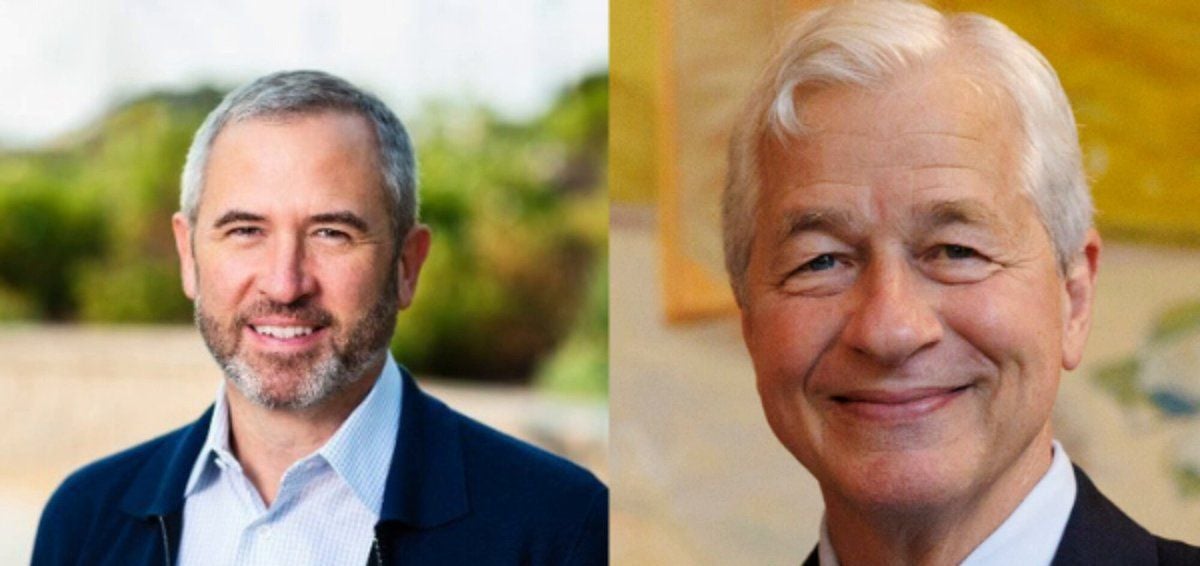
@Ripple CEO Brad Garlinghouse (@bgarlinghouse) appeared on Fox Business this week and offered a direct explanation for why JPMorgan chief Jamie Dimon is fighting so hard against the Digital Asset Market Clarity Act: money. Specifically, a payments business that Garlinghouse says generates roughly $20 billion in revenue and more than $5 billion in profit. In his view, Dimon is "trying to protect and dig a deeper moat" around that franchise.
The revenue figure checks out against JPMorgan's own disclosures. According to J.P. Morgan Payments' earnings highlights, the unit posted a record $19.4 billion in full-year 2025 revenue, up 5% year-over-year, making it one of the bank's most important growth engines. The profit figure, however, is Garlinghouse's claim. JPMorgan does not publicly break out a standalone profit number for its Payments division.
The Stablecoin Yield Dispute
Dimon's stated objection to the bill centers on consumer protection. In a Fox Business interview on May 29, as reported by CoinDesk, Dimon argued that the legislation would allow stablecoin issuers to effectively pay interest on deposits without the bank-grade protections that apply to traditional institutions. He warned the system would "eventually blow up" if adopted as written, and said banks would not accept the bill in its current form.
The yield question has become the central sticking point. The CLARITY Act, as currently drafted, attempts to draw a line between passive yield on balances and rewards tied to specific activity, but that distinction has satisfied neither side. Bank lobbying groups have mounted an aggressive campaign against the compromise: the American Bankers Association reportedly coordinated thousands of letters to Senate offices opposing the current text, according to crypto.news.
Garlinghouse and the broader crypto industry read the opposition differently. For them, the yield provisions represent exactly the kind of competitive threat that an entrenched incumbent would want to neutralize before it gains regulatory legitimacy. The clash has become one of Washington's most closely watched digital asset debates, with the outcome likely to shape how crypto products are regulated for years to come. The window to pass the bill before midterm elections narrows with each week of delay.
Harmony, the Layer 1 network behind the ONE token, is reportedly preparing to fully sunset its blockchain and migrate its token to Ethereum in support of an AI video initiative, according to
The FBI has seized more than $560,000 in cryptocurrency from a network described as linked to Hamas, with the funds tied to activity moving across cross-chain bridges, an enforcement step tha
A Bitcoin-linked blockchain has reportedly been hacked for $320 million, according to early and still-unconfirmed reports, in what would rank among the larger digital-asset thefts of the year