Key Takeaways MediaTek is transitioning from traditional chip design to comprehensive system-level AI hardware integration, pursuing contracts with Google’s TPU program and AI infrastructure
Key Takeaways
- MediaTek is transitioning from traditional chip design to comprehensive system-level AI hardware integration, pursuing contracts with Google’s TPU program and AI infrastructure projects linked to Elon Musk.
- TF International Securities analyst Ming-Chi Kuo indicates this strategic shift will have minimal earnings impact in the near term but strengthens MediaTek’s positioning for future growth.
- Google is pursuing discussions with Samsung to manufacture components for its upcoming AI processor, internally designated Icefish, as TSMC’s manufacturing capacity remains constrained.
- The Google-Samsung negotiations underscore the intense demand for cutting-edge AI chip fabrication, forcing even leading customers to seek alternative production partners.
- MediaTek aims to achieve 40–50% gross margins in its system-level business by maintaining an asset-light approach, focusing on design and validation while outsourcing production.
MediaTek has broadened its artificial intelligence ambitions beyond traditional semiconductor design, now pursuing complete system-level hardware integration projects. The Taiwanese semiconductor company has identified two initial targets: printed circuit board assembly work for Google’s Tensor Processing Unit and rack-level infrastructure for AI chip projects associated with Elon Musk’s ventures.
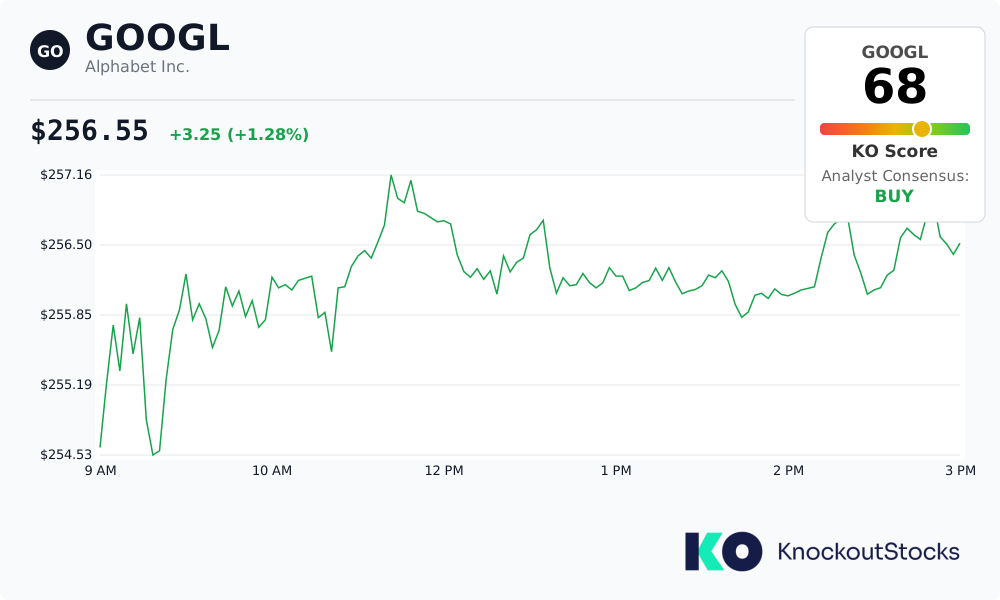 Alphabet Inc., GOOGL
According to Ming-Chi Kuo from TF International Securities, this strategic expansion represents a fundamental business transformation rather than a short-term revenue opportunity.
“MediaTek has elevated the strategic focus of its AI operations from IC and ASIC design to comprehensive system-level design,” Kuo explained. The analyst emphasized that this transition carries “negligible impact on core business metrics through the next 24 months.”
The two business opportunities present distinct challenges and prospects. Google operates with a mature and established hardware assembly infrastructure, making MediaTek’s prospects for securing premium rack integration contracts relatively limited.
MediaTek’s more viable pathway with Google exists at the board assembly level, beginning with the TPU v10 processor codenamed Icefish.
The opportunity with Musk-affiliated enterprises presents a contrasting scenario. These organizations are currently scaling their proprietary AI silicon development, and the corresponding rack assembly infrastructure remains underdeveloped.
“This represents MediaTek’s genuine opportunity,” Kuo stated. He emphasized that sustainable success requires MediaTek to capitalize on Taiwan’s robust hardware supply network and its strategic relationship with Terafab, though he cautioned that the initiative “currently lacks definitive timeline clarity.”
MediaTek intends to pursue gross margins between 40–50% in this business segment by spearheading design and validation processes while delegating manufacturing to external partners, maintaining operational efficiency.
Google Engages Samsung Amid TSMC Production Bottlenecks
Simultaneously, Google has reportedly initiated discussions with Samsung regarding the fabrication of a memory input-output component for the Icefish processor. TSMC would continue producing the primary compute die utilizing its cutting-edge 1.4-nanometer technology.
Wedbush analysts suggest the Samsung negotiations primarily indicate constrained availability at TSMC rather than a strategic departure from the foundry partnership. Essentially, the extraordinary demand for advanced AI semiconductor manufacturing has reached levels where even premier customers like Google must diversify production across multiple fabrication facilities.
Employing Samsung introduces operational complications. Distributing chip fabrication across different manufacturers increases technical complexity and may impact production yields and overall costs.
For Google, the priority is guaranteeing adequate supply to support expanding AI computational requirements. For Samsung, this presents an opportunity to secure additional advanced foundry business.
Kuo’s broader concern centers on MediaTek’s current ASIC chip design operations potentially decelerating within two to three years as the semiconductor industry transitions toward new architectural paradigms. This vulnerability partially explains why he considers the system-level expansion strategically essential, despite limited immediate revenue contribution.
The most significant near-term indicator will be whether MediaTek secures qualification work on the TPU v10 Icefish processor. Regarding the Musk-related initiatives, specific timelines have yet to materialize.
The post Google (GOOGL) Explores Samsung Partnership as TSMC Faces Capacity Constraints for AI Chips appeared first on Blockonomi.