A raccoon sits at a table and eats a sandwich. The clip, caught on grainy night-vision footage is how Google chose to show off its newest tool. It is, after all, the kind of clip that travels
A raccoon sits at a table and eats a sandwich. The clip, caught on grainy night-vision footage is how Google chose to show off its newest tool. It is, after all, the kind of clip that travels fast on social media and gets shared without a second thought.
Google posed a simple question: did a camera record this, or did a computer invent it?
That question has become harder to answer.
Generative AI, software that produces new images, video, audio and text from a typed prompt, now turns out convincing media in seconds. Nature warned in November 2024 that the technology "can create convincing scientific data with ease."
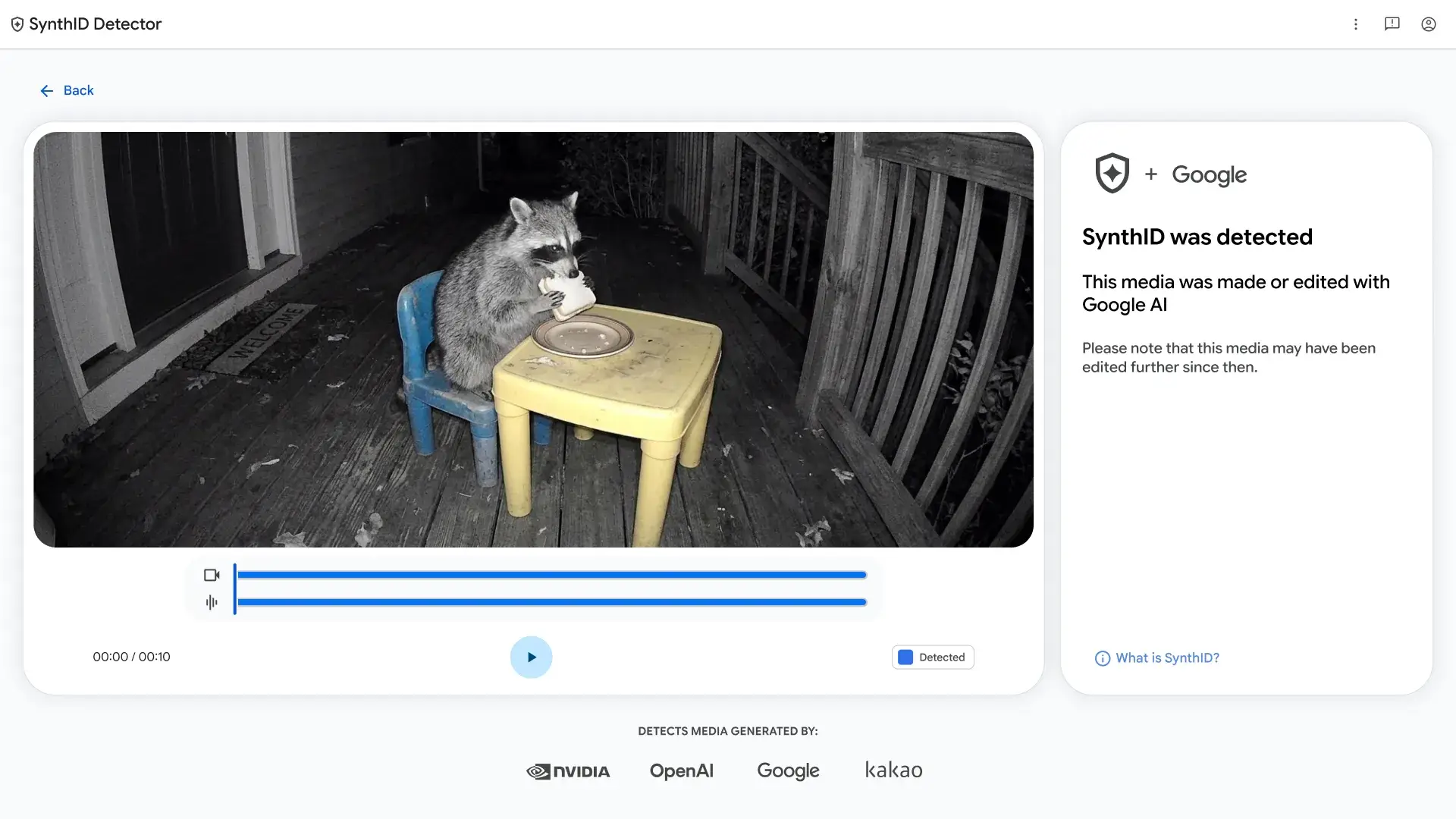
Image source:
Google
A raccoon sits at a table and eats a sandwich. The caught on grainy night-vision footage is how Google chose to show off its newest tool. It is, after, all, the kind of clip that travels fast on social media and gets shared without a second thought.
Google posed a simple question: did a camera record this, or did a computer invent it?
That question has become harder to answer.
Generative AI, software that produces new images, video, audio and text from a typed prompt, now turns out convincing media in seconds. Nature warned in November 2024 that the technology "can create convincing scientific data with ease."
Related: Trump buys surging stocks, dumps Nvidia
The cost is not only abstract.
In January this year, a group of UN agencies issued a joint statement, warning that offenders are using AI (Artificial Intelligence) to create fake explicit images of real children. UN News, cited data from a 2025 Childlight Global Child Safety Institute report, and it was alarming. Reports involving generative AI to the U.S. National Center for Missing & Exploited Children rose from 4,700 in 2023 to more than 67,000 in 2024.
An invisible signature goes public
Google's answer is SynthID, a system built by its AI research lab Google DeepMind. Since 2023, it has embedded an imperceptible watermark, a hidden digital signature invisible to the eye or ear, into media made with Google's AI tools.
On Oct. 7, the company opened its SynthID Detector to everyone, worldwide. Until now, the platform was reserved for media professionals. Anyone can now upload an image, video or audio file and check whether it carries that signature.
Trending on TheStreet Roundtable:
The scale behind it is significant. Google says more than 180 billion images and videos have been watermarked so far, along with 240,000 years of audio.
Verification tools already built into Search, the Gemini app and Chrome handle more than 1 million requests a day, the company says.
A detector with clear boundaries
SynthID can only recognize content made with AI from Google or its partners. Those partners include OpenAI, Nvidia and South Korean tech firm Kakao. Apple set to join soon too. Media from other generators may pass through unflagged.
The tool is also available only in English for now, and Google has not published accuracy rates.
But the stakes reach well beyond one company.
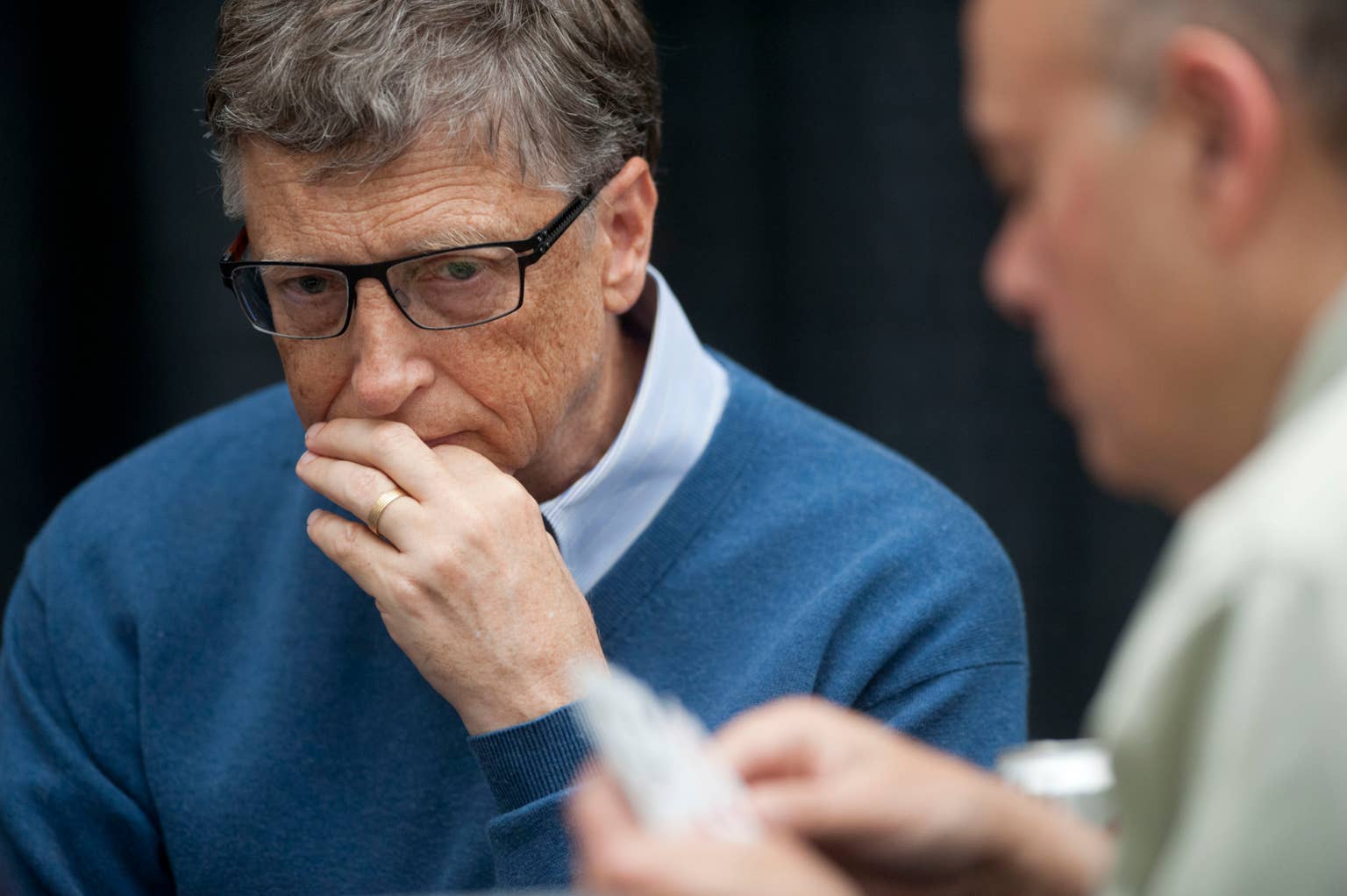
Bill Gates, founder of Microsoft Corp.
Bill Gates, the Microsoft co-founder who now chairs the Gates Foundation, wrote on Aug. 26 that "AI-enabled fraud, disinformation, deepfakes, and surveillance are the harms" people will feel most in daily life.
He also cautioned that "AI will empower bad actors who have relatively little power now."
Sam Altman, CEO of ChatGPT maker OpenAI, one of SynthID's partners, weighs the trade-off differently.
In an interview with Politico's Decoded published Oct. 4, he said "the world should accept some bad things happening for the benefits of this technology," arguing people will do "orders of magnitude more" good than bad.
Still, the launch moves a quiet piece of infrastructure into public hands.
Telling real from synthetic is no longer just a newsroom skill. It is becoming an everyday one.
Related: Cathie Wood dumps tumbling crypto stock to buy NVIDIA-linked AI stock