Granta, one of literary publishing’s most storied names, has severed its long-running partnership with the Commonwealth Short Story Prize following weeks of controversy over whether this year
Granta, one of literary publishing’s most storied names, has severed its long-running partnership with the Commonwealth Short Story Prize following weeks of controversy over whether this year’s Caribbean regional winner was written, at least in part, by artificial intelligence.
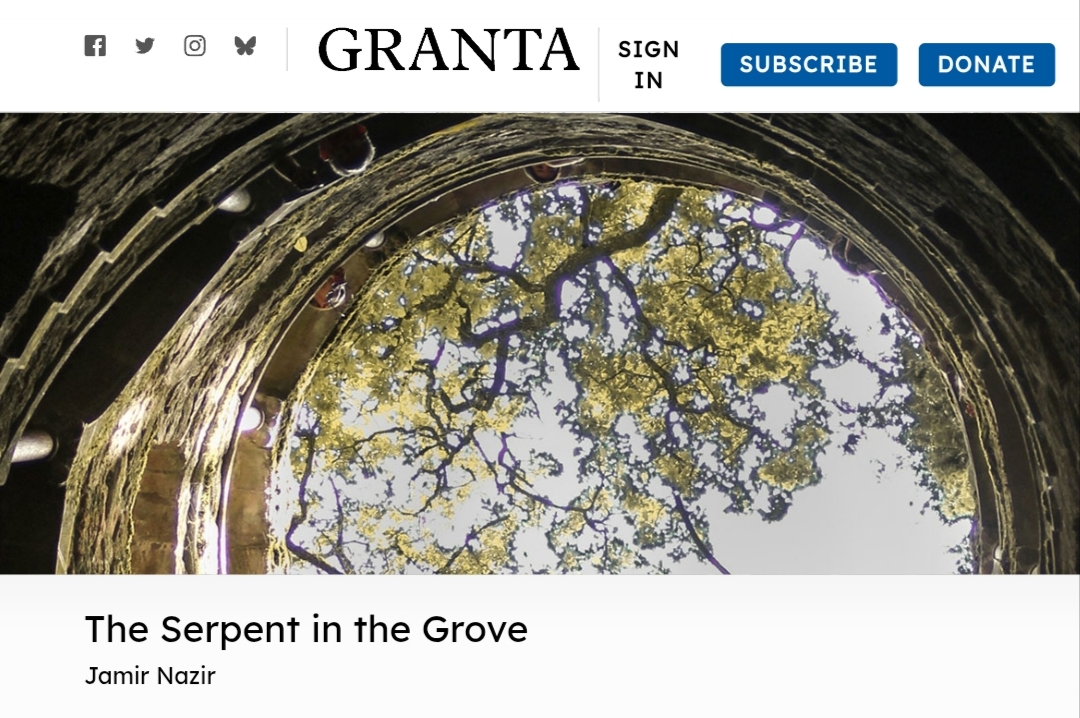
The dispute centres on “The Serpent in the Grove”, a story by Trinidadian writer Jamir Nazir that follows a struggling farmer whose obsession with another woman leads him to plot against his wife, only for the scheme to unravel near a haunted well. The story was selected from the Caribbean region and had been praised by judging chair Louise Doughty before questions about its origins began circulating online.
How the controversy started
The story emerged as the Caribbean finalist from a pool of 7,806 entries, selected by a panel that included Caribbean judge Sharma Taylor. But Wharton professor Ethan Mollick, who studies AI’s workplace effects, flagged the piece in a widely shared social media thread after running it through Pangram, a detection tool its maker says is highly accurate at spotting machine-generated text.
Jenna Russel, a research scientist at Pangram, went further, saying three of this year’s five regional winners appeared to be partly or wholly AI-generated, including Nazir’s story. Close readers pointed to the text’s heavy use of parallel phrasing, three-part lists and other rhetorical patterns often associated with large language model output.
Compounding the suspicion, Nazir himself proved difficult to verify. Reports noted a thin public record for a writer described in his own biography as a Trinidadian author of East Indian heritage exploring Caribbean and diaspora themes, with little published work beyond a self-released poetry collection and a professional online presence that includes posts championing generative AI in leadership contexts.
The Commonwealth Short Story Prize stands firm even as Granta walks awayFaced with mounting pressure, the Commonwealth Foundation opted not to overturn the jury’s decision. Director-General Razmi Farook said the organisation had consulted its judges and reviewed the available evidence and was satisfied AI had not been used to write the winning stories, so the regional winners would stand. Nazir has denied the allegations throughout.
Granta reached a different conclusion about its own role. In a statement, the magazine said the controversy over possible AI involvement, denied by the authors, had led its board to stop entering external publishing arrangements where it lacks editorial control. The magazine added it would keep the shortlisted stories on its site in the public interest while ending future collaboration with the foundation.
The financial stakes attached to the prize are modest but meaningful within literary circles: regional winners receive £2,500, with the overall winner set to collect £5,000.
A literary community divided
Reaction from within the Caribbean writing community has been sharp. Trinidadian novelist and former Commonwealth Prize overall winner Kevin Jared Hosein described the prize as effectively finished, arguing the damage came in two blows, first Nazir’s contested story, then the foundation’s decision to back the judges who selected it. He argued Granta’s withdrawal was the correct response and called the episode a cautionary tale for literary institutions confronting AI authorship questions.

Other commentators framed the moment in starker terms. Literary Hub writer Brittany K. Allen noted colleagues had described the episode as a troubling turning point for fiction prizes, while some AI researchers characterised it, more approvingly, as a milestone moment for AI-assisted writing entering elite literary spaces, a split reaction that captures how differently the episode reads depending on where one sits in the debate.
The controversy lands at a moment when detection tools, publishers and prize committees are all still working out shared standards for handling suspected AI authorship, standards that, as this case shows, do not yet exist in any binding form. Unlike the film industry, where the Oscars moved in May to bar AI-generated actors and scripts outright, literary prizes have no comparable rulebook, leaving juries, publishers and detection vendors to reach conflicting conclusions from the same piece of writing.
Also read: Anthropic’s most powerful AI models are back, but Nigerian users are waking up to a different kind of restriction
For the Commonwealth Foundation, the immediate fallout is reputational rather than existential; the winning story remains recognised, and the overall prize announcement is proceeding on schedule. For Granta, long regarded as a gatekeeper of literary quality, distancing itself from a process it does not control may matter more for how the magazine positions its own editorial authority going forward than for anything that happens to this particular prize.
Whether “The Serpent in the Grove” was written by a human hand, a machine, or some combination of both remains formally unresolved. What is no longer in question is that the uncertainty itself was enough to end a partnership.