Grass Airdrop Claim Update: Why Season 2 Pays USDC Instead of $GRASS? The network just confirmed its Season 2 rewards will land as USDC, not GRASS tokens, and the claim clock starts July 22.
Grass Airdrop Claim Update: Why Season 2 Pays USDC Instead of $GRASS?
The network just confirmed its Season 2 rewards will land as USDC, not GRASS tokens, and the claim clock starts July 22. For anyone who ran a node for years, this changes how much money actually shows up in their wallet — and not everyone is happy about it.
Here's what most reports aren't telling you about how the payout is calculated, and what's still coming later in 2026.
What Happened With the Grass Airdrop
The Foundation has confirmed the terms of its Season 2 rewards distribution, closing out nearly two years of network participation data. The airdrop covers Epochs 1 through 19, spanning October 14, 2024, to June 8, 2026, and rewards users for the bandwidth they contributed during that window.
Unlike many airdrop reward season 2 programs across the industry, the network chose to pay out in USDC rather than its native token. The Foundation says this approach was taken to avoid regulatory friction and to let users in more jurisdictions claim without delay. No new tokens will be minted for this round, so the circulating supply is unaffected.
The total pool is roughly $3 million, funded directly from network revenue rather than treasury reserves or new emissions — a detail that matters more than the headline number itself.
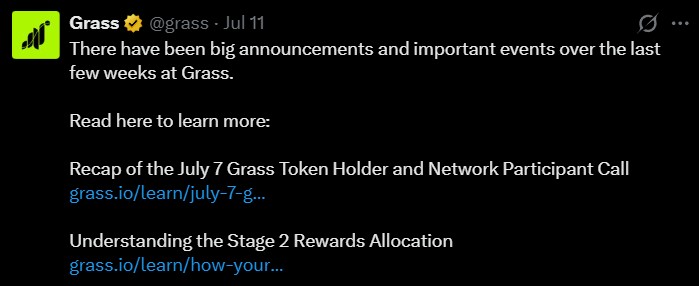
Source: Official X
Why the Grass Holder Call Sparked Debate
The July 7 Grass holder call was meant to build excitement ahead of the claim window. Instead, it triggered visible frustration. Several long-term node operators discovered their individual USDC allocations were only a few dollars, despite years of consistent uptime.
The math explains why. Rewards are split into two point systems — Network Points and Uptime Points — and Network Points, tied to actual bandwidth demand, carry a far higher payout rate. During Stage 2, just 150,000 users captured roughly 90% of total network traffic, meaning the bulk of the $3 million pool is concentrated among a small group of high-throughput contributors rather than spread evenly.
For everyday users, this news has been a reality check: casual participation earned casual rewards, while dedicated, high-uptime residential nodes on preferred devices captured the lion's share.
Key Details Traders Should Know
The Grass airdrop season 2 claim date is set for July 22, 2026, at 1:00 PM EST, and the window stays open for six months. Claims must go through a new non-custodial in-app wallet, secured by passkey or email OTP, with built-in MoonPay and Jupiter integrations for off-ramping. A small Turnkey wallet fee of $0.15 per transaction applies only if users choose the in-app wallet, alongside standard Solana network fees.
On price action, the project is trading near $0.3566, down about 10.8% over the past 24 hours, with a market cap close to $86.99 million and 24-hour volume around $19.2 million. Anyone checking the grass coin price today will notice the pullback lines up with airdrop-related selling pressure rather than a broader market move.
Beyond Season 2, Grass tokenomics show early investors hold 25.2% of total supply, with that VC vesting schedule set to fully unlock by late October 2026 — a milestone that removes a long-standing overhang once it passes.
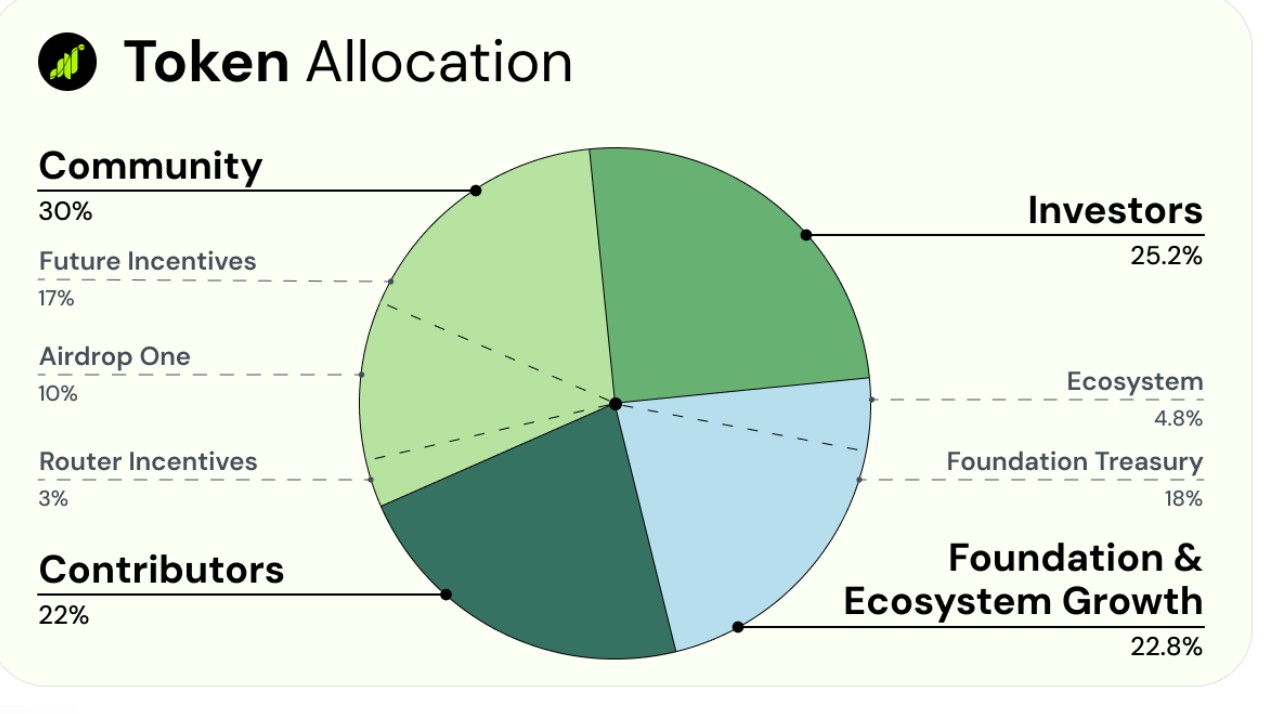
Source: Website
What to Watch Next
The Grass airdrop season 2 end date, or claim deadline, falls on January 22, 2027; unclaimed rewards after that point are retained rather than redistributed. That gives eligible users a firm six-month runway to act.
Further out, roughly 170 million tokens — about 17% of total supply — are expected to enter circulation later in 2026 under a separate Season 2 token distribution, still pending official eligibility criteria. This event, alongside any future grass listing date news tied to expanded exchange support, is likely to matter far more for price than the current USDC round.
Also worth tracking: a newly passed governance vote now lets stakers capture a share of network USDC revenue, reported at an annualized $33 million from bandwidth and AI training data sales — a mechanism that ties token value more directly to real usage going forward.
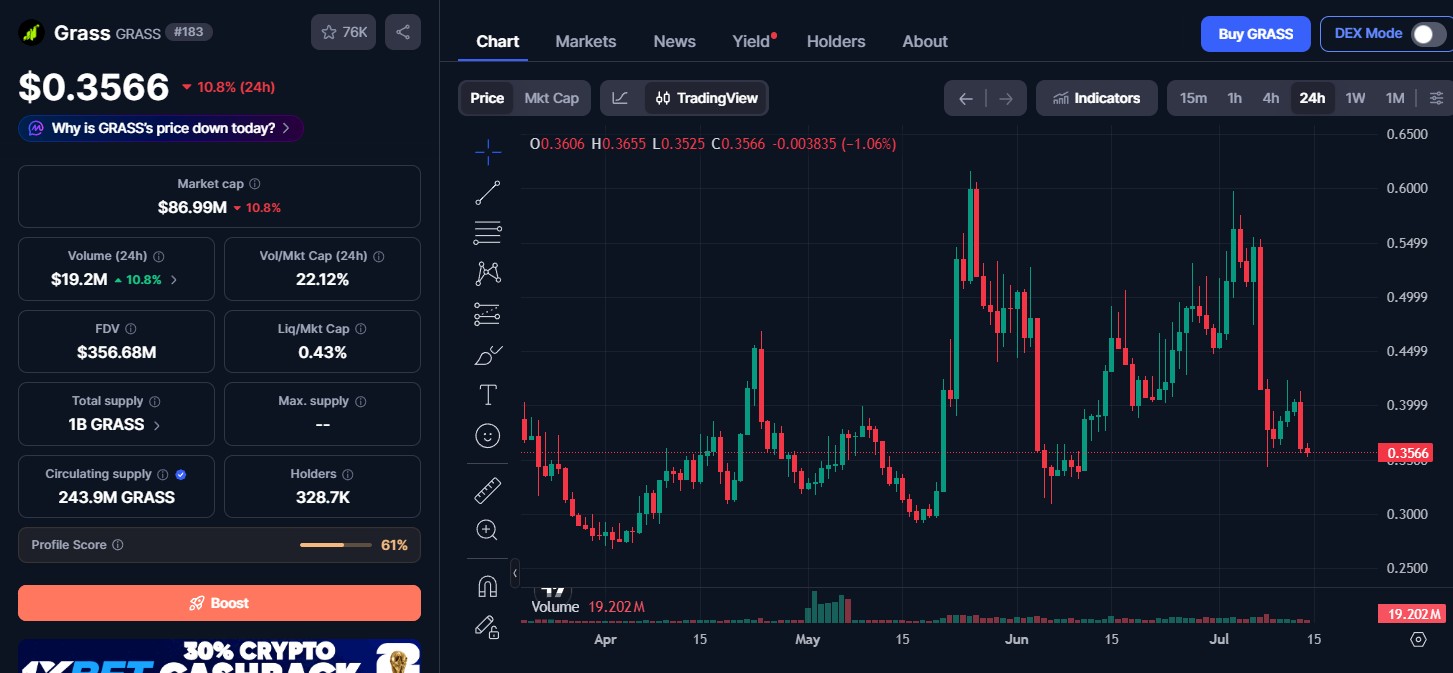
Source: CoinMarketCap Data
Conclusion
The airdrop marks a shift toward revenue-backed, regulation-conscious rewards rather than pure token emissions, but the uneven payout structure has left a portion of its community underwhelmed. With VC unlocks ending in October and a larger token distribution still ahead, the next few months will decide whether Grass can convert infrastructure growth into renewed trust — and demand.
Disclaimer: This article is for informational purposes only and does not constitute financial, investment, or trading advice. Cryptocurrency markets are highly volatile and involve significant risk. Readers should conduct their own research and consult a licensed financial advisor before making any investment decisions. CoinGabbar is not responsible for any losses incurred based on the content of this article.