Grayscale has moved to bring Zcash into a regulated wrapper with a Zcash ETF, a step that lands at an awkward moment given headline claims of a critical privacy flaw in the same asset whose e
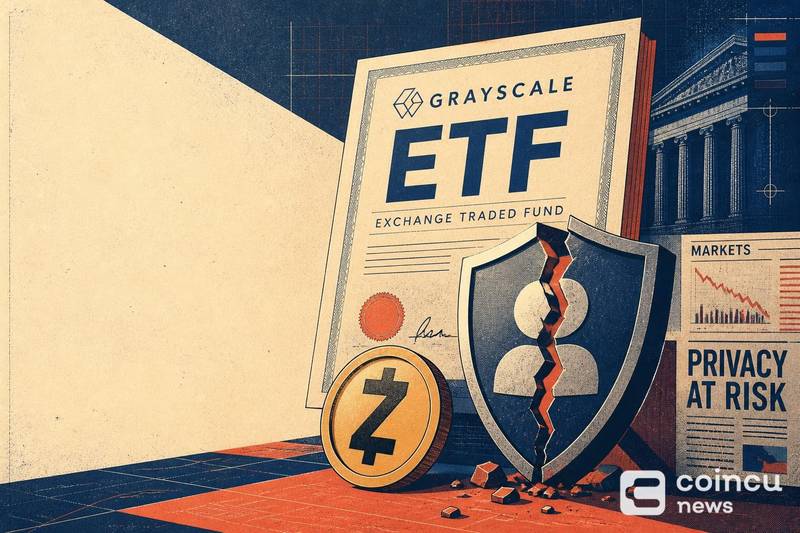
Grayscale has moved to bring Zcash into a regulated wrapper with a Zcash ETF, a step that lands at an awkward moment given headline claims of a critical privacy flaw in the same asset whose entire value proposition is confidential transactions. This article works from that headline framing, and separates what is established from what remains unverified.
What the Grayscale Zcash ETF Claim Actually Says
The core claim is narrow: Grayscale has launched a Zcash ETF, packaging exposure to ZEC into an exchange-listed product for investors who prefer regulated rails over direct token custody. For related coverage, see Grayscale to Launch First Spot Chainlink (LINK) ETF This Week.
Grayscale's interest in a Zcash product is not new, a trajectory documented as the firm weighed a U.S. spot ETF for the privacy coin and as ZEC rallied sharply on that ETF push. The launch itself is the news hook here; the timing is what makes it contentious.
What is not independently confirmed in the available research is the transaction-level detail: no verified filing, exchange listing document, or market data was resolved during reporting, so specifics on ticker, structure, and inflows remain conditional pending primary disclosure.
Why a Privacy Flaw Cuts Deeper for Zcash Than Most Assets
Privacy is not a feature of Zcash; it is the thesis. Shielded transactions using zero-knowledge proofs are what differentiate ZEC from transparent chains, so a reported weakness in that layer strikes directly at the asset's reason to exist.
A privacy flaw is distinct from a total network failure. Blocks can keep producing and balances can stay intact even if confidentiality guarantees are weakened, which means the damage is reputational and trust-based rather than a chain halt.
The reported critical privacy flaw remains unverified in the research available for this piece. Presented as an unconfirmed claim, it would matter most through user trust: if shielding cannot be relied upon, the premium holders assign to Zcash over transparent alternatives erodes.
How the Launch Reshapes the Near-Term Narrative
An ETF launch signals that an issuer sees investable, institutional-grade demand for the underlying asset, which is a credibility marker regardless of price action.
Launching alongside a reported privacy flaw produces a conflicted story: institutional optics point up while the core technical narrative faces questions, and that tension can drive short-term volatility and speculation more than the product itself. This is the same "next Bitcoin" framing that accompanied earlier ETF-driven moves, including when a Zcash ETF listing sent ZEC to multi-year highs.
Retail and institutional readers weigh these differently: institutions read the wrapper as legitimacy, while retail attention often tracks the controversy, so timing can overshadow the launch on a headline basis.
Key Questions Investors Should Ask Next
On risk reassessment: does the reported flaw, if confirmed, change the assumed confidentiality guarantee, and how does that flow into a Zcash exposure held through an ETF rather than direct custody?
On project response: has the issue been acknowledged, patched, or disputed by maintainers, because remediation speed is the clearest signal of whether trust damage is temporary or structural.
On adoption: if privacy concerns persist unresolved, credibility and demand can weaken even as a regulated wrapper exists, a dynamic worth watching against the broader field where analysts have debated whether Zcash keeps pace with rival tokens into 2026.
FAQ
What is the Grayscale Zcash ETF?
Per the headline this article examines, it is a Grayscale exchange-traded product offering exposure to Zcash (ZEC); product specifics remain conditional pending primary filing disclosure.
Why is the Zcash privacy flaw important?
Because Zcash's value rests on shielded, confidential transactions, a reported privacy weakness, still unverified here, targets the asset's core differentiator rather than its ability to keep producing blocks.
Could the flaw affect investor confidence in Zcash?
Potentially yes, primarily through trust rather than mechanics; the concrete trigger to watch is an official confirmation, dispute, or fix from Zcash maintainers.
Additional source references: source document 1, source document 2.
Disclaimer: This article is for informational purposes only and does not constitute financial or investment advice. Cryptocurrency and digital asset markets carry significant risk. Always do your own research before making decisions.
The post Grayscale Launches Zcash ETF After Critical Privacy Flaw was initially published on Coincu.