Hackers gained access to Robinhood CEO Vlad Tenev’s X account and used it to post a promotion for an unauthorized memecoin. Robinhood confirmed the compromise on July 23, 2026, stating that t
Hackers gained access to Robinhood CEO Vlad Tenev’s X account and used it to post a promotion for an unauthorized memecoin. Robinhood confirmed the compromise on July 23, 2026, stating that the fraudulent content referenced Robinhood Chain and included a token contract address. The company acted swiftly to delete the post and recover the account through coordination with X.
The post quickly drew significant trader interest, driving rapid activity for the token on Robinhood Chain. Blockchain records showed the memecoin experiencing sharp price movements and elevated trading volume in the short window before the official confirmation circulated. Once Robinhood clarified the situation publicly, the token’s momentum shifted as the market adjusted to the verified information.
- Robinhood CEO Vlad Tenev’s X account was compromised to promote a fake memecoin.
- The unauthorized post was removed after company intervention.
- On-chain data reflected immediate trading surges followed by price correction.
- Robinhood Chain’s active trading environment amplified initial visibility.
- The company stated it maintains no association with any such tokens.
What Happened
Unauthorized actors accessed Vlad Tenev’s personal X account and published content falsely presenting a memecoin as connected to Robinhood and its blockchain network. The message included promotional claims and a specific contract address for the token known as $VLAD or Vladhood.
Robinhood’s communications team publicly disclosed the breach and confirmed ongoing efforts with X to secure the account. The misleading post was taken down promptly. Robinhood emphasized that the company has issued no official tokens and that the promotion was entirely fraudulent.
Fake Token Activity and On-Chain Analysis
Blockchain data for the token at contract address 0x92D176ccBeEffeCd8089e841D09ea17b6C22D969 showed concentrated trading activity shortly after the compromised post appeared. Network metrics indicated the token reached a peak market capitalization of $10.7 million before declining substantially following the public confirmation of the hack.
- The token recorded over $22 million in trading volume with approximately 85,000 swaps in the main liquidity pool within the first few hours.
- Coordinated wallets appear to have realized an estimated $1.2 – $1.3 million in profits during the rapid price movement.
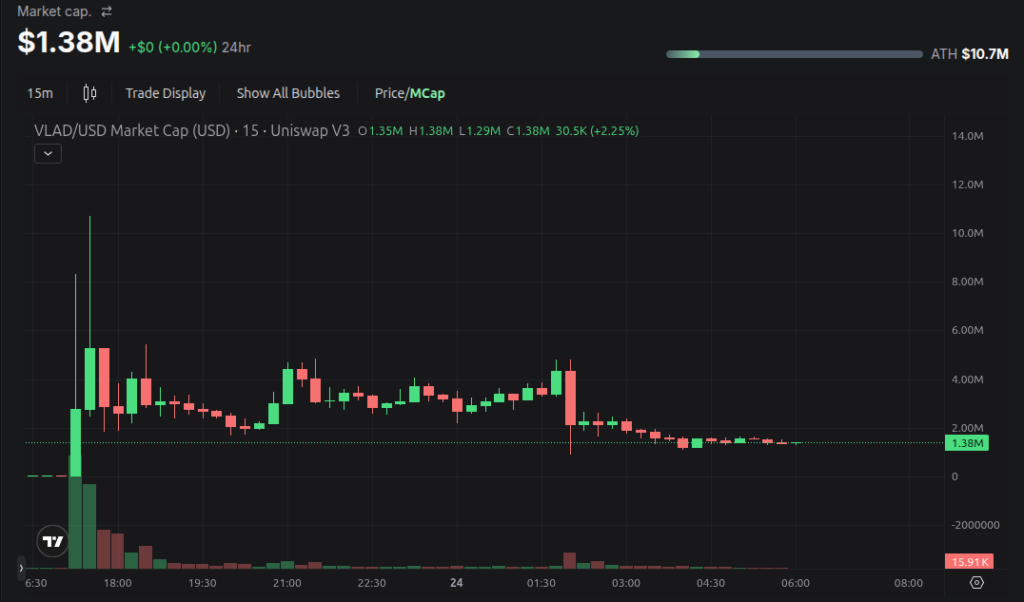 Vladhood ($VLAD) Market Cap Chart
Trading records reflected high buy and sell volumes with numerous participants engaging in the initial window. Holder counts and liquidity pools adjusted rapidly during the volatility. These movements represent typical on-chain reactions to high-visibility social triggers rather than sustained fundamentals, with activity tapering after the official denial. This pattern mirrors the sharp pump and crash seen in the recent Roaring Kitty X account compromise that affected a Solana-based memecoin.
Robinhood Chain Context
Robinhood Chain provided a highly liquid trading venue with notable DEX volume and stablecoin supply that enabled quick token launches and speculation. According to DeFiLlama, as of July 24, 2026, at the time of the incident, the chain had a Total Value Locked (TVL) exceeding $300 million, stablecoin market cap around $461 million, and strong daily DEX volume often surpassing $600 million. These conditions allowed a branded-sounding token to attract rapid attention through perceived affiliation with Robinhood.
The chain’s existing infrastructure and user base created an environment where a single prominent mention could generate immediate on-chain flows, even for unverified projects. Similar social engineering tactics were used in the SpaceX and Starlink account incidents involving the Scatman token.
Why This Incident Matters
Executive social media accounts have become frequent targets for attackers seeking to exploit brand trust for quick financial gains. In this case, the compromise bypassed technical protocol vulnerabilities in favor of direct social engineering on a widely followed platform.
Such events demonstrate how misinformation can influence decentralized trading within minutes. They reinforce the need for market participants to cross-check announcements against primary official channels, especially in fast-moving memecoin segments. This trend was also evident in the Airbnb CEO Brian Chesky X account hack involving fake crypto promotions.
The Robinhood CEO account compromise illustrates the speed with which social media can intersect with on-chain markets to drive real economic activity. Even brief exposure to a high-profile handle proved sufficient to mobilize traders on Robinhood Chain before corrective information spread. As crypto platforms and social networks continue to overlap, rapid detection and transparent communication remain essential tools for maintaining market integrity.

 Heads up: Our CEO Vlad Tenev’s X account was compromised and posted a fake promotion for a meme coin.