Key Highlights Halliburton reported Q2 adjusted earnings per share of 55 cents, surpassing Wall Street’s forecast of 54 cents Total revenue climbed approximately 4% to $5.71 billion, exceedin
Key Highlights
- Halliburton reported Q2 adjusted earnings per share of 55 cents, surpassing Wall Street’s forecast of 54 cents
- Total revenue climbed approximately 4% to $5.71 billion, exceeding analyst expectations of $5.49 billion
- Middle East and Asia segment revenues plummeted 10% from the prior year to $1.3 billion amid U.S.-Iran conflict
- HAL shares declined 5.7% to $34 during premarket hours on Tuesday
- The stock has gained 24% year-to-date but remains 18% below its May peak
Despite delivering quarterly results that exceeded Wall Street projections, Halliburton shares took a significant hit in early trading. The stock tumbled 5.7% to $34 during Tuesday’s premarket session.
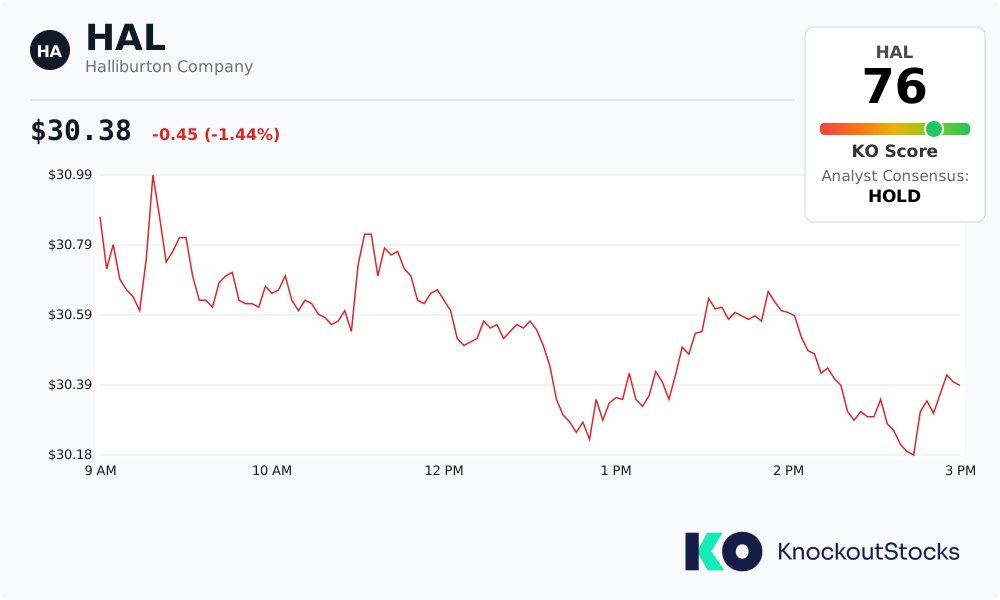 Halliburton Company, HAL
The oilfield services giant reported adjusted earnings of 55 cents per share for the second quarter, edging past the Street’s consensus forecast of 54 cents. Total revenue reached $5.71 billion, representing a roughly 4% increase from the year-ago period and comfortably beating the FactSet consensus estimate of $5.49 billion.
On a GAAP basis, the company’s net income improved to $534 million, or 64 cents per share, versus $472 million, or 55 cents per share, during the comparable quarter last year.
Revenue gains were driven by both of Halliburton’s primary business divisions. The completion-and-production segment and drilling-and-evaluation unit each delivered sequential growth during the quarter.
Chief Executive Jeff Miller highlighted an improving trajectory in North America throughout Q2 and emphasized the company’s robust backlog of international growth opportunities.
However, one geographic region stood out as a significant drag. Revenue from the Middle East and Asia segment contracted 10% year-over-year, falling to $1.3 billion.
This weakness stemmed from reduced drilling operations in Kuwait, Iraq, and Qatar—markets heavily impacted by the escalating tensions between the United States and Iran.
Gulf Region Conflict Creates Operational Headwinds
The ongoing U.S.-Iran military conflict has generated substantial challenges for Halliburton’s operations throughout one of its most critical international territories. Drilling activity and demand for oilfield services across major Gulf nations took a pronounced hit during the period.
Crude oil price fluctuations compounded the difficulties throughout the quarter. West Texas Intermediate prices tumbled from approximately $100 per barrel down to around $70 as oil shipments through the Strait of Hormuz normalized.
As of Tuesday morning, WTI had rebounded to trade above $82 per barrel amid persistent uncertainty surrounding the U.S.-Iran standoff.
Shares Retreat from Spring Peak
HAL closed Monday’s regular session down 0.3% before Tuesday’s premarket decline accelerated losses. At the $34 level, shares are now nearing their 200-day moving average, currently positioned around $33.30.
While Tuesday’s selloff stings, HAL has still delivered a 24% gain year-to-date. The stock has retraced 18% from its recent closing peak reached in May.
The negative premarket response indicates investors are prioritizing the Middle East revenue shortfall over the company’s better-than-expected earnings performance.
Trading at $34, HAL shares are hovering just above critical technical support represented by the 200-day moving average at $33.30.
The post Halliburton (HAL) Stock Tumbles 6% Despite Earnings Beat as Middle East Conflict Takes Toll appeared first on Blockonomi.