DDC Enterprise, the Asian packaged-food company that turned itself into a Bitcoin treasury play, has not traded in days, and the value of its Bitcoin has kept falling the whole time. The New
DDC Enterprise, the Asian packaged-food company that turned itself into a Bitcoin treasury play, has not traded in days, and the value of its Bitcoin has kept falling the whole time.
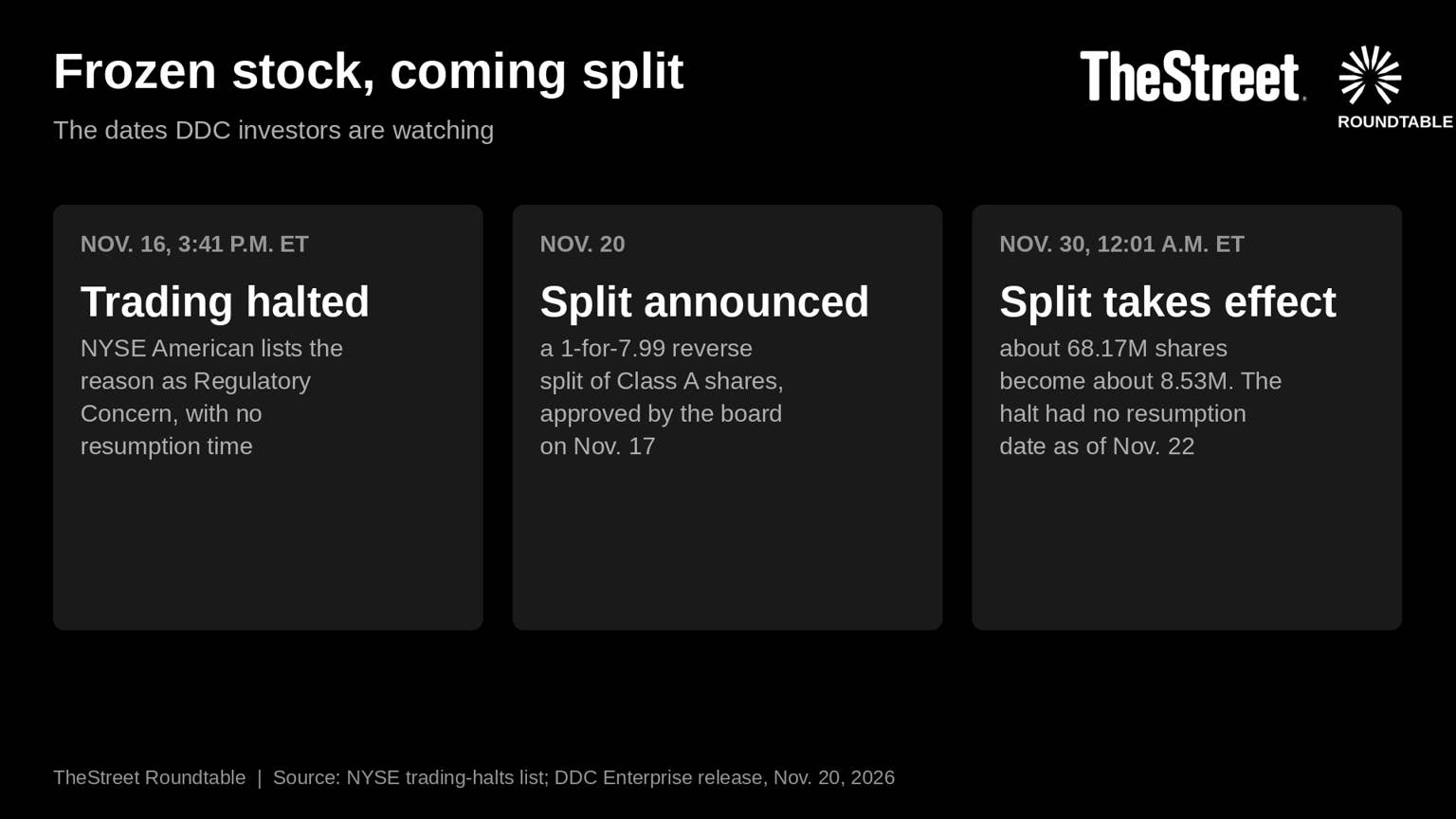
The New York-based company's stock was halted by NYSE American at 3:41 p.m. ET on Nov. 16. The exchange's halts list cites "Regulatory Concern" as the reason and shows no resumption time as of Nov. 22.
While the stock sits frozen, the company's 2,899 Bitcoin are worth about $51 million less than DDC paid for them, according to the company's own treasury tracker.
That is a paper loss, not cash out the door. DDC has not announced selling any of its coins, and the number moves with Bitcoin's price by the minute.
What is DayDayCook?
Norma Chu founded the company in Hong Kong in 2012 as DayDayCook, a recipe and food-content business that grew into selling packaged Asian food. It now trades as DDC Enterprise on NYSE American, with Chu as chairwoman and CEO, and calls itself "a global Asian food platform and digital asset treasury company."
DDC built its name on brands a U.S. shopper might recognize from grocery aisles. It acquired Nona Lim in 2023 and Omsom in June 2024, and Yai's Thai is also part of the group.
When the Omsom deal was announced in 2024, the brand said it had 100,000 customers and placement in more than 2,000 stores.
In May 2025, the company adopted Bitcoin as its primary treasury reserve asset, funding purchases mainly through share offerings, convertible notes and preferred share issuances, according to its prospectus.
A Bitcoin treasury company uses its corporate balance sheet to accumulate cryptocurrency. Buying its stock means buying a company with expenses, financing and management decisions, not simply buying Bitcoin.
The Bitcoin is worth less than DDC paid
The tracker puts the holdings at 2,899 Bitcoin with a total cost of about $226.7 million, an average of roughly $78,200 per coin. With Bitcoin at about $60,700 on Nov. 22, the stash was worth about $175.9 million.
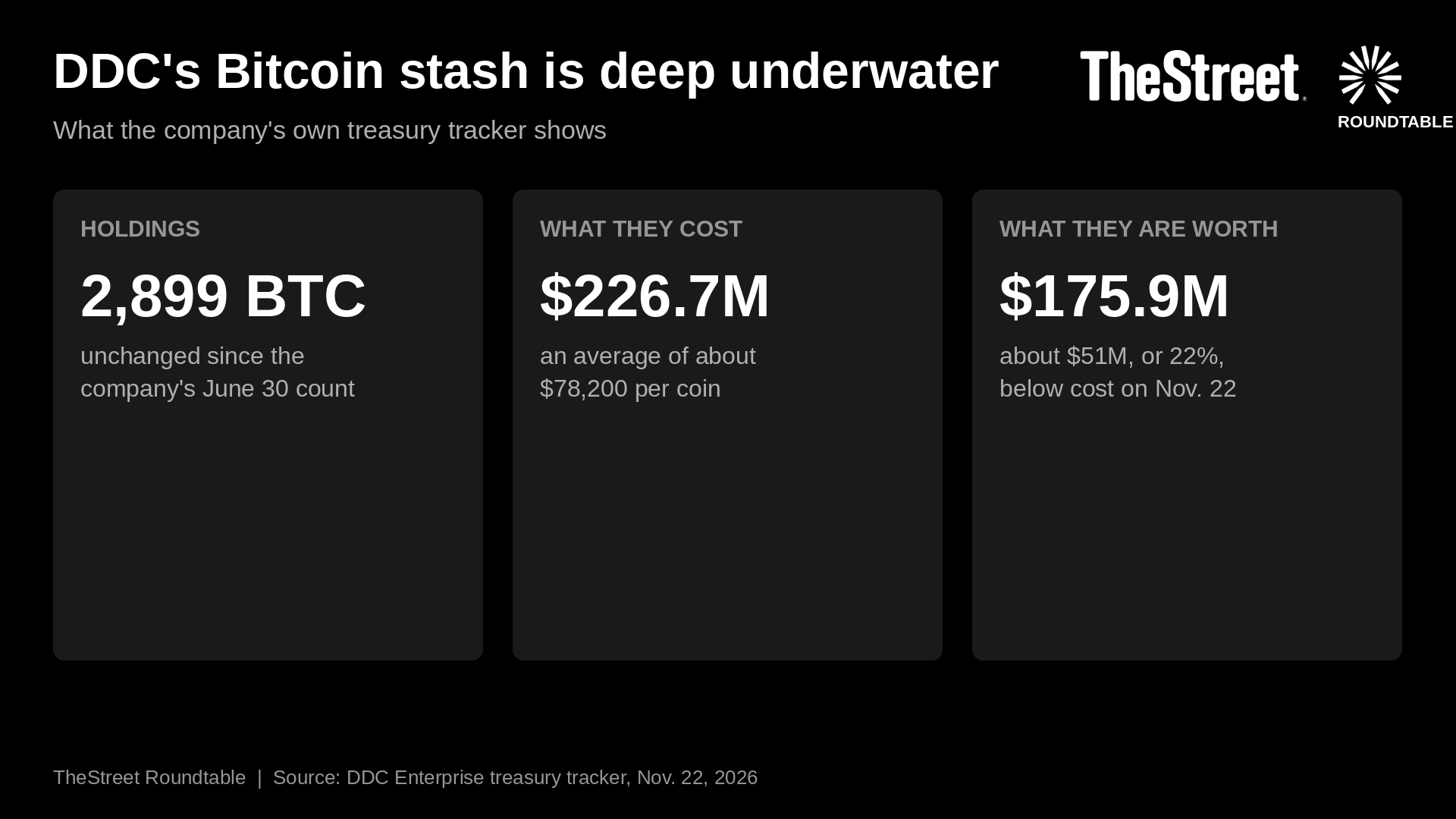
That leaves DDC roughly $51 million, or about 22%, below what it paid. The figure is an unrealized loss, which means it exists on paper for as long as the company holds the coins.
It would become a realized loss only if DDC sold at these prices.
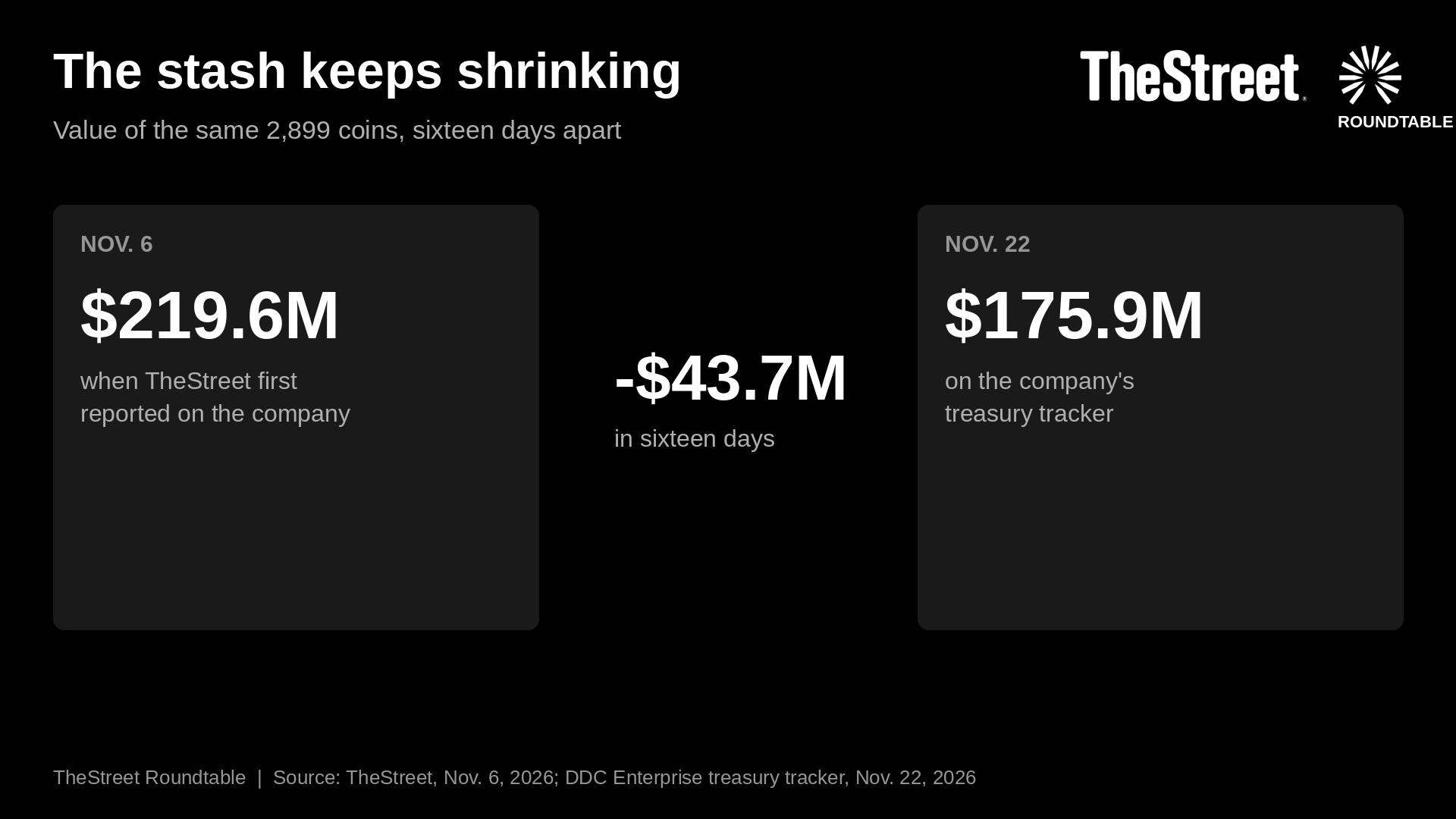
The gap has widened fast. When TheStreet reported on the company's preferred-share offer on Nov. 6, the same 2,899 coins were worth $219.6 million and the stock changed hands at 13 cents. Sixteen days later, the stash is worth about $175.9 million.
The company's own filings show how fixed the holding has been. Its November prospectus said DDC held approximately 2,899 Bitcoin as of June 30, acquired at an average price of approximately $78,204 per coin, a small difference from the tracker's math that comes down to methodology. "We view our bitcoin holdings as long-term holdings and expect to continue to accumulate bitcoin," the filing said.
The stock has been frozen for six days
A halt with the reason "Regulatory Concern" comes from the exchange rather than from company news, and only NYSE American can lift it. Its list shows no resume date or time for DDC as of Nov. 22.
The company itself has acknowledged the risk. In the forward-looking section of its Nov. 20 release, DDC listed the possibilities that NYSE American may delist its Class A shares and that trading may be suspended.
Why crypto treasuries survived the drawdown: BNB Standard CEO Alex Odagiu (3:30)
The reverse split lands while trading is frozen
On Nov. 20, DDC announced a 1-for-7.99 reverse split of its Class A shares, effective at 12:01 a.m. ET on Nov. 30. Every 7.99 shares will automatically combine into one, cutting the count from about 68.17 million shares to about 8.53 million.
The stated goal is to lift the per-share trading price and support continued compliance with NYSE American listing standards.
The board set the ratio on Nov. 17, the day after the halt began, under authority shareholders granted at a June meeting.
A reverse split creates no economic value.
An investor owns the same percentage of the same company before and after, only with fewer and higher-priced shares. It also does not lift a trading halt.
DDC says it expects split-adjusted trading at the open on Nov. 30, but its own release treats that as a forward-looking statement rather than a promise, and the exchange has not said when the stock resumes.
The share count explains how the company ended up here.
Tracker data shows DDC's Class A shares more than doubled during 2026, from about 29.8 million to 68.17 million, as the company sold stock to fund Bitcoin purchases. More than doubling the share count while the Bitcoin price fell is how a stock ends up at pennies.
The food business behind the Bitcoin
The company still sells food, and it wants investors to know that business improved. The Nov. 20 release says its portfolio of Asian food brands generated $39.2 million in fiscal 2025 revenue and its first positive adjusted EBITDA, a measure of operating profit that strips out certain noncash and one-time items.
It also says DDC holds "one of the largest corporate Bitcoin treasuries among NYSE-listed consumer companies." That combination is what makes the story unusual. A grocery brand's fortunes now rise and fall with the price of Bitcoin.
Where this leaves investors
DDC is now three stories at once. It is a food company with $39.2 million in annual sales, a Bitcoin treasury worth about $176 million at current prices and a halted penny stock trying to keep its exchange listing through a reverse split.
The next dated milestone is Nov. 30, when the split takes effect. What happens to the halt is not the company's call to make.
For anyone weighing the stock, the Bitcoin is only part of the picture. Shares of a treasury company can trade above or below the value of its coins, and shareholders carry the company's costs, dilution and listing risks on top of whatever the Bitcoin is worth.
If you follow our market coverage, don't miss the Roundtable 100. Updated every Friday, it's a power ranking of the 100 most investable tech stocks, including digital assets. Check out the latest RTB 100 rankings at roundtable100.com.
This article is for informational purposes only and does not constitute financial advice. Cryptocurrency investments are highly volatile and risky. Always conduct your own research before making any investment decisions.