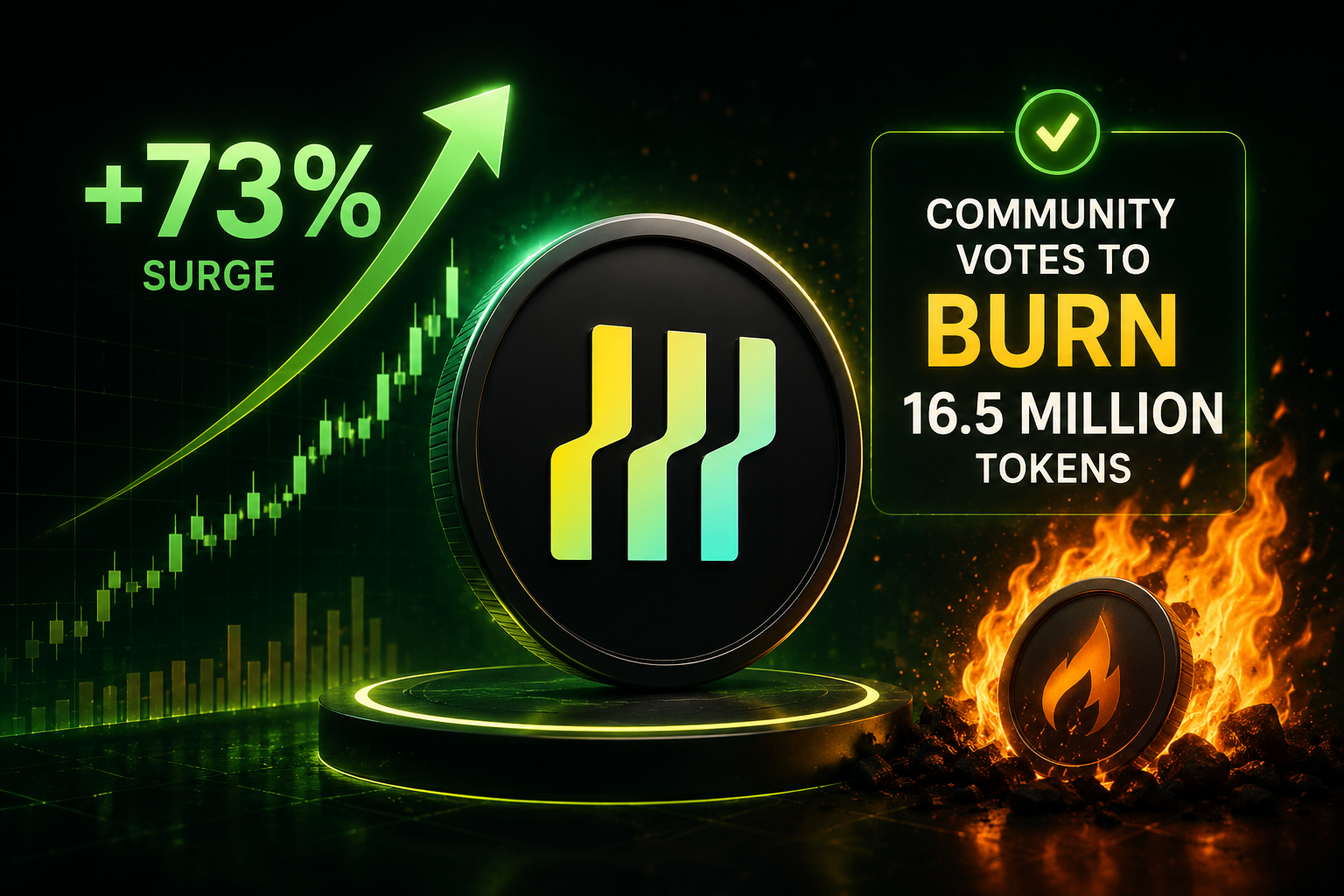
Heima has had a sharp few days. HEI is up 73% in the past 24 hours and 39.8% over the past seven days, significantly outperforming the broader crypto market, which has been down roughly 15.9%
Heima has had a sharp few days. HEI is up 73% in the past 24 hours and 39.8% over the past seven days, significantly outperforming the broader crypto market, which has been down roughly 15.9% over the same period. The move coincides directly with one of the most significant governance decisions in the project's history — a community vote to permanently burn 16.5 million HEI tokens from the ecosystem allocation.
For a token with a total supply capped at 100 million, that's not a routine supply management exercise. It's a meaningful structural shift.
Why the Burn Proposal Matters
The 16.5 million tokens targeted for destruction fall into two groups: 12.05 million tokens still locked under a vesting schedule and 4.45 million already unlocked but never touched or sold — both currently sitting in multi-signature wallets on the Heima Network.
The origin of these tokens explains why the team feels comfortable burning them. They were originally reserved for Polkadot parachain auctions. The Polkadot ecosystem has since shifted from auction-based slot allocation to Coretime sales, meaning Heima can now pay for its network slot directly from the team's treasury using DOT. The reserved tokens no longer serve their original purpose — and rather than hold them as a potential source of future sell pressure, the team proposed burning them outright.
The Heima Foundation has publicly voted in favor of the proposal, but the final outcome rests with the broader community of token holders. The vote is being conducted entirely on-chain, meaning all transactions and tallies are publicly verifiable. If approved, the burn would reduce the ecosystem allocation by roughly 18.7% of current circulating supply — a deflationary signal that appears to be driving the market's positive reaction.
What Heima Is Actually Building
The project evolved from Litentry, a decentralized identity protocol that rebranded and pivoted to focus on cross-chain abstraction and multi-chain interoperability. Heima's core value proposition is letting users manage assets and execute transactions across supported chains from a single, unified account — without manually bridging or holding native gas tokens on each chain.
The HEI token serves three functional roles within this system. It enables decentralized governance through a Polkadot-inspired model where holders submit proposals, a council deliberates, and final referenda are decided by community vote. It facilitates gas abstraction — a network of intent fillers sponsors transaction fees so end-users never need to hold HEI for gas, dramatically lowering the onboarding barrier. And it anchors cross-chain liquidity pools that act as mediation assets to reduce slippage and costs when moving assets between heterogeneous chains.
The underlying security architecture uses Trusted Execution Environments and Secure Multi-Party Computation through what Heima calls Omni Accounts — meaning user assets are secured without relying on any single server or custodian. That privacy-preserving infrastructure is a meaningful differentiator in a cross-chain space where bridge exploits remain a recurring threat.
On the product side, the team is also building Wildmeta — a flagship trading dApp that is expected to launch a new version featuring prediction markets — alongside AgentKeys, an identity product currently in active public development.
A Headwind Worth Noting
The rally hasn't come without complications. Binance delisted HEI margin trading pairs on May 15, 2026, removing HEI/USDC cross and isolated margin trading — a development that reduces leveraged trading access and potential liquidity depth. The team addressed concerns publicly, reaffirming its development focus without offering a specific price catalyst. The burn proposal appears to have done more to restore confidence than any statement could.
HEI is currently trading around $0.158 with 24-hour volume of roughly $100 million against a market cap of just $13.8 million — a volume-to-market-cap ratio that signals speculative intensity rather than steady accumulation. Whether this momentum extends beyond the burn vote will depend on what Wildmeta's prediction market launch and the AgentKeys rollout deliver in the coming weeks.