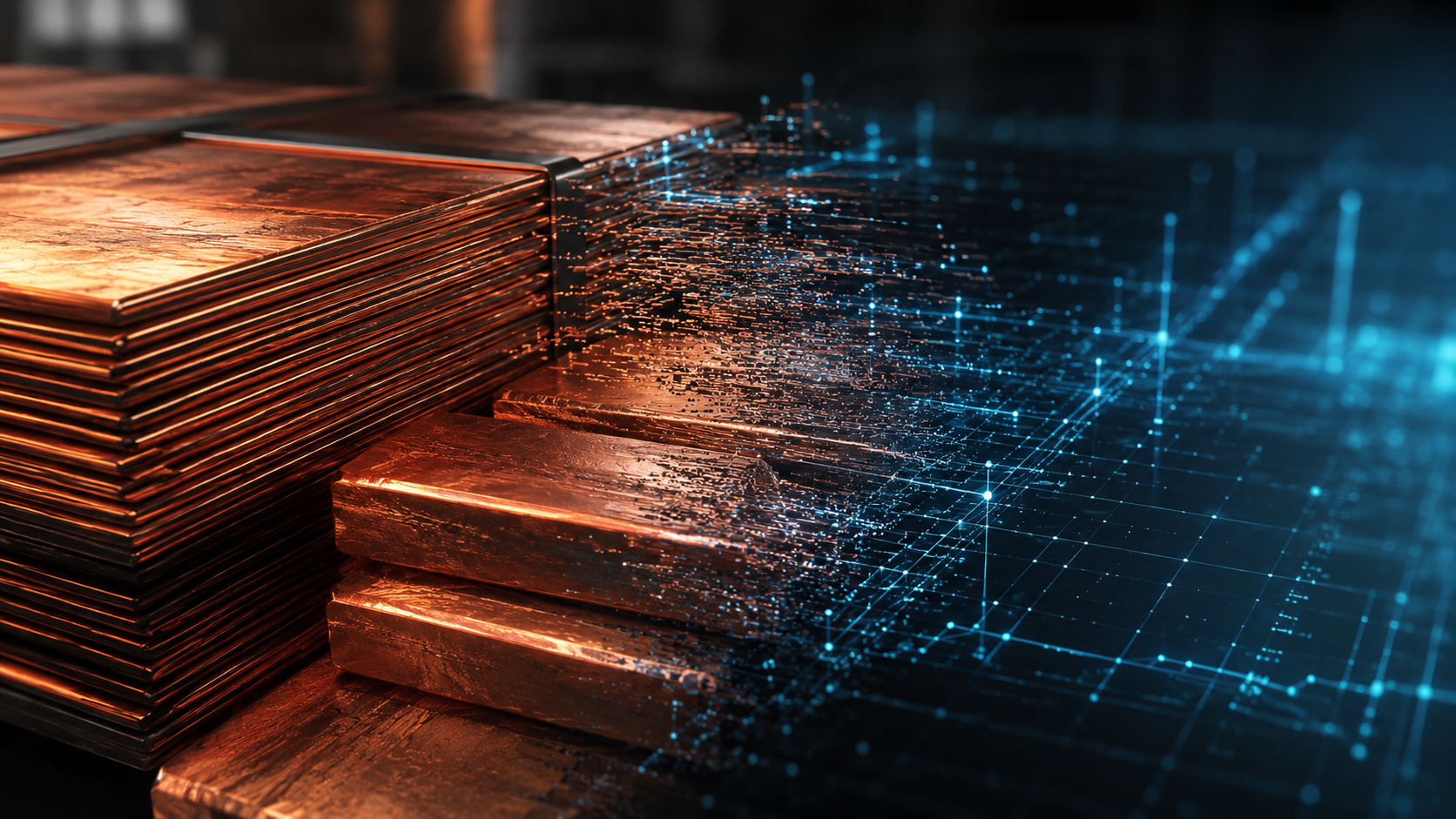
Tokenization used to mean stablecoins, treasuries, and private credit. Physical commodities were always "next." In 2026, copper is making that transition concrete. The numbers behind the shif
Tokenization used to mean stablecoins, treasuries, and private credit. Physical commodities were always "next." In 2026, copper is making that transition concrete.
The numbers behind the shift are hard to ignore, too: the tokenized RWA sector has crossed $30 billion in total distributed value, with nearly 750,000 holders globally.
Why Copper Is in the Spotlight
Copper's supply-demand dynamics have been well-documented. Years of underinvestment, permitting backlogs, and mine development timelines that stretch well beyond a decade have compressed the supply side. And exactly at this moment, demand is accelerating from multiple directions at once: AI data center buildouts, grid expansion, EV manufacturing, and renewable energy infrastructure.
The structural characteristics make copper an unusually strong candidate for tokenization. A commodity with inelastic demand, constrained supply, and critical industrial applications has clear institutional appeal. The challenge is access and verification.
The Ecosystem Taking Shape
Several distinct infrastructure layers are converging around copper tokenization.
The April 2026 partnership between Bridgetower Capital and Chainlink is one of the most significant signals. Rather than tokenizing warehouse receipts or inventory, the initiative targets an $11 billion Arizona copper mining project. It’s digitizing the underlying asset itself, connecting production data, reserves, and operational metrics directly to blockchain infrastructure.
Meanwhile, platforms like Ondo Finance are building the liquidity rails: tokenized US Treasuries and yield-bearing instruments that can function as programmable collateral for commodity-linked structures, providing capital efficiency across the ecosystem.
At the commodity-specific layer, platforms like ALCUM are approaching the problem differently. The model ties token value to the operational performance of an actual industrial copper processing cycle: procurement of secondary copper materials, processing into refined metal, and sale to verified buyers. The NAV reflects what happened in the real world, not just what copper is trading at on the LME.
The Verification Problem Is the Real Frontier
What unites these efforts is a shared focus on one core challenge: closing the gap between what a token claims and what is physically verifiable.
Oracle infrastructure, independent physical audits, and on-chain settlement records are the product. Institutional allocators evaluating tokenized commodity exposure are asking whether the verification stack is sufficient to meet their due diligence requirements.
That question is being answered, piece by piece, across the copper tokenization ecosystem in 2026.
Physical custody introduces operational complexity that purely financial tokenization doesn't face. Regulatory fragmentation across jurisdictions (particularly between the EU's MiCA framework and the still-evolving US structure) creates compliance overhead for any platform operating across markets. And the reliability of oracle systems remains a critical dependency wherever real-world data feeds into on-chain pricing.
What makes copper a particularly important test case is the combination of factors that distinguish it from earlier tokenization subjects. It has inelastic industrial demand, a supply side that cannot respond quickly to price signals, and a processing chain that generates measurable margin at each stage. These characteristics enable the creation of tokenized structures that derive value from operational outcomes, which is precisely what institutional due diligence frameworks require.
If the copper tokenization ecosystem can meet that standard at scale, it will establish a template that applies well beyond copper.