TLDR On August 31, 2026, Honda and Nissan formalized a partnership to create standardized electronic control units, operating systems, and middleware for software-defined vehicles. Both manuf
TLDR
- On August 31, 2026, Honda and Nissan formalized a partnership to create standardized electronic control units, operating systems, and middleware for software-defined vehicles.
- Both manufacturers plan to implement this unified electrical and electronic architecture in their SDV models beginning in fiscal year 2029.
- Honda has indicated that this partnership will not significantly affect its financial performance for the fiscal year concluding March 31, 2027.
- During Q2, BlackRock expanded its Honda holdings by 35.2%, purchasing 691,165 additional shares valued at approximately $72 million.
- HMC shares began Monday trading at $31.91, reflecting a 1.69% increase, following Zacks’ August upgrade to “Strong Buy” status.
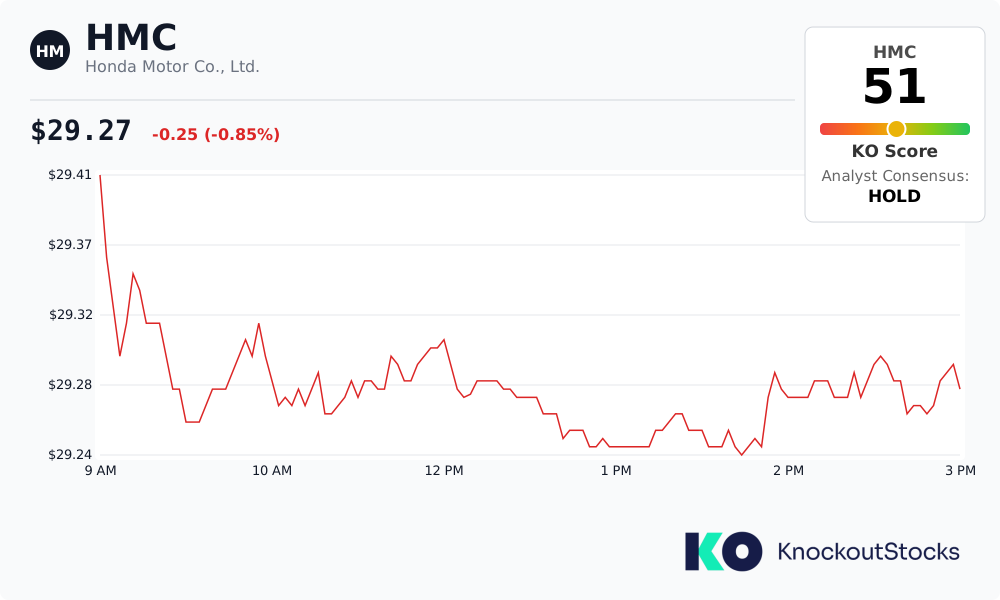
In a strategic move to enhance their competitive positioning, Honda Motor and Nissan Motor have formalized an agreement to collaboratively develop and unify the core technological components that will drive their future software-defined vehicles. The partnership, publicly announced on August 31, 2026, encompasses the development of central electronic control units, in-vehicle operating platforms, essential middleware components, and vehicle management software. On the announcement day, HMC stock climbed 1.69%, beginning the session at $31.91.
 Honda Motor Co., Ltd., HMC
Both Japanese automotive giants intend to integrate this unified technological framework into their software-defined vehicles commencing in fiscal year 2029. The primary objectives include reducing research and development expenditures, accelerating technological advancement, and strengthening their competitive advantage in the rapidly expanding market for advanced, electrified automobiles.
The alliance focuses on establishing unified specifications for high-performance and zone-based electronic control units that will form the foundation of next-generation vehicle electrical and electronic systems. Through this standardization of core technological layers, both manufacturers anticipate significant cost advantages through shared development resources.
Honda has stated explicitly that this agreement will not substantially influence its consolidated financial outcomes for the fiscal period ending March 31, 2027. This positions the initiative as a strategic investment in future competitiveness rather than an immediate revenue catalyst.
The collaborative effort also aligns with each company’s broader sustainability commitments, including achieving carbon neutrality and eliminating traffic-related fatalities, objectives both organizations have publicly embraced.
BlackRock Expands HMC Holdings
From an institutional investment perspective, BlackRock boosted its Honda position by 35.2% throughout the second quarter, acquiring 691,165 additional shares. The investment firm’s total holdings now stand at 2,655,980 shares with an approximate value of $72 million, constituting 0.17% of the company’s outstanding shares.
Multiple other institutional investors similarly expanded their HMC positions during this timeframe, notably WealthCollab LLC, which increased its stake by 66.2%, and Financial Management Professionals Inc., which grew its holdings by 38.2%.
HMC’s trading range over the past 52 weeks spans from $23.25 to $34.89. The equity’s 50-day moving average currently stands at $29.47, while the 200-day moving average is positioned at $27.46. The company maintains a market capitalization of $49.81 billion.
Divergent Analyst Perspectives
Wall Street opinion on HMC remains divided. Zacks Research elevated the stock to “Strong Buy” status on August 17, whereas Weiss Ratings downgraded it to “Sell (D)” in June. Wall Street Zen adjusted its recommendation from “Sell” to “Hold” during May.
According to MarketBeat data, the consensus analyst rating stands at “Hold,” accompanied by an average price target of $25.00, substantially below the stock’s current trading level.
Honda’s latest quarterly results, disclosed on July 1, revealed earnings of $2.14 per share on revenues totaling $37.27 billion. Nevertheless, the company recorded a negative return on equity of 1.30% alongside a negative net margin of 0.73%. Wall Street analysts project full-year earnings per share of $2.11 for the ongoing fiscal period.
The AI-powered analyst from TipRanks assigns HMC a Neutral rating, highlighting concerns regarding profitability measurements while acknowledging favorable technical patterns and strong momentum-based buy signals.
The post Honda (HMC) Stock Gains as Automaker Partners with Nissan on Software-Defined Vehicle Platform appeared first on Blockonomi.