Hong Kong is planning to conduct a trial of tokenized Exchange Fund Bills before the end of 2026, a move that would place blockchain-based settlement infrastructure directly within the territ
Hong Kong is planning to conduct a trial of tokenized Exchange Fund Bills before the end of 2026, a move that would place blockchain-based settlement infrastructure directly within the territory's sovereign debt issuance pipeline, according to the announcement. The scope of the trial, the participating institutions, and the settlement platform have not yet been specified in official disclosures.
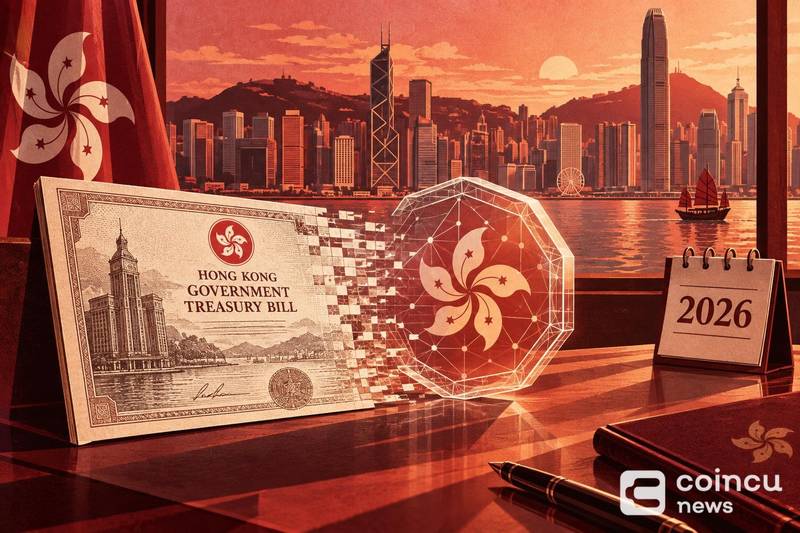
Hong Kong targets a tokenized Exchange Fund Bills trial by end-2026
The planned trial is a proposal, not a completed rollout. What has been stated is that the Hong Kong Monetary Authority intends to run a live test of tokenized Exchange Fund Bills within the 2026 calendar year. No platform vendor, issuance volume, or participant eligibility criteria have been confirmed as of the date of this report. For related coverage, see Hong Kong Advances Tokenization with Long-Term Revenue Products.
Exchange Fund Bills are short-term debt instruments issued by the HKMA on behalf of the Exchange Fund, the reserve portfolio that backs the Hong Kong dollar's linked exchange rate. They function as the territory's equivalent of Treasury bills, traded among licensed banks and institutional counterparties as liquid, high-grade money market instruments. Tokenizing them means representing ownership and transfer rights as digital tokens on a distributed ledger rather than through conventional central securities depository records. For related coverage, see Ironlight Markets Approved for Trading Tokenized Securities.
A tokenized bill is categorically distinct from a cryptocurrency. It carries the full credit of the issuing authority, denominated in Hong Kong dollars, with no speculative price component. The blockchain layer would be used to handle issuance, ownership records, and settlement mechanics, not to create a new asset class. Hong Kong has been advancing this area across multiple instruments; the territory has separately advanced tokenization work covering long-term revenue products, and has explored stablecoin settlement for tokenized funds as a parallel infrastructure layer.
What the trial is designed to test
A live trial of this type would typically evaluate issuance workflow on a distributed ledger, atomic delivery-versus-payment settlement, real-time ownership record updates, and interoperability with existing payment rails. These are the functional areas where tokenized sovereign bills differ operationally from conventionally issued instruments. However, which of these areas fall within the confirmed scope of the planned HKMA trial has not been publicly detailed, and readers should treat any granular operational description as conditional until official disclosures follow. For related coverage, see Czech Central Bank Launches $1M Blockchain Asset Trial.
The distinction matters for institutional participants assessing custodial, legal, and operational risk. A trial limited to issuance mechanics carries different implications than one that extends to secondary market settlement or cross-border transfer. Central bank digital infrastructure trials at comparable institutions, such as the Czech central bank's blockchain asset trial, have varied significantly in scope and participant structure.
Why institutional participants are watching this trial
Hong Kong's position as an international financial center gives a tokenized EFB trial weight beyond its immediate transaction volume. If the HKMA demonstrates that a short-term government bill can be issued, transferred, and redeemed on a distributed ledger with full regulatory compliance, it establishes a precedent for applying the same infrastructure to longer-duration instruments and private-sector bond issuance. The territory has already seen cross-institutional collaboration in this space, including tokenized cross-border transfer tests involving Ant Group, HSBC, and Swift.
The principal questions institutional market participants will watch are: which ledger technology the HKMA selects, whether the trial permits secondary market activity or remains a primary issuance-only test, how the regulatory treatment of tokenized bill ownership aligns with existing securities law, and whether the reporting framework captures enough data to inform a permanent rollout decision.
What to watch before the planned 2026 window closes
With the stated deadline set before the end of 2026, the remaining timeline leaves room for multiple rounds of official disclosure. Market participants should monitor HKMA publications for detail on trial size and eligible counterparties, the platform architecture and ledger type, settlement finality rules, and the reporting structure that will inform any post-trial assessment. Until those details are published, the scope of this initiative cannot be evaluated beyond the headline commitment.
Any formal invitation to tender or participant registration process would be the first concrete operational signal that the trial is moving from planning to execution. That milestone, rather than the announcement itself, is the appropriate trigger for institutional preparation.
FAQ: Hong Kong's tokenized Exchange Fund Bills trial
Will Hong Kong trial tokenized Exchange Fund Bills? Yes. The Hong Kong Monetary Authority has stated a plan to conduct a trial before the end of 2026. Operational details have not yet been disclosed.
When is the trial planned to take place? Before the end of 2026, per the announcement. No specific launch date within that window has been confirmed.
What are Exchange Fund Bills? Exchange Fund Bills are short-term debt instruments issued by the HKMA on behalf of the Exchange Fund, Hong Kong's reserve portfolio. They are institutional money market instruments backed by the Hong Kong government and used to manage liquidity in the banking system.
Are tokenized Exchange Fund Bills the same as cryptocurrency? No. A tokenized Exchange Fund Bill is a government-backed debt instrument with a fixed denomination in Hong Kong dollars. The blockchain layer handles settlement and ownership records; it does not create a speculative asset or alter the credit profile of the instrument.
Which trial details have not yet been specified? As of this report, the following remain unconfirmed: the distributed ledger platform, the issuance volume, eligible participant types, whether secondary market activity is included, settlement finality mechanics, and the post-trial evaluation framework.
Additional source references: source document 1, source document 2.
Disclaimer: This article is for informational purposes only and does not constitute financial or investment advice. Cryptocurrency and digital asset markets carry significant risk. Always do your own research before making decisions.
The post Hong Kong to Trial Tokenized Exchange Fund Bills in 2026 was initially published on Coincu.