The House Financial Services Committee has confirmed a field hearing on the Digital Asset Market CLARITY Act for July 17, giving the long-running U.S. crypto regulation effort its most visibl
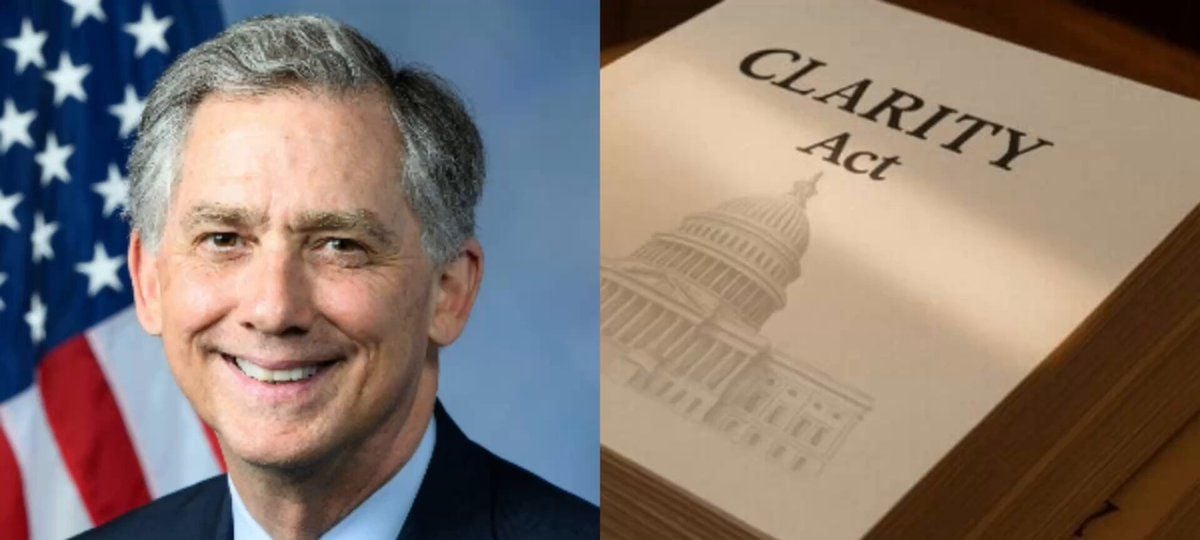
The House Financial Services Committee has confirmed a field hearing on the Digital Asset Market CLARITY Act for July 17, giving the long-running U.S. crypto regulation effort its most visible public stage yet as lawmakers race against the August congressional recess.
What the Hearing Covers
The session, titled "Building the Future of Finance: How the CLARITY Act Unlocks Innovation," will be held at Federal Hall in New York at 10:00 AM local time. Choosing New York is deliberate. As the country's financial capital, the city is home to the exchanges, banks, asset managers, and custodians that would operate directly under the framework the bill establishes.
The CLARITY Act would divide regulatory authority along clear lines. The Commodity Futures Trading Commission would gain exclusive authority over spot markets for digital commodities such as Bitcoin, while the Securities and Exchange Commission would retain jurisdiction over investment-contract tokens. The bill also sets registration requirements and operational standards for intermediaries including exchanges, brokers, and dealers. Stablecoins such as $USDC and $RLUSD would fall under a separate federal oversight category for payment stablecoins.
A Tight Legislative Window
The July 17 hearing arrives after the Senate Banking Committee advanced the bill 15-9 on May 14, with all 13 Republicans joined by two Democrats, though both conditioned their votes on further negotiations. The bill was placed on the Senate legislative calendar on June 1, making it eligible for a floor vote, but significant hurdles remain.
To pass the Senate, the bill must clear a 60-vote cloture threshold. Republicans hold roughly 53 seats, meaning at least seven Democratic votes are needed, a number that has not yet been secured. Outstanding disputes over ethics provisions, anti-money-laundering language, and Section 604 have complicated cross-party talks. Senator Cynthia Lummis, one of the bill's primary Senate backers, has warned that a failure to pass the legislation in 2026 could push the next viable window to 2030.
Galaxy Research currently estimates a 60 to 75 percent chance the bill becomes law in 2026, citing a possible presidential signature during the week of August 3, though passage odds have softened as the Senate calendar has tightened. More than 100 crypto firms have publicly backed the bill, and industry groups have urged the Senate to act before the recess.
For the broader market, the stakes are clear. Years of regulatory ambiguity have pushed development and institutional activity offshore. A statutory framework would replace enforcement-driven oversight with defined rules, giving exchanges, token issuers, and institutional allocators a predictable operating environment to plan against.
Sources:The Defiant: House Sets July CLARITY Act Field HearingU.S. House of Representatives Committee Repository: Building the Future of Finance Hearing NoticeCoinPedia: CLARITY Act Update, Congress Schedules Hearing for July 17