A pilot that put 10 cows in Brazil on-chain has become a talking point for how tokenization of real-world assets could help address a global financing shortfall estimated at $8 trillion, turn
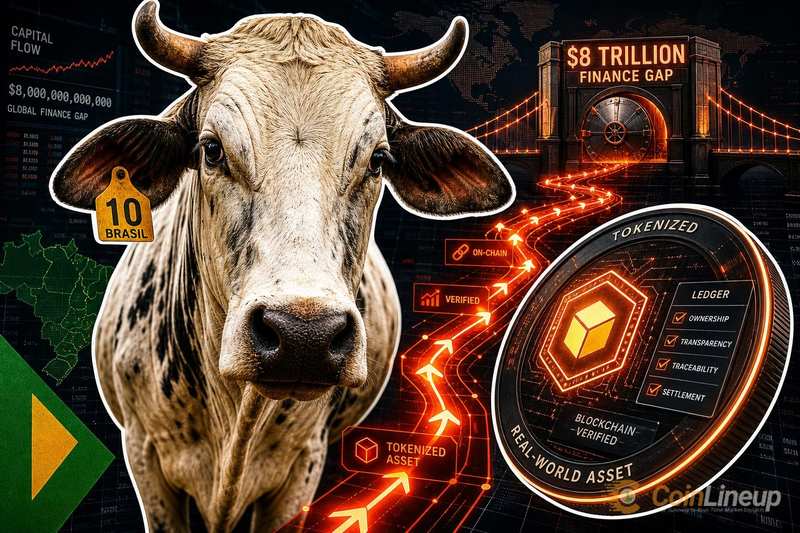
A pilot that put 10 cows in Brazil on-chain has become a talking point for how tokenization of real-world assets could help address a global financing shortfall estimated at $8 trillion, turning livestock into a concrete example of blockchain reaching beyond speculation.
The case centers on a small herd tokenized in Brazil, where cattle ownership was represented as digital tokens rather than paper records. In its first operation, tokenized cows moved roughly R$100,000 on the B3 exchange, according to CNN Brasil. For related coverage, see Strategy Says Bitcoin Could Fall 11.4% Annually for Nearly Six Years.
The appeal of using cattle is that they are a productive, trackable asset. Herd monitoring platforms such as Cowmed already collect individual animal data in Brazil, the kind of verifiable record that tokenized ownership models depend on to link a physical asset to a digital claim. For related coverage, see Bitcoin Mining Power Use Rose 38%, Cambridge Data Shows.
Why a Small Herd Points at a Large Financing Gap
The story's macro hook is the $8 trillion global finance gap referenced in the original headline, the estimated shortfall in capital reaching underserved borrowers and producers. The cows function as a proof-of-concept: if a live animal can be fractionally owned and traded, so can other hard-to-finance assets.
Tokenization's proposed advantage is access to capital. Fractional ownership lets many small investors hold a slice of an asset that would otherwise require buying an entire herd, while a market venue like B3 offers a path to liquidity that private livestock deals lack, as the first Brazilian operation illustrated.
Whether that model scales to anything near the headline figure remains unproven from the available evidence. The Brazil case demonstrates the mechanism at a small scale, not the size of the market it might eventually serve.
What It Signals for Real-World Asset Adoption
The example fits a broader crypto narrative around real-world assets, or RWA, where physical value is connected to blockchain-based financial infrastructure. It sits alongside other moves pushing crypto rails toward everyday finance, such as Samsung Wallet adding native stablecoin support for payments.
For emerging markets in particular, tokenized collateral could widen the investor base for agricultural producers who are often outside conventional banking reach. That framing positions crypto as utility infrastructure rather than a trading instrument, a distinction increasingly cited in policy circles, including through initiatives like the Bitcoin Policy Institute's freedom tech work.
The direction of travel is toward crypto networks handling more real financial activity, a shift also visible as regulators track how crypto-linked networks move across financial rails. Brazil's tokenized cattle are a modest but tangible entry in that ledger.
Disclaimer: This article is for informational purposes only and does not constitute financial or investment advice. Cryptocurrency and digital asset markets carry significant risk. Always do your own research before making decisions.
Read original article on coinlineup.com