The Internet of Things is moving into factories, vehicles, farms and city infrastructure, raising a stubborn question: how can billions of devices exchange trusted data without placing every
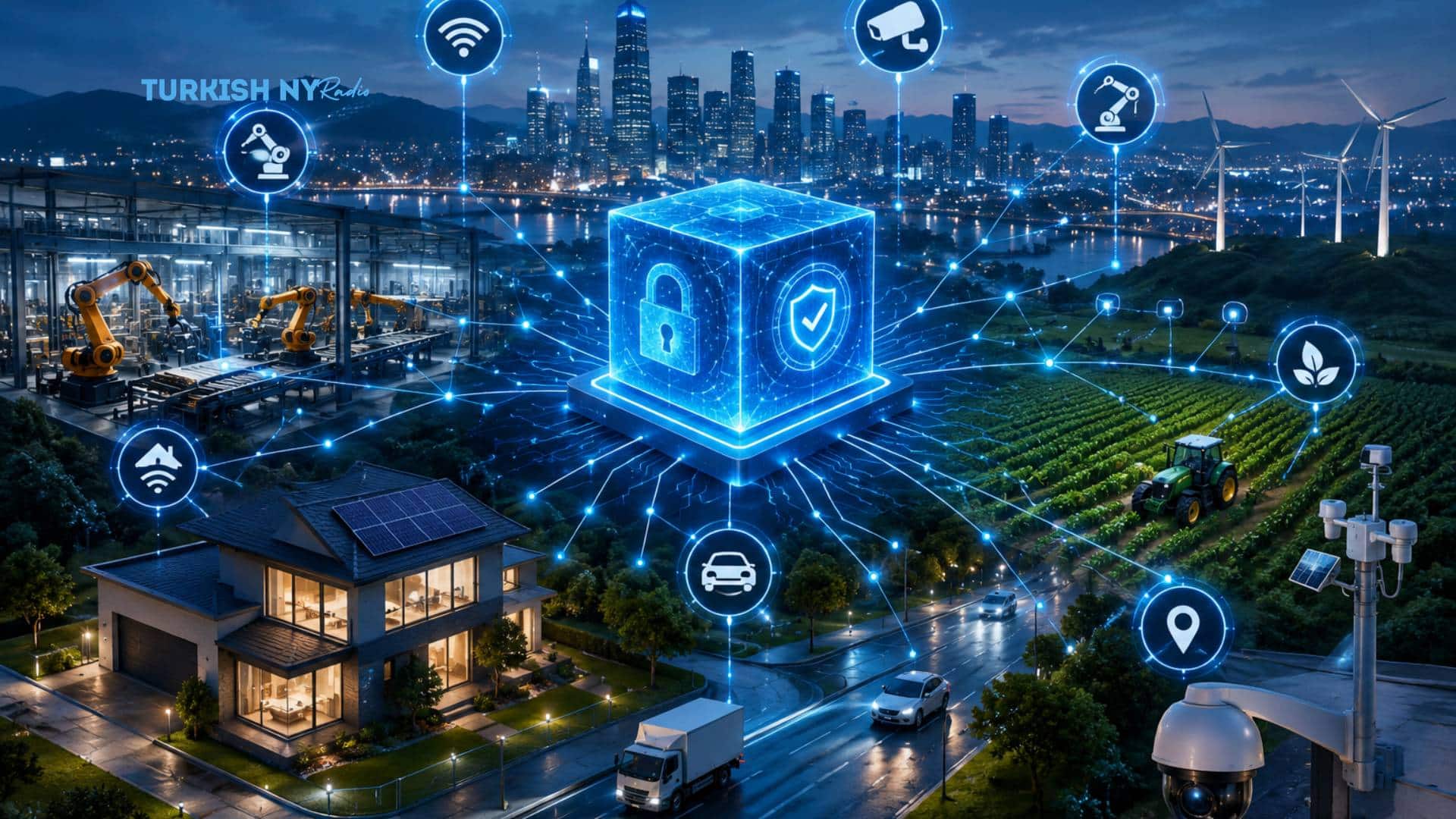
The Internet of Things is moving into factories, vehicles, farms and city infrastructure, raising a stubborn question: how can billions of devices exchange trusted data without placing every decision in one central database? The growing field of blockchain for internet of things offers one answer. It adds shared records, cryptographic identity and automated settlement, helping machines prove who they are, what they reported and whether they should be paid.
IoT links sensors, software and physical equipment, but many deployments still depend on a central cloud provider that can become a security target or single point of failure. IBM defines IoT as connected physical objects, while the GSMA has explored authenticated data markets combining eSIM security with distributed ledgers.
Blockchain for Internet of Things Creates a Trust Layer
A blockchain does not replace Wi-Fi, 5G, LoRaWAN, Bluetooth or satellite links. It can sit above those networks as a shared trust and settlement layer. A connected meter may send readings through a normal wireless protocol, while a cryptographic fingerprint is recorded on a ledger. That record can show when the reading was created, which device signed it and whether anyone changed it later.
This matters when several companies rely on the same information but none wants another party to control the master database. With blockchain for internet of things, participants can verify a common record while keeping sensitive files off-chain.
The same structure supports decentralized identity as IOTA Identity uses decentralized identifiers and verifiable credentials to authenticate people, organizations and devices. Its framework supports trusted machine communication while keeping many credentials off-chain for privacy.
How Connected Devices Use Blockchain
A practical system begins with a device identity tied to cryptographic keys. A gateway checks signed sensor data, removes unnecessary information and sends selected proofs to the ledger, where smart contracts apply preset rules.
Consider a refrigerated medicine shipment. If sensors show that the cargo stayed within range, a smart contract may release payment after delivery. If not, the ledger preserves a time-stamped record for the buyer and insurer. Blockchain for internet of things can reduce disputes over whose database is correct, although it cannot prove that a faulty sensor measured reality accurately.
That limitation matters. Blockchain protects records after submission, but the result still depends on secure hardware and honest inputs. In crypto language, this is the oracle problem: a tamper-resistant ledger can still receive bad information.
Decentralized Wireless Networks Add an Economic Layer
One clear use is decentralized physical infrastructure, or DePIN. Individuals or businesses install network hardware and receive token rewards for useful coverage or transferred data.
Helium is a well-known example. Community-operated hotspots provide LoRaWAN connectivity for IoT devices, while its incentive system rewards infrastructure providers. The network later moved its blockchain operations to Solana, separating wireless activity from the cost of running a dedicated base layer.
This gives blockchain for internet of things an economic role. Tokens can measure contributions and settle small payments, allowing a farm sensor to pay for a tiny packet of connectivity. Still, rewards must reflect genuine demand. A network packed with hardware but short on paying users may look active while producing weak business value.
Benefits for Industry, Cities and Supply Chains
Industrial operators can use blockchain for internet of things to create audit trails across machines, suppliers and maintenance teams. A component may carry a digital identity from production through installation, repair and resale. This record can support recalls, warranties and regulatory reviews.

Cities may apply similar systems to meters, parking sensors or waste collection. Agriculture can link equipment with soil, water and storage records, while supply chains pair sensor evidence with digital documents. The World Economic Forum has noted that IoT, digital twins and blockchain-based documentation can improve transparency and predictability in complex trade systems.
The Main Risks Cannot Be Ignored
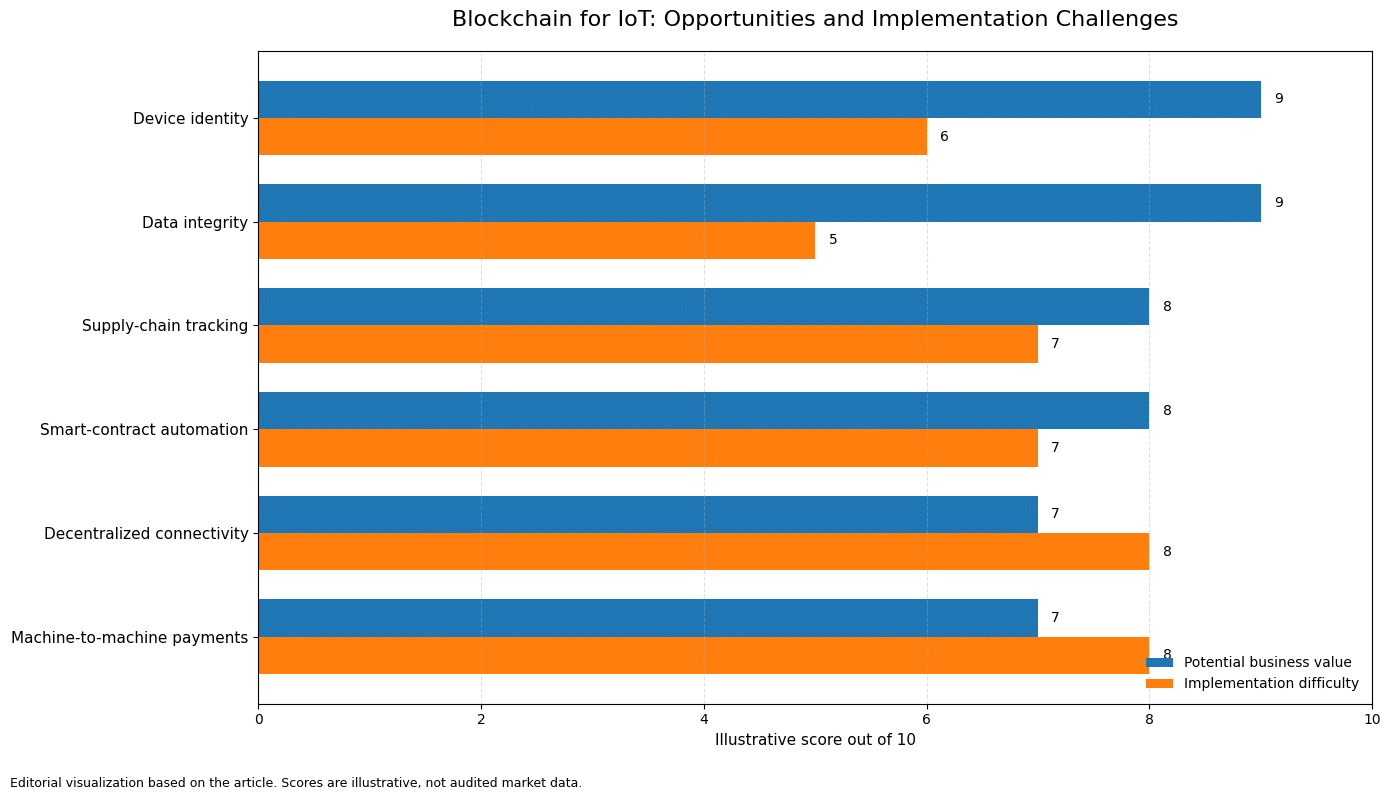
Scalability is the first test because high-volume devices create more messages than a public blockchain can process cheaply. Serious designs avoid writing every reading on-chain. They use edge computing, batching, hashes, side networks or permissioned ledgers, then store large files elsewhere.
Privacy also matters because immutable records may conflict with rules requiring personal data to be corrected or deleted. Strong systems keep private information off-chain and record only proofs or references.
Cybersecurity extends beyond blockchain. Weak passwords, exposed firmware, stolen keys and compromised gateways can still damage a network. The GSMA has also warned that future quantum computers may threaten cryptography used in IoT systems, pushing the industry toward post-quantum planning.
For investors, token price is not the best measure of adoption. Useful indicators include active devices, paid data transfers, recurring revenue, coverage quality, customer concentration, hardware churn and the share of rewards funded by real usage rather than token issuance. When assessing blockchain for internet of things projects, these figures reveal more than social-media attention or short-lived trading volume.
What Comes Next
The next phase is practical as enterprises will favor systems that work with existing standards, protect commercial data and show a cost advantage. Identity, data verification, roaming settlement, equipment history and machine payments are stronger uses than placing every device action on a public chain.
Blockchain for internet of things will not solve unreliable connectivity, poor sensors or weak governance by itself. Its value appears when independent parties need a shared record and no single operator should control the process. It can then make connected machines easier to trust, coordinate and pay.
Conclusion
IoT gives machines the ability to observe and communicate, while blockchain adds a way to verify identity, preserve records and execute shared rules. The combination works best when the ledger handles trust and settlement, not raw data. As decentralized wireless networks, digital identities and machine payments mature, blockchain for internet of things may become background infrastructure connecting devices across company and national boundaries.
Frequently Asked Questions
Can blockchain connect IoT devices directly?
No. Devices still need Wi-Fi, cellular, LoRaWAN, satellite or another network. Blockchain records proofs, permissions and transactions.
Does blockchain make IoT completely secure?
No. It protects records, but devices, keys, gateways and sensors need protection.
Is every sensor reading stored on-chain?
Usually not. Most data stays off-chain, while hashes or selected events reach the ledger.
Glossary of Key Terms
Blockchain: A shared ledger maintained by many computers.
IoT: Connected physical devices with sensors and software.
Smart contract: Code that executes preset actions.
DePIN: Community-operated infrastructure supported by token incentives.
LoRaWAN: A low-power, long-range sensor network.
Oracle problem: The risk of bad external data entering a blockchain.
Edge computing: Processing data close to its device.
Sources
ibm/or
gsma
iota
Disclaimer: This article is for educational and informational purposes only. It does not provide investment, financial, legal or cybersecurity advice