This article was first published on TurkishNYR. As at 2025, over 13,000 DAOs were operating worldwide and had a collective treasury of around $24.5 billion. But unlike regular companies with
This article was first published on TurkishNYR.
As at 2025, over 13,000 DAOs were operating worldwide and had a collective treasury of around $24.5 billion. But unlike regular companies with a centralized top-down leadership, DAOs rely on blockchain-based DAO governance models to spread decision-making power out among people who hold tokens.
DAOs even out the power among a wider group of stakeholders, giving a more genuinely democratic way of making decisions together.
What Is a DAO? How Web3 is Digitizing Organizations
A Decentralized Autonomous Organization (DAO) is an online community that is run by a mix of code and shared consensus. A DAO is not a corporation or company in the traditional sense, it is a virtual organization where the rules and policies are written into smart contracts on a blockchain.
Because all the deals and votes are put online in the same blockchain ledger, they’re completely transparent and impossible to change once they’re there.
A DAO is a new kind of human organizational structure where decisions are made in a much more distributed, open, and low-trust way than one would ever be able to do in a regular company.
Members get to hold governance tokens that let them vote on proposals, such as funding new projects or changing the rules of the system. Once a proposal is voted in, the system will do what it says automatically, without a single authority having to make any decisions.
For example, in the MakerDAO protocol, MKR token-holders vote on monetary policy (collateral types, stability fees) and the results are implemented on-chain.
Uniswap DAO token-holders get to vote on things like how to set the fees for trading and what upgrades to make to the Uniswap trading platform. This is a big difference from the CEO-and-board structure that most companies have.
As ConsenSys economist Lex Sokolin notes, DAOs give “each participating member a voice” via these smart contracts, unlike traditional companies where the decision-making power is all concentrated at the top.
Key features of DAOs:
- DAOs don’t have any physical “head office” – no managers, no formal board of directors, no bank accounts.
- Their whole setup is out in the open and operated on the blockchain
- They’re built in such a way that their governance rules and decision-making parameters are all written into the software that runs the blockchain.
- If a member wants to change any of the rules or spend any money out of the DAO’s treasury, they first have to put up a proposal on the blockchain and get it voted in by the token-holders.
- Once the rules are set up properly, no single individual or business can suddenly change a DAO’s rules on their own. That means the power is with the community and the code, not with a CEO.
In the grand scheme of things, DAOs are really changing the way organizations work by spreading out the decision-making power, automating the decision-making process, and letting people from all around the world get in on it.
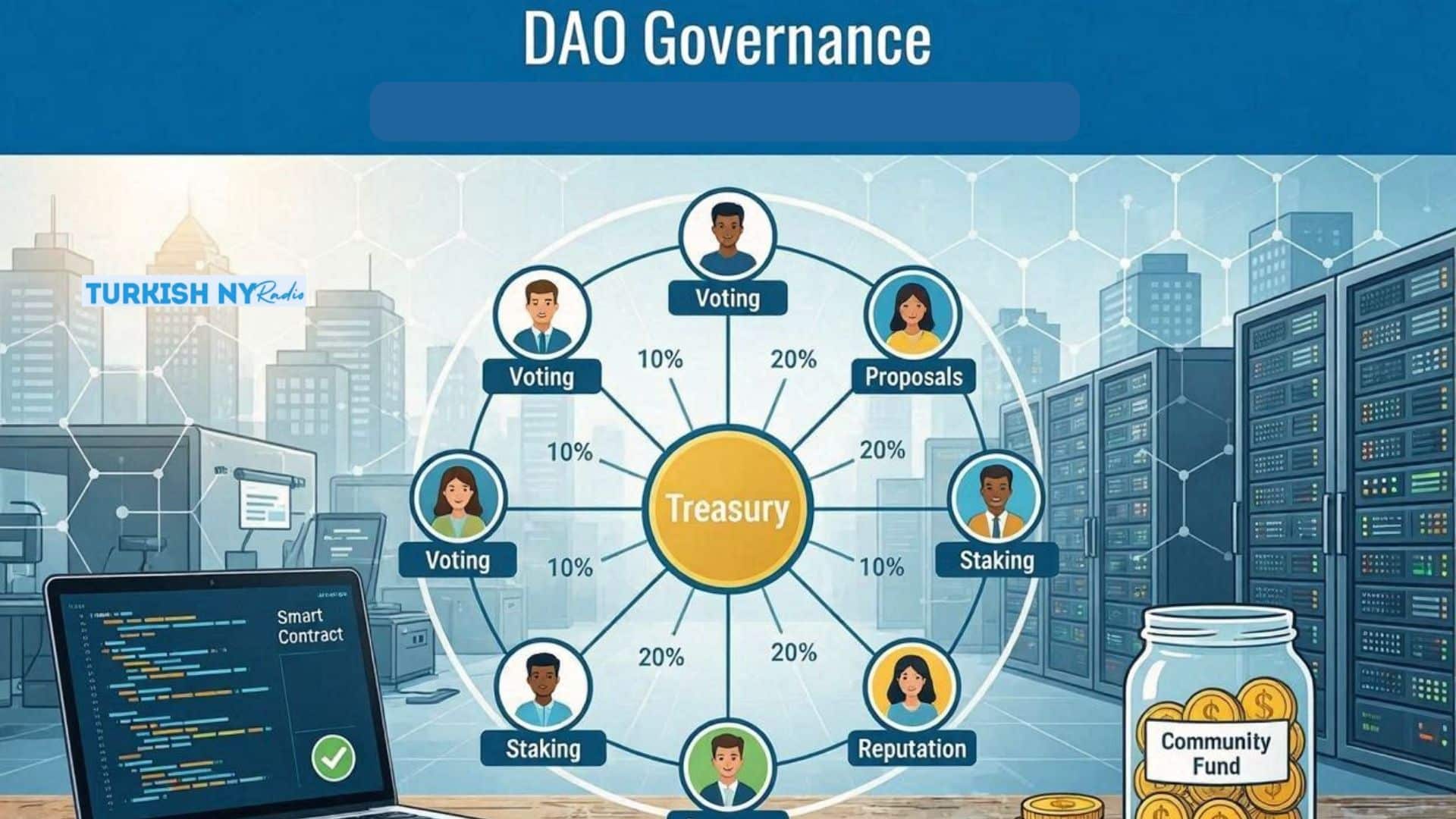 DAO Governance
DAO vs Traditional Organization: 5 Key Differences
FeatureTraditional CompanyDAO (Decentralized Autonomous Organization)GovernanceCentralized (CEO/Board make key decisions).Decentralized (token-holder voting, smart contracts).Decision AuthorityTop-down (executives, appointed board).Bottom-up (any token holder can propose/vote).Ownership/ControlShareholders with equity; limited voting.Token holders with voting rights tied to tokens.TransparencyLimited (internal books; public filings).High (all actions and votes on public blockchain).Legal StructureCorporations/LLCs under company law.Typically unincorporated, new legal wrappers evolving.Physical PresenceOffices, HQ, legal address.No HQ; operate online globally on-chain.Flexibility/SpeedSlower (board meetings, legal approvals).Faster (automated execution, continuous voting).AccountabilityExecutive accountability to board/shareholders.Code and community enforced; members accountable on-chain.ExamplesGoogle, Apple, Goldman Sachs.MakerDAO, Uniswap DAO, Aave DAO, BitDAO, PleasrDAO.
Table: Comparing DAO governance structures to traditional corporate models. Unlike hierarchical companies, DAOs rely on protocol rules and community voting.
Decentralizing Power: Traditional companies put their faith in executives and boards. But DAOs eradicate this structure, every token owner gets a say in what happens. Companies normally only let large investors or directors vote, whereas DAOs are open to anyone who is a member. DAOs completely reimagines the way a company is structured by chipping away the “boss class”.
Transparency and Accountability: Corporations often do their business behind closed doors. DAOs do their business in the open. Every single transaction, vote and treasury movement is up on the public ledger for all members to see.
This is the main way that DAOs can avoid getting taken for a ride by scammers, and it helps build trust. On-chain governance means no single company can go behind everyone’s back and change the rules because decisions get made by a set of rules that everyone agrees on.
Global Membership Without Limits: Most corporations keep membership to employees or “accredited” investors. DAOs, on the other hand, are perfectly open to anyone who wants to join; anyone can buy tokens and join the community. This can make a huge difference. For example, the Uniswap DAO’s governance forum has over 400,000 token holders signed up which is a lot more than the executives in a corporate boardroom.
Rules Enforced Automatically: Corporate decisions often require multi-layer approval and legal contracts. DAOs on the other hand, use smart contracts to turn proposals into reality with minimal delay. When a proposal passes, the smart contract code kicks in and executes it. This saves a lot of hassle, but only if the code is secure.
Legal and Structural Novelty: Traditional companies operate under established laws and rules that make them a legitimate entity. DAOs traditionally started as informal collectives on blockchain with no formal legal status. This can complicate liability and regulation. Early DAOs clashed with traditional law due to a lack of proper structure. New types of business entities (like DAO LLCs) are being created to fill this gap.
DAO Governance in Action: Leading Examples
To get a sense of how all this works out, here are a few prominent DAOs:
MakerDAO (Decentralized Finance): Creator of the DAI stablecoin, MakerDAO is governed by MKR token-holders who vote on monetary policy parameters.
In 2025, they restructured into a multi-DAO model (“Sky” and sub-DAOs) to make them even more resilient and decentralized. MakerDAO is often cited as one of the most successful examples of decentralization.
Uniswap DAO (Decentralized Exchange): The Uniswap protocol’s treasury and fees are all controlled by the community, using the UNI token for votes. Uniswap’s DAO has over 390,000 people who own the token and are actively participating. In 2025, it even launched a plan called “Uniswap v4” to help the project become even bigger.
Arbitrum DAO (Layer-2 Blockchain): The Arbitrum DAO is in charge of one of Ethereum’s biggest scaling networks. They control the treasury and decide on upgrades via on-chain proposals. In 2025, their treasury was holding over $3.8 billion in assets.
Governance happens through something called “Arbitrum Improvement Proposals” (AIPs). Recently, the DAO spent some time discussing whether or not they should have an “oversight veto” to prevent any rogue decisions.
Aave DAO (Lending Protocol): Aave’s DAO has control of a multi-billion-dollar lending platform that spans across Ethereum, Polygon, Avalanche, and the like. This system operates largely through the efforts of token holders who vote on risk parameters and upgrades.
Aave’s widespread presence in DeFi serves as a clear demonstration that lending can take place without a central authority purely relying on DAO governance to provide safety and stimulate innovation.
BitDAO (Venture Collective): BitDAO pools capital to support Web3 projects, and it managed to pull in about $2 billion in token sales. This makes it one of the richest DAOs out there. As token holders of the BIT governance token vote on investments and fund allocations, this shows just how far DAO governance has come as a community, effectively acting like a decentralized VC fund.
These examples really show DAO governance at scale. Thousands of individuals are working together to co-manage billions of dollars worth of funds all without a CEO.
However, they also face a lot of challenges. Even DAOs have whales and governance token concentration is still a major issue with a few actors holding a disproportionate amount of voting power.
To top it off, low participation is common; the average DAO vote turnout is only around 17%, meaning most token holders are essentially passive. DAOs are continually working on improving their governance models (delegation, quadratic voting, reputation systems) in a bid to address these issues.
The Privacy and Participation Trade-Offs
DAO governance is transparent, but this can also raise serious privacy concerns. All votes and wallet addresses are public and can be tracked by anyone; which is quite different to the ‘behind closed doors’ approach used in traditional firms, where board decisions are private between directors. This can deter participation for those who prefer anonymity.
Some people are worried that this degree of transparency could allow monitoring of individuals’ financial and political behavior. Unstructured DAOs can expose members’ identities to regulators, and a public record of votes can be tied to wallet owners.
DAO governance is accountable and open by design, but that same openness is at odds with some people’s expectations of anonymity and privacy.
On participation, studies confirm a ‘DAO paradox’. More voters typically lead to slower consensus and often lower turnout. One analysis found that even in DAOs that are active, only around 20% of token holders bother to participate.
A lot of members rely on delegation or don’t vote at all. Experts are currently researching new models (e.g. liquid democracy, reputation systems) to make DAO governance more inclusive and strong.
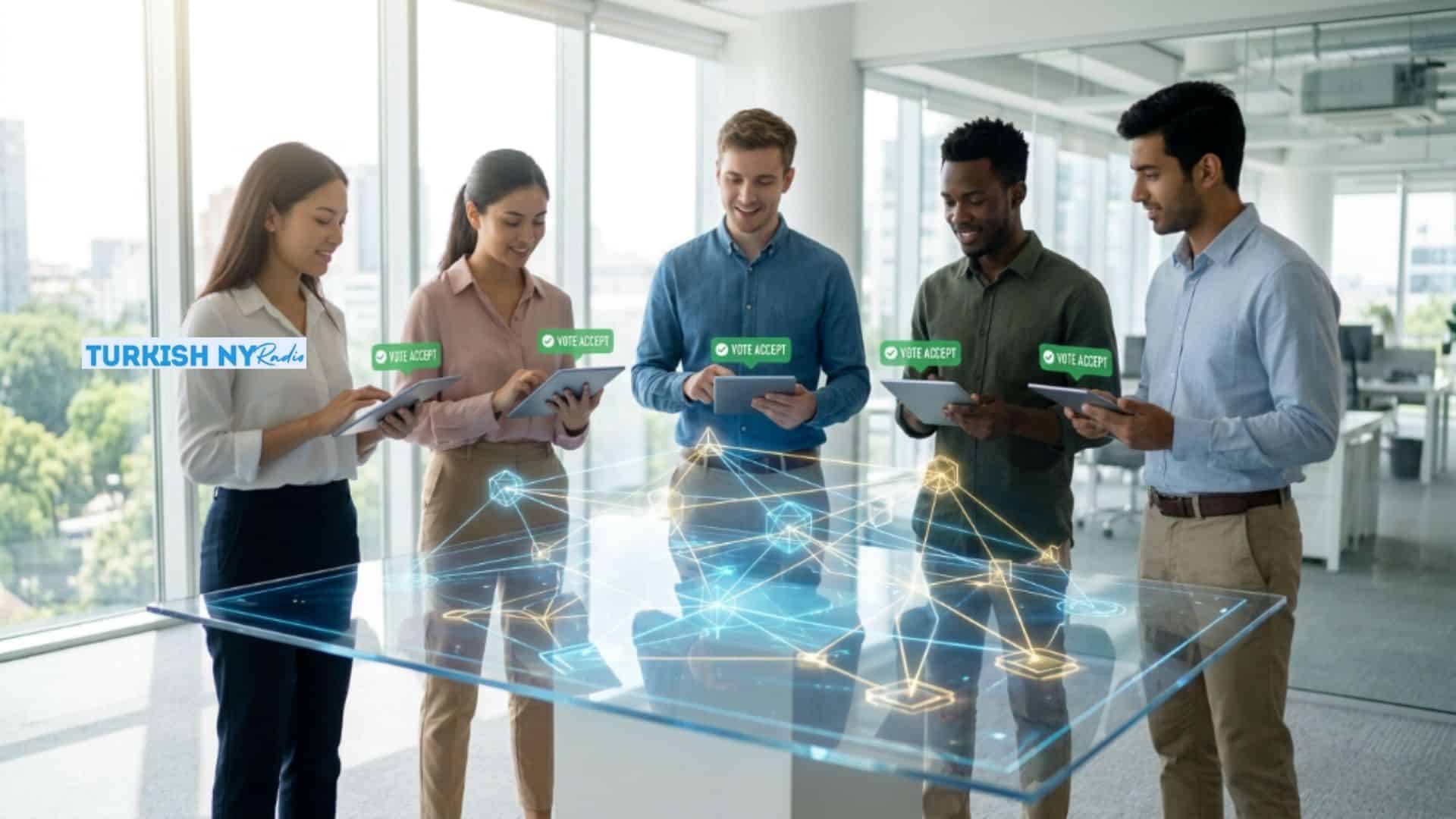 DAO Governance
Regulatory and Legal Evolution for DAOs
Because DAOs blur the line between informal communities and legal entities, regulators and the courts are having a hard time figuring things out. A 2025 analysis from Aurum Law describes a “legal crisis of DAOs”.
Traditional courts are generally classifying unstructured DAOs as unincorporated partnerships which has major implications.
In Samuels v. Lido DAO, a US court ruled that Lido DAO members (and even its major VC backers) were “legal partners” responsible for its actions. There are similar cases against bZx and Ooki DAOs that have reached comparable conclusions.
This means DAO members could, in worst cases, be held personally liable for a DAO’s debts or legal violations. Ostrovksy argues that this effectively dismantled the concept of ‘entityless’ DAOs”, forcing DAOs to wrap themselves in formal legal frameworks to protect members.
New solutions like the DAO LLC in Wyoming, the Marshall Islands DAO Act, and Aurum’s “DAO-Specific Entity” framework are being created. They provide DAOs with a legal identity, limited liability and try to keep things as decentralized as possible.
Regulators aren’t just sitting around doing nothing either. The US Securities and Exchange Commission (SEC) has been taking a close look at DAOs and how they fit in with securities law; for example the SECs guidelines for ICOs have implications for governance tokens.
The EU’s MiCA framework (which went live in mid 2025) and the evolving global crypto laws may someday address DAO governance more directly down the line. For now, much of DAO regulation falls under existing categories: for example, if a DAO issues tokens that resemble stocks, it might fall under securities law.
Overall, DAO governance is reshaping the very concept of an organization, forcing legal systems to catch up.
Corporations and LLCs are giving way to new constructs that blend code and law. If DAOs will replace traditional companies is still uncertain, but they are undeniably pushing corporate law to adapt.
Expert Analysis: The Future of DAO Governance
Industry experts and academics are going back and forth over how DAO governance will develop. Deloitte and a16z have picked out trends like “modular governance”, cross-chain DAOs and AI being used to make decision-making tools.
The “DAO 3.0” concept (being looked at by Frontiers and Aurum Law) envisions DAOs with multi-layer structures that combine automation with human flexibility. This, in practice, might mean on-chain voting remains a thing, but supplemented by trusted delegates, dynamic quorum rules or even time-phased changes to stop rash decisions.
Economist Lex Sokolin reckons that DAOs and token economies are going to drive new collaborations. He points out that Web3 combines innovation in tech with a revolution in social organization, leading to “new ways of working together” and sharing in the gains.
Many believe that DAOs will thrive in areas where collective knowledge is vital (like open-source software, research or communal investments) but are going to struggle when central control is really needed.
Quantitatively, studies are saying that DAO governance will continue to grow. Funds like Standard Chartered forecast that tokenization could drive $2.7 trillion into blockchain ecosystems by 2030 (much of it via DAOs).
However, getting people to participate and actually use these DAOs is proving a lot harder than expected. Recent papers (e.g. Li & Chen, 2024) say that without rules to coordinate and account for power imbalances, DAOs risk replicating old governance pitfalls.
This has led to really creative solutions. Hypha DAO, for example, has turned itself into a “Decentralized Human Organization” and is putting human-centric processes first, and its move to a context-adaptive design shows how DAO governance can integrate social insights.
DAO governance holds out a real promise that it could revolutionize decision-making and enable people all around the world to work together in a way that is truly global. However, there’s a clear risk of centralization by the whales, combined with apathy among voters and legal entanglements.
Fortunately, there’s a lot of ongoing research going on from industry leaders like Consensys, Aragon, DAOhaus, as well as from academics working at Frontiers, BJ Ventures Insights.
Experts say that governance is “one of the trickiest aspects of Web3” but getting it right could really redefine how organizations are structured for the Digital Age.
Conclusion
DAO governance represents a total change from how organizations are normally run. DAOs replace centralized hierarchies with token-based, code-enforced governance models.
This has enabled entirely new forms of collaboration, from developing all sorts of protocols to investing in communities, DAOs are handling billions of dollars and millions of participants.
While they still have a lot of challenges to overcome like getting official recognition, getting more people involved and governance design, they have already started to rewrite the rulebook on how organizations are set up.
Corporations and governments are taking notice and working out how to adapt. Wyoming has already introduced laws specifically to deal with DAOs, and there are new international regulations starting to get put in place.
DAOs offer a new way of working together by using blockchain to make everything totally transparent. It operates on the core ideas of Web3 which is letting the community make the decisions, not a select few.
It is hard to say yet whether it is going to live up to its promise of more democratic, more resilient organizations, or will it end up falling back towards traditional models? Either way, DAO governance is set to be a real force in Web3 for years to come and it would be really interesting to see how it all develops.
Glossary
DAO (Decentralized Autonomous Organization): A blockchain-based organization that gets run by its members using a combination of smart contracts and voting tokens, with no need for a central boss to make the decisions.
Governance Token: A cryptocurrency token that lets its holders cast a vote on what a DAO should be doing (eg MKR for MakerDAO, or UNI for the Uniswap DAO).
Smart Contract: Self-executing code on a blockchain that enforces the rules of a DAO (e.g. executing a voted decision automatically).
Treasuries: The pool of funds/assets a DAO controls, managed by member votes. DAOs use treasuries to fund projects or investments.
Unincorporated Association: A legal term describing DAOs without formal corporate status. Courts may treat them as partnerships for liability.
DAO LLC: A special legal structure (e.g., Wyoming DAO LLC) that gives DAOs a recognized corporate form, protecting members with limited liability.
Frequently Asked Questions About DAO Governance
What is the difference between a DAO and a traditional corporation?
A corporation has a traditional top-down management structure (director, executives) and is a proper legal entity under company law. In contrast, a DAO is governed by code on a blockchain which means that token holders get to directly vote on decisions, making everything totally decentralized and transparent.
Who can join a DAO?
Anyone can buy in and join the vote just like with traditional companies where shareholders or employees get to make decisions.
Are DAO decisions legally binding?
On-chain DAO votes automatically execute code, so yes, passed proposals take effect in the DAO protocol. However, enforcement of off-chain outcomes (like real-world contracts) can be complex.
How do DAOs deal with the problem of legal liabilities?
Without a formal legal structure, DAO members could be held personally liable for the DAO’s actions. Recent court rulings (e.g. Samuels v. Lido DAO) treated DAO members as partners responsible for debts. To mitigate this, many DAOs register as LLCs or similar entities, providing limited liability to token holders.
Can DAOs exist outside of Web3?
The whole idea of a DAO is tied into the blockchain/Web3 space because at its most basic level, it relies on smart contracts and crypto tokens to keep everything running in a fair and transparent way.
ReferencesScience Direct
Frontiers
Aurum
Sqmagazine
Corporatecompliance