How DecimalChain Fees Work: USD-Pegged Costs and a Price Oracle
Most blockchains price fees in their native coin, so the real cost of a transaction floats with the market and network load. DecimalChain takes a different approach: the cost of operations is
A
AnonymousCryptoCompass newsroom
July 29, 2026
2 min read
NEWS
CryptoCompass editorial visual for defi coverage.
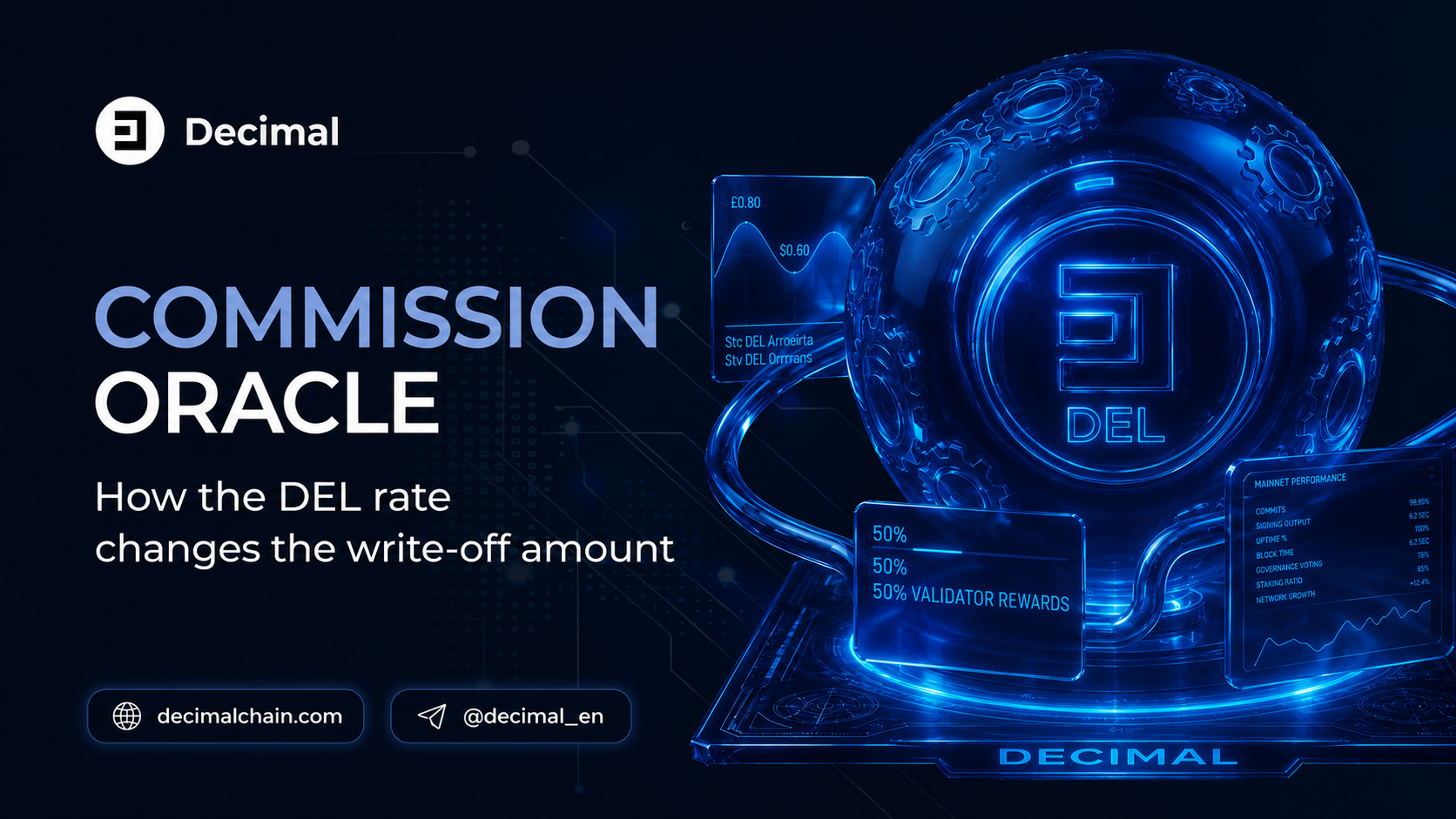
Most blockchains price fees in their native coin, so the real cost of a transaction floats with the market and network load. DecimalChain takes a different approach: the cost of operations is pegged to USD, and the network converts it into $DEL at the moment of sending.
The fee model
The cost of every operation is set in USD and converted into $DEL at the current price, which a price oracle reports to the network. The exact calculation depends on how the transaction is sent: Decimal Console and the mobile app run operations through EVM smart contracts and charge gas, while transactions sent directly to a node are charged per byte plus a fixed operation tariff. Both models are pegged to USD.
What the July update changed
Previously the oracle relied on an inflated $DEL price, so fees in coins came out below their real value. After the update the oracle takes the rate from the market, and the coin amount now reflects the actual price. USD tariffs did not change — a regular transfer still costs just a few cents.
Why it matters
A USD anchor keeps costs predictable for users and protects the network from spam, since operations are never nearly free. $DEL remains the fuel of the network: it is required for transfers, delegation, token issuance and smart contracts. After payment, half of the fee is burned and permanently removed from circulation, and half goes to the validator that produced the block, shared with its delegators.
How Financial Institutions Use Chainlink Technology Banks rarely talk about blockchains the way crypto users do. They talk about settlement risk, messaging standards, and compliance. That is
A community post says SHIB crossed 150,000 new on-chain holders in 2026. Does that help the price? Not by itself. The claim is unverified, and SHIB trades below both key trend lines after a b
Monero traded between $643.65 and $648.74 on the morning of October 22, 2026. Over 24 hours the privacy coin gained 9.9 to 11.9 percent depending on the data provider, making it the strongest