The Democratic Republic of the Congo (DR Congo) is facing its largest and deadliest Ebola outbreak since the disease was first recorded in the country between August and November 1976. The ou
The Democratic Republic of the Congo (DR Congo) is facing its largest and deadliest Ebola outbreak since the disease was first recorded in the country between August and November 1976. The outbreak, which was officially declared on May 17, 2026, is the country’s 17th and has infected 6,250 people, while 3,039 have died, according to official data.
One of the greatest hits faced by health officials or the government in combating a virus is how to control its spread. In a situation where it’s almost impossible to control crowds in public places, social gatherings, communities or children or youths having fun, the virus keeps growing.
DR Congo is in that party.
The latest outbreak clashes with conflicts associated with armed men’s attacks in the country, as dozens of armed groups operate in eastern provinces like Ituri and North Kivu, two Ebola-hit areas. Their activities, involving violence and attacks on treatment centres and displacement, make it dangerous and difficult for health workers to reach persons who have contracted the disease.
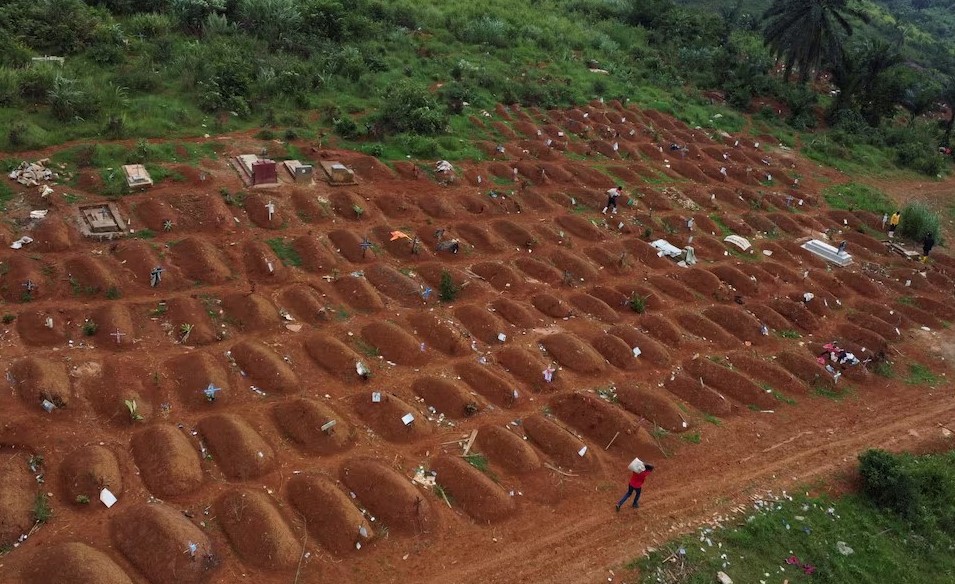
A drone view of workers at the Ceca-20 cemetery, as aid agencies intensify efforts to contain an Ebola outbreak caused by the Bundibugyo virus, in Mungwalu, Djugu Territory of Ituri province, Democratic Republic of Congo, July 14, 2026. REUTERS/Gradel Muyisa Mumbere/File Photo
Efforts to control the Ebola disease caused by the Bundibugyo virus have been largely unsuccessful. Aside from attacks by rebel groups and limited facilities, the Bundibugyo virus lacks approved and widely available commercial vaccines, forcing workers to rely strictly on supportive symptom care.
Among other challenges, the greatest threat is curbing the spread of Ebola in the DR Congo. Once they can prevent the spread to other people, the limited resources can then be used to treat people affected by the disease.
Health officials are now using technology to combat the spread. This time around, it’s through the use of mobile phone data supported by a network available on the telecom tower.
Since there’s no nationwide lockdown to stop the movement of people or the assembly of people in public places, health officials rely on monitoring people’s movements.
Through the tool, they are now tracking the movement of people who crossed from an Ebola-hit community to another community. With this, the latter area becomes a target point and a red zone where the disease could spread next at large.
Curbing Ebola spread in DR Congo: When technology meets health
It was the Swedish non-profit organisation Flowminder that partnered with Vodacom DRC to provide anonymised mobile-phone data, according to Reuters. This information is used to map population movements and identify areas where the Ebola Virus could spread next.
Merged image of Flowminder and Vodacom’s logo
By anonymising data, the organisations have taken the data protection of subscribers into consideration. Information available to health workers, or what they see, has been purged of personal identifiers such as names, phone numbers, email addresses, or government IDs that reveal a person instantly.
So, they only see data with codes such as “Person 1412”.
Flowminder says it receives aggregated and anonymised records and does not have access to information identifying individual subscribers.
“We seek to provide estimates of how people move, which in turn is a predictor of how infectious people move,” Flowminder founder Linus Bengtsson said in a conversation with Reuters.
In comparison, traditional risk assessments focus on outbreak hotspots, places with the largest number of infected people and assume the virus is most likely to spread to surrounding areas. With the new tool that allows analysis of mobility data, health workers can identify risks in places.
“It gives us a more nuanced understanding of risk,” said Olivier Le Polain, head of epidemiology and analytics for response at the WHO Health Emergencies Programme.
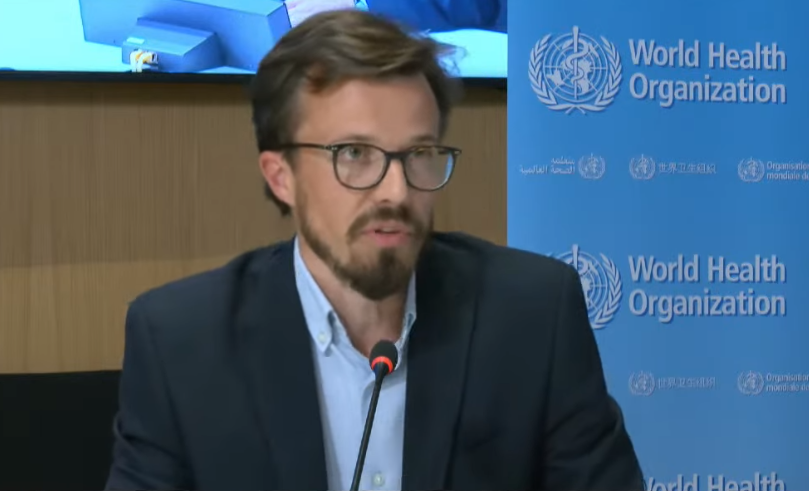
Olivier Le Polain, head of epidemiology and analytics for response at the WHO Health Emergencies Programme (IM: WHO)
Also Read: Airtel launches Africa’s first satellite-to-mobile service in DR Congo
How it works
Anonymised records are generated when mobile phone users connect to telecom towers. As people move around the country, their phones connect to different networks on the towers, generating records that show where those connections took place and their movement.
Researchers and health workers then use the records to estimate how people travel between different areas and where the outbreak could hit next. It becomes vital when tracking people who moved from a high-hit zone/community to another.
The tool’s implementation
In its first analysis published in June, Flowminder focused on Bunia, Mongbwalu and Rwampara, the three areas where the outbreak is believed to have started. Researchers tracked where people who had spent time in those areas between April 3 and April 23 later travelled.
In its findings, the largest movements were to nearby areas in Ituri Province and North Kivu Province.
What happened later confirmed the authenticity of the findings.
By the end of June, all 10 of the destinations that received the largest flows of travellers from the original outbreak areas had reported confirmed Ebola cases.
Recognising that this can be a cure after the damage, Flowminder expanded the analysis by examining where people leaving those hotspots were most likely to travel. This is done by predicting destinations based on past patterns of movement.
Le Polain said Kisangani has drawn attention recently. It’s a major transport hub on the Congo River that connects eastern and western Congo. He noted that Kisangani being at risk was not a huge surprise, even if it was not bordering the affected areas. This is due to the attractiveness of public gatherings.
“By mid-June, the data showed the risk was significant and that the outbreak could spread there faster than we initially thought. We strengthened operations there before the first cases were detected,” Le Polain said.
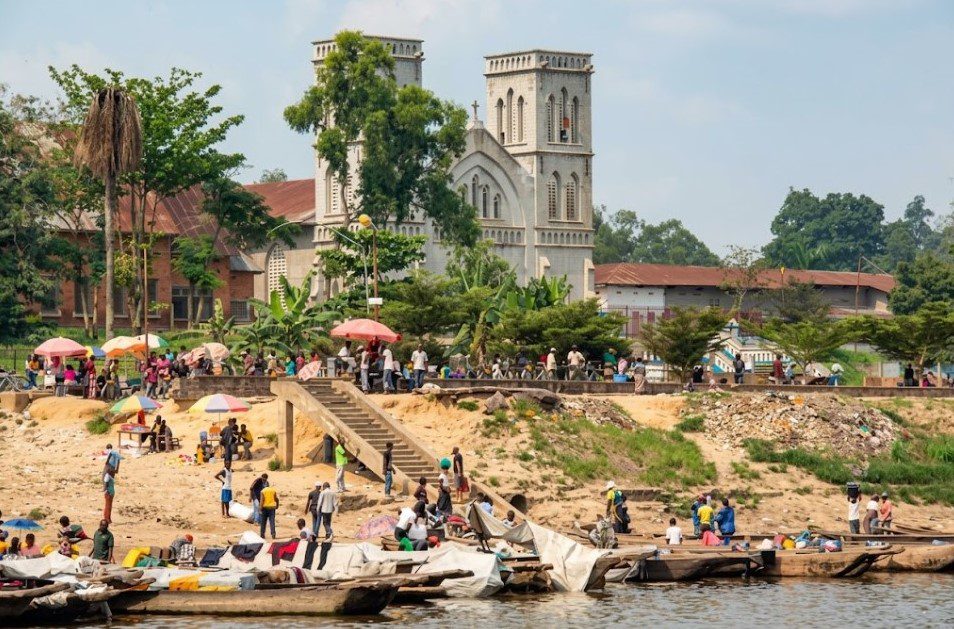
Kisangani, DR Congo
Meanwhile, the tool is facing a critical challenge: a coverage gap.
Flowminder only partnered with Vodacom, leaving people connected to the operator’s competitors, such as Airtel, Orange and Africell, outside the monitoring box.
While Vodacom is the country’s largest operator with more than 26 million active subscriptions and a market share of nearly 35%, the analysis cannot capture the entire population. But officials noted that efforts are underway to secure similar partnerships with other telecom operators.
Notwithstanding, the tool shows how technology has grown to solve natural disasters, as it’s currently saving lives in the DR Congo.