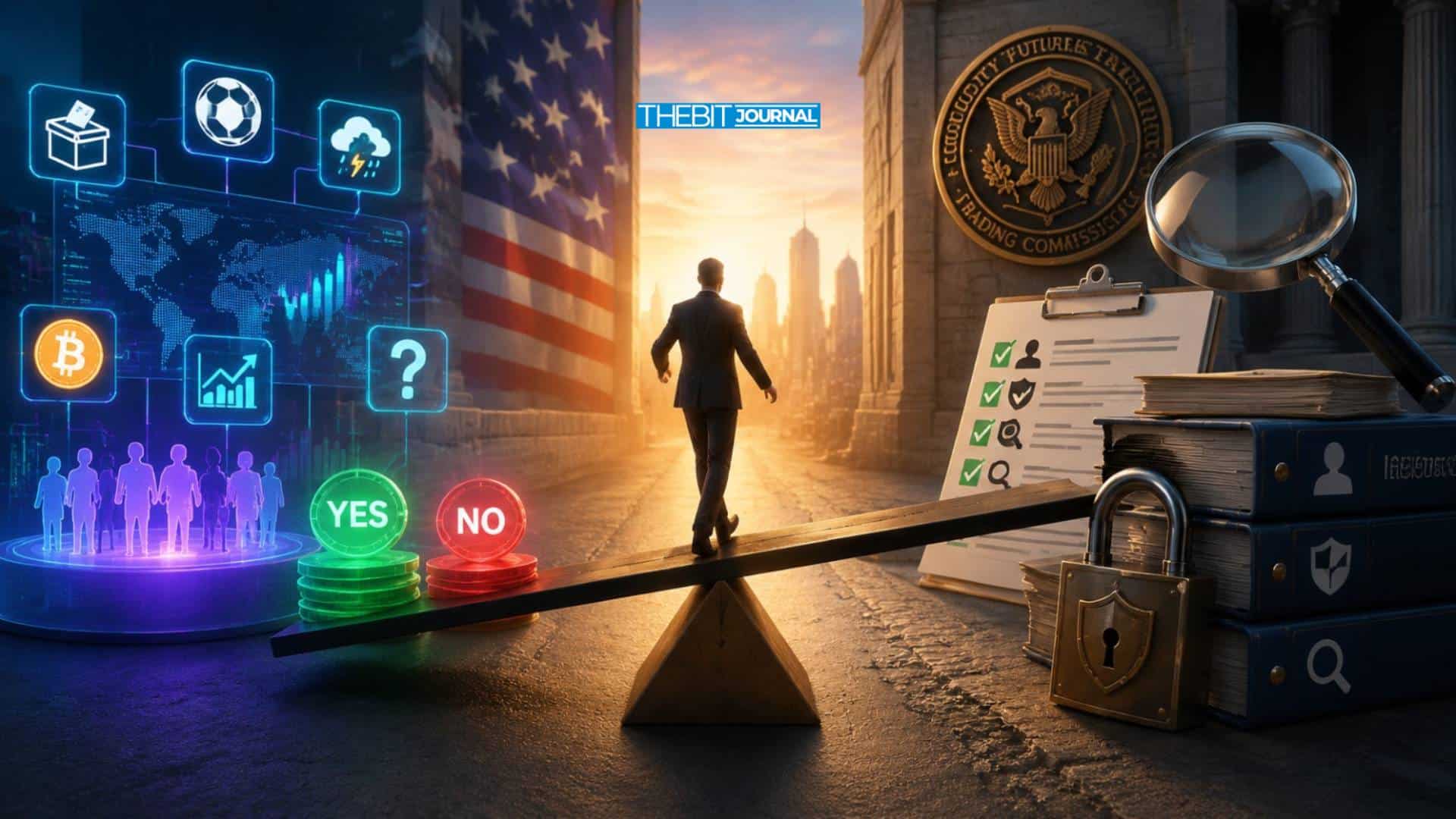
Polymarket is moving to bring leveraged event trading into the United States. The prediction market platform wants legal approval to let users trade real-world outcomes with less money upfron
Polymarket is moving to bring leveraged event trading into the United States. The prediction market platform wants legal approval to let users trade real-world outcomes with less money upfront.
The plan could mark a major shift for the fast-growing prediction market sector. It may also help Polymarket attract larger and more experienced traders. The push for Polymarket margin trading comes as regulators are already taking a closer look at event-based markets.
Polymarket Margin Trading Push Begins With FCM Application
According to Bloomberg, Polymarket filed an application to operate as a Futures Commission Merchant. The filing was made through its affiliate, Coming Home GBA LLC. It was submitted to the National Futures Association on July 3.
A Polymarket representative confirmed the application. The Commodity Futures Trading Commission and the NFA did not immediately respond to requests for comment.
The filing is only one step. It does not give Polymarket full approval to launch margin products in the U.S.
Polymarket US is operated by QCX LLC. QCX is a CFTC-registered Designated Contract Market. Polymarket acquired QCX and QC Clearing in 2025.
At the moment, every position on Polymarket US must be fully backed. This means traders must put up the full dollar value of each trade.
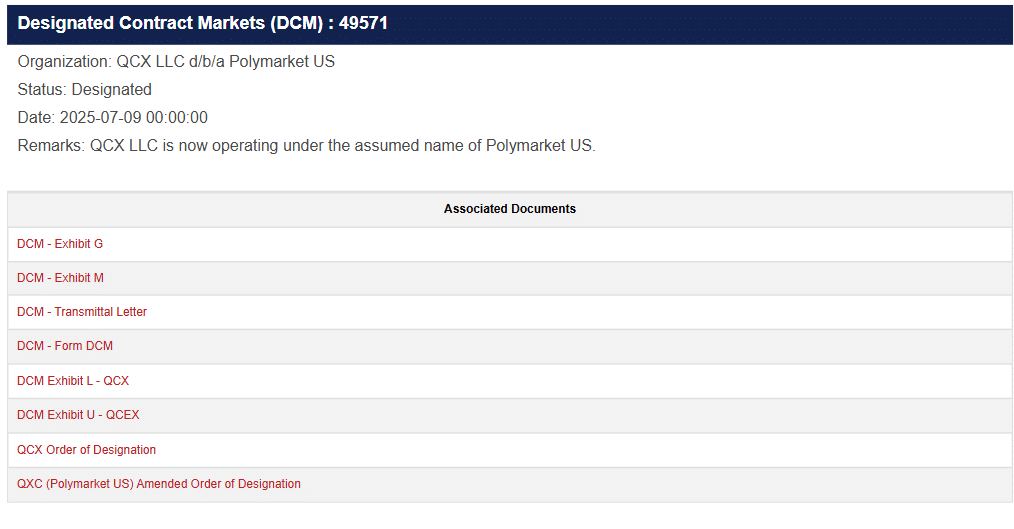
Source: CFTC
Polymarket margin trading would change that model. It would allow qualified users to open positions without funding the entire trade upfront.
Why Margin Trading Matters
Margin trading is common in professional markets. It is used by hedge funds, market makers, and institutional traders. It helps traders spread capital across more positions.
For prediction markets, the change could be important. More capital efficiency may bring deeper liquidity. It may also create tighter pricing across event contracts.
Polymarket margin trading could make the platform more attractive to advanced traders. It could also move prediction markets closer to traditional futures markets.
What Polymarket Still Needs
An FCM license alone is not enough. Polymarket must also win approval from the CFTC for changes to its exchange rulebook. Those changes would need to permit non-fully collateralized trading. That is a major regulatory step.
The CFTC will likely review the risks closely. Leverage can increase losses. It can also create larger exposures across markets. Because of that, Polymarket margin trading may face a strict approval process.
How Prediction Markets Work
Prediction market platforms let users trade on real-world outcomes. These can include elections, sports, weather, crypto prices, and economic events.
Most contracts are simple. They often ask yes-or-no questions. That makes them easier to understand than many traditional derivatives.
Polymarket and Kalshi are two of the best-known platforms in this space. Their growth has made prediction markets a more visible part of finance.
Retail traders have already shown strong interest. Weekly notional volume on Polymarket reportedly reached more than $4 billion in June.
Kalshi Offers a Roadmap
Polymarket is not alone in seeking a larger regulated role. Rival Kalshi received its own FCM license earlier this year.
Kalshi has also moved into perpetual futures. In May, the CFTC approved Kalshi’s BTCPERP Bitcoin perpetual contract. The product later went live in early June.
Perpetual futures are popular in crypto markets. They do not expire like standard futures contracts. Instead, they track the price of an underlying asset.
Kalshi reportedly recorded more than $5.5 billion in perpetuals volume within two weeks of launch. Most of that activity was tied to crypto-linked contracts.
Legal Challenges Remain
Kalshi’s expansion has already faced legal resistance. CME Group has sued the CFTC over the approval of Kalshi’s perpetual futures product.
CME argues that the product should be treated as a swap under the Dodd-Frank Act. It says the product should not be treated as a futures contract.
That case could matter for the broader industry. It may shape how regulators view new products from prediction market platforms.
Regulatory Scrutiny Is Growing
Polymarket’s filing comes during a sensitive period. Bloomberg reported in late June that the CFTC is conducting a broad probe into the company.
The probe reportedly includes questions about social media activity. The Wall Street Journal reported earlier that Polymarket hired young content creators to film staged trades and fake wins.
The company also faces wider concerns about market integrity. Insider trading risk has become a major issue for prediction markets.
Polymarket uses a public blockchain ledger. That allows people to see trades. But accounts are usually pseudonymous.
This visibility can help detect suspicious activity. Yet it can also expose how often well-timed trades appear before major events.
Identity Checks Could Expand
Under U.S. rules, margin products would require stronger identity checks. Users may need to provide more information before accessing leveraged markets.
That could include employer details. These checks are meant to reduce compliance risks. They may also help platforms detect insider trading concerns.
For Polymarket, this could become a key issue. Regulators may want stronger controls before approving margin access.
Conclusion
Polymarket returned legally to the U.S. in December 2025 after acquiring QCX LLC and QC Clearing. The company had been locked out of the market since 2022, when it paid a $1.4 million penalty for operating an unregistered trading facility.
Now, Polymarket margin trading has become a defining test. Approval could bring prediction markets closer to mainstream finance. Rejection or delay could slow the industry’s next stage of growth.
Appendix Glossary of Key Terms
Futures Commission Merchant: A regulated firm that handles customer orders and funds for futures-related products.
CFTC: The U.S. regulator that oversees futures, derivatives, and some event-contract markets.
NFA: A U.S. self-regulatory body that supervises firms in the futures industry.
Fully Collateralized Trading: A trading model where every position must be backed by the full dollar value.
Event Contracts: Yes-or-no contracts tied to outcomes such as elections, sports, weather, or crypto prices.
Perpetual Futures: Futures-style contracts that do not expire and usually track an underlying asset.
Frequently Asked Questions About Polymarket Margin Trading
1- What is Polymarket trying to do?
Polymarket is trying to legally offer margin-based event trading in the United States.
2- What does margin trading mean?
It means traders can open positions without paying the full amount upfront.
3- Has Polymarket received approval?
No. The company has filed for an FCM license, but it still needs CFTC approval for rule changes.
4- Why does this matter?
It could bring more institutional traders into prediction markets.
References
CryptoTimes
Bloomberg
Read More:How Polymarket Margin Trading Plan Could Reshape U.S. Prediction Markets">How Polymarket Margin Trading Plan Could Reshape U.S. Prediction Markets