Key Takeaways SpaceX prices at $135/share on June 11; Nasdaq ticker SPCX trading starts June 12. Bybit IPO Express and Kraken xStocks both offer tokenized access from 100 USDC minimum – no br
Key Takeaways
- SpaceX prices at $135/share on June 11; Nasdaq ticker SPCX trading starts June 12.
- Bybit IPO Express and Kraken xStocks both offer tokenized access from 100 USDC minimum – no brokerage account required.
- xStocks tokens are tracker certificates backed 1:1 by real equity in custody – but carry no voting rights and no dividends.
- US, UK, Canadian, and Australian users are excluded from both crypto platforms. EEA users are excluded from Bybit but can access the offering via Kraken’s Cyprus-licensed subsidiary.
- ~$150B to $250B in total investor demand against a $75B target – expect partial allocations on all routes.
- SpaceX enters the Nasdaq 100 ~15 trading days after listing, triggering an estimated $22–27B in index-forced buying.
What Is Actually Happening on June 11–12
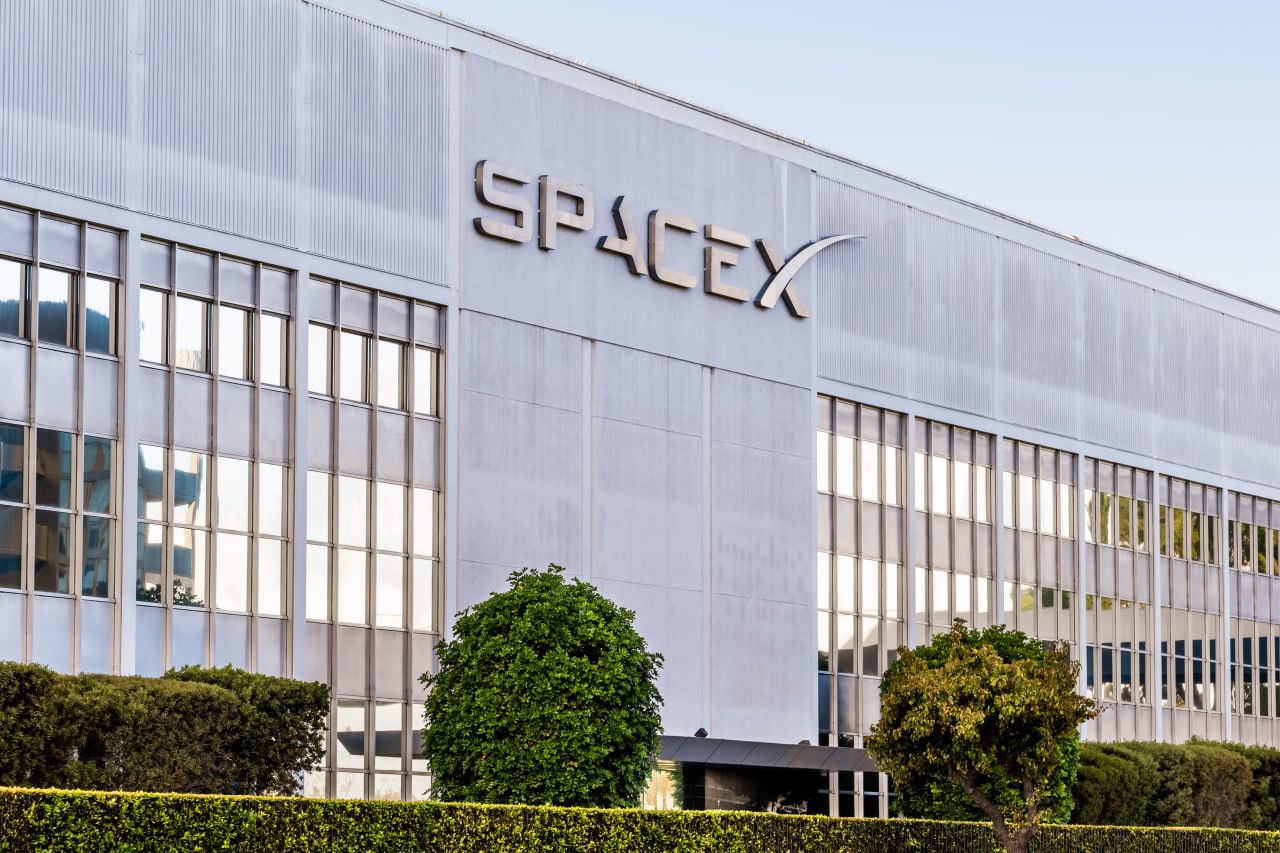
SpaceX filed its public S-1 prospectus with the SEC, launching its roadshow on an accelerated timeline after an efficient regulatory review. Final share pricing is set for after market close on June 11 at a fixed $135 per share, with first-day public Nasdaq trading under the ticker SPCX debuting on June 12.
This stands to become the largest IPO in global history, targeting a $1.75 trillion valuation to raise $75 billion. The offering involves a Wall Street syndicate of 23 financial institutions, with Goldman Sachs serving as lead underwriter alongside Morgan Stanley, Bank of America, Citigroup, and JPMorgan Chase. Unlike most major IPOs, SpaceX moved straight to a fixed $135 price rather than a fluctuating bookbuilding range.
Notably, SpaceX has reserved up to 30% of the total offering for retail investors, roughly triple the traditional industry norm of 5–10%. This public capitalization event offers direct entry into the world’s dominant aerospace and satellite communications network. Starlink revenue reached $11.4 billion in 2025, representing approximately 61% of total company revenue, and scaling infrastructure demand positions it as a primary driver of the company’s long-term commercial valuation.
The Core Trade-Offs at a Glance
Before exploring either route in detail, the structural differences between a tokenized xStocks certificate and a registered brokerage share are significant enough to affect how you evaluate both access paths. This table isolates the four dimensions that matter most:
DIMENSIONCRYPTO TRACKER (XSTOCKS)TRADITIONAL BROKERAGEPRODUCT TYPETracker certificate – economic exposure onlyRegistered Nasdaq equity – direct legal ownershipFEES5% underwriting/processing fee built inTypically zero on primary allocationSIPC PROTECTIONNo – Exchange counterparty risk appliesYes – Up to $500,000 protectionSECONDARY MARKET24/7 continuous trading, including weekendsStandard Nasdaq market hours only
Important Risk Considerations
Make sure to carefully evaluate counterparty vulnerability metrics and jurisdictional availability parameters prior to committing capital to synthetic allocation products.
IMPORTANT: Understand the Risks Before Committing Capital
Both crypto routes described below involve tokenized tracker certificates – not registered equity. They carry platform counterparty risk, no SIPC protection, a built-in 5% fee, and no voting or dividend rights. Investors in the United States, United Kingdom, Canada, and Australia are ineligible for both platforms. Review the full risk checklist at the bottom of this article before proceeding.
The Two Crypto Routes: Kraken and Bybit
Two major digital asset exchanges built direct retail subscription paths into the SpaceX IPO allocations, both operating on the same underlying infrastructure: the xStocks framework operated by Payward Services (the parent company of Kraken).
How to Subscribe on Kraken
Log into your Kraken account. From the interface, navigate to the Upcoming IPOs section and select Pre-order on the SpaceX IPO portal. Your funds are reserved rather than immediately debited. After reviewing the confirmation terms and accepting the required platform disclosures, you submit a conditional offer to buy. The tokenized ticker on Kraken is tracked as SPCXx. Jurisdictional eligibility is dynamically verified inside your account portal before you commit capital. Full instructions are available on Kraken’s official IPO support page.
How to Subscribe on Bybit
Log into your Bybit account and navigate to the IPO Express page. Select the SpaceX offering, review the $135 USDC indicative price and the 5% underwriting fee, confirm your regulatory eligibility, and input your allocation amount (minimum 100 USDC). Funds are locked in USDC until allocations are finalized on June 11–12, with the tokenized SpaceX spot market opening for trading on June 12.
If the demand for the SpaceX IPO significantly outstrips the available allocation pool, Bybit does not adjust the entry price upward; instead, it enforces a standard pro-rata distribution model. Because SpaceX established a fixed institutional listing price of $135 rather than a variable bookbuilding range, your entry cost per token remains anchored at $135 (plus the 5% underwriting fee). If the offering is oversubscribed, your order will be partially filled, and any unallocated USDC will be automatically unlocked and credited back to your Bybit spot wallet once the allocation phase concludes on June 11–12.
What You Actually Own: Tracker Certificate vs. Real Equity
Buying SpaceX through Kraken or Bybit does not grant you direct, registered public stock. Instead, it issues a digital tracker certificate designed to map SpaceX’s open-market price performance.
These xStocks tokens are issued by Backed Assets (JE) Limited, a Jersey-based entity. They are legally structured as tracker certificates that provide pure economic exposure to the underlying reference asset rather than direct corporate equity ownership. Consequently, token holders have no shareholder voting rights, no corporate governance weight, and no direct dividend entitlements.
The underlying custody backing is physical but conditional. Each issued token is collateralized 1:1 by real SpaceX equity acquired via specialized allocations and held in a regulated broker-dealer’s custody framework once listing day settlements clear. However, disclosures state that token collateral structures carry counterparty and issuance risks unique to the exchange framework, which users must evaluate prior to locking funds.
Crypto Route vs. Traditional Brokerage: Full Comparison
DIMENSIONCRYPTO — KRAKEN / BYBITTRADITIONAL BROKERAGEPRODUCT TYPETracker certificate (xStocks) — economic exposure onlyRegistered Nasdaq equity – direct legal ownershipIPO PRICE$135 USDC + 5% spread/fee$135 – no additional fee on allocationMINIMUM ENTRYBETTER — 100 USDC minimum1 share minimum at Fidelity (~$135); variable by brokerGEOGRAPHYBETTER — 110+ countries via KrakenWORSE — Primarily US-centric; global retail paths restrictedUS/UK/CA/AU USERSEXCLUDED from both Kraken and BybitELIGIBLE – via Fidelity, Robinhood, Schwab, SoFi, etc.EEA USERSExcluded from Bybit; eligible via
Kraken’s Cyprus-licensed subsidiaryELIGIBLE – via EU brokerages including Revolut, eToro, Hargreaves LansdownACCOUNT REQUIREMENTBETTER — Crypto account + identity verificationBrokerage account – requires active IPO eligibility approvalVOTING RIGHTSNONE – Derived tracker certificate structureYES – Standard shareholder voting rights retainedDIVIDENDSNONE – Excluded from distribution passesYES – If and when declared by the boardCOUNTERPARTY RISKHIGHER – Platform reliance; conditional asset containmentSIPC protection up to $500,000 on eligible securities accountsFEESWORSE – 5% underwriting/processing fees built inZero fee on successful primary allocation at top brokersALLOCATIONPro-rata — Partial fills expected due to oversubscriptionPartial fills highly likely – Heavy institutional demand scalingRESALE LOCK-UPNo broker lock-up — Immediate trading on secondary spotFlipping restrictions apply; early sales risk future
IPO shadowbans *Swipe horizontally on mobile to view full data parameters • Compiled by Coindoo Editorial Team
CRYPTO CAN BE BETTER IF YOU:
- Are based internationally outside the US and lack traditional US brokerage avenues.
- Hold liquid USDC stables and prefer to avoid fiat settlement conversions.
- Want sub-$135 fractional exposure starting from a 100 USDC baseline.
- Require zero flipping/penalty restrictions on early secondary market exits.
CRYPTO CAN BE WORSE IF YOU:
- Demand actual corporate equity accompanied by governance and dividend benefits.
- Reside inside the United States, UK, Canada, or Australia.
- Require SIPC regulatory protection guarantees on your active balances.
- Refuse platform-level counterparty risks and built-in 5% underwriting fees.
A Third Option: Pre-IPO Perpetual Futures
Beyond the xStocks tokenized allocation route, alternative derivatives mechanisms exist via synthetic perpetual futures contracts. Platforms like Binance, BitMEX, Bitget, OKX, and Coinbase International rolled out SPCX perpetuals ahead of the listing date. However, these represent entirely separate financial structures from the 1:1 backed certificates.
FEATUREXSTOCKS TOKENIZED – KRAKEN / BYBITPERPETUAL FUTURES – BINANCE / OKX / BITMEXCUSTODY BACKING1:1 real equity allocation held in regulated custodyNONE — Cash-settled purely synthetic instrumentsLEVERAGENo leverage – Spot-backed economic exposure onlyVariable options (Up to 5x leverage deployment available)FUNDING RATENone – No recurring carrying charges applyOngoing capital exchanges driven by funding intervalsPRICE RISKTracks primary asset closely; minor localized slippageHigh divergence risk; highly susceptible to pre-listing volatilityBEST FORMedium-term accumulation; baseline IPO price accessAggressive short-term price speculation only
Allocation Reality: What to Actually Expect
Institutional and retail demand data indicates a highly oversubscribed environment, with aggregate interest ranging between $150 billion and $250 billion fighting for the $75 billion allotment. In an environment exceeding a 2:1 oversubscription ratio, pro-rata structural logic implies that individual buyers should prepare for partial fills, receiving a significantly compressed portion of their initial capital commitments.
On the digital exchange track, unallocated capital from the subscription queues is programmatically returned to users’ spot balances once the final settlement distributions clear. On the traditional equity side, domestic retail allocations via networks like Fidelity, Robinhood, or SoFi face strict anti-flipping rules. Selling allocation shares within standard designated post-listing windows triggers penalties, including exclusion from future primary offerings.
The Post-Listing Catalyst: Nasdaq 100 Inclusion
The Technical Catalyst: Under the revised Nasdaq rules effective May 1, 2026, an IPO ranking in the top 40 by market capitalization bypasses the traditional multi-month seasoning period. This fast-track structure forces passive index funds and ETFs to execute an estimated $22B to $27B in mechanical, non-discretionary purchases within 15 trading days of listing.
SpaceX could join the Nasdaq-100 around early July 2026, triggering forced buying from QQQ (Invesco QQQ Trust, ~$495B AUM) and QQQM among other passive vehicles. Unlike discretionary fund flows, these are algorithmic rebalancing purchases that execute regardless of price, creating a structural demand floor independent of fundamental valuation. This technical liquidity event forms a significant cornerstone of institutional market positioning ahead of the opening bell.
Specific Risks of the Crypto Route
RISK CHECKLIST – CRYPTO ROUTE ONLY
- Premium Built-in Fees: Premium entry layers introduce a 5% spread or service cost disadvantage relative to standard primary allocations processed at institutional brokerages.
- Conditional Custody Parameters: Collateral clearing relies entirely on intermediate acquisition vehicles; token structures guarantee direct secondary price indexing rather than direct share claim lines.
- Absence of SIPC Protection: Traditional security balances fall within the $500,000 Securities Investor Protection Corporation safety mesh. Digital token structures carry platform-specific counterparty variables instead.
- Jurisdictional Restrictions: Circumventing strict local registration restrictions or geofences via synthetic routing networks violates regional compliance rules and threatens programmatic account mitigation.
Disclaimer: This analysis is compiled for research and educational purposes only and does not constitute formal financial, tax, or investment advice. Tokenized stock certificates, derivatives products, and digital assets introduce material market volatility and substantial risk of structural capital loss. Past market trends or pre-listing indications provide no guarantee of future trading performance. Conduct comprehensive personal research and consult an authorized fiduciary financial professional before allocating capital to high-risk investments.
The post How to Buy SpaceX IPO With Crypto: Kraken and Bybit appeared first on Coindoo.