How to Choose a Crypto Market Maker in 2026-2027: Which Firm Fits Which Token The short version: choose a crypto Market Maker by matching it to your project’s stage, exchanges, fee model and
How to Choose a Crypto Market Maker in 2026-2027: Which Firm Fits Which Token
The short version: choose a crypto Market Maker by matching it to your project’s stage, exchanges, fee model and regulatory needs. In 2026, large-cap tokens and institutions usually look at Wintermute, first launches, including Binance Alpha, that want full launch advisory and access to a wide network of partners look at EchoTrade, projects that want an investor alongside liquidity look at GSR, and teams needing a MiCA or VARA licence look at Flowdesk.
The choice got harder this year because exchanges now check the market after a token lists, not only before. MEXC, for example, flags a token whose average daily spread stays above 2% for 15 consecutive days, according to its published monitoring rules. A token can pass the listing review and still get a warning a few weeks later if nobody is keeping its book tight.
All four firms below do Market Making. They are built for different projects.
What should you answer before comparing Market Makers?
Five answers decide which firms are worth a call.
- Stage. Pre-TGE, just listed, or an established token with steady volume?
- Venues. Which exchanges are you on or applying to, and how many?
- Fee model. A fixed monthly retainer where you keep your tokens, or a token loan with a call option?
- Support. Do you need only quoting, or also help with exchange selection, listings and launch timing?
- Regulation. Do investors, banks or exchanges require a licensed counterparty in a specific jurisdiction?
How do Wintermute, EchoTrade, GSR and Flowdesk compare?
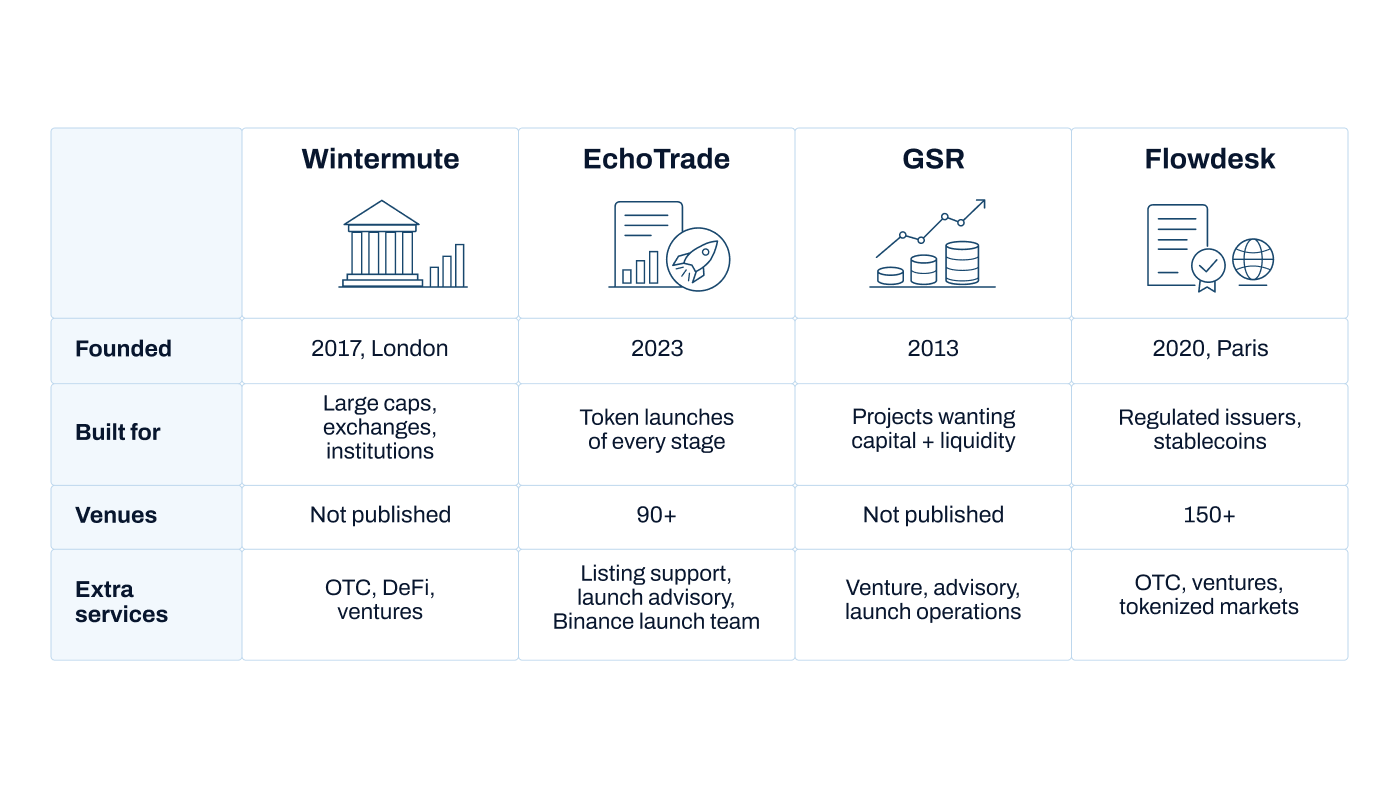
They differ most on who they serve and what they offer around the quoting. The table uses each firm’s own published information as of October 2026.
Wintermute
EchoTrade
GSR
Flowdesk
Founded
2017, London
2023
2013
2020, Paris
Built for
Large caps, exchanges, institutions
Token launches of every stage
Projects wanting capital + liquidity
Regulated issuers, stablecoins
Venues
Not published
90+
Not published
150+
Extra services
OTC, DeFi, ventures
Listing support, launch advisory, Binance launch team
Venture, advisory, launch operations
OTC, ventures, tokenized markets
 How do you judge a Market Maker’s quality?
On numbers measured on every exchange, not on the firm’s size. Exchanges check these four:
- Spread as a percentage of the mid price. This is the number exchanges set ceilings on.
- Depth within 1% and 2% of mid, on both sides. How much can trade near the price before it moves.
- Uptime. The share of trading hours with quotes live inside the agreed spread, including nights and weekends.
- Cross-venue consistency. Whether spread and depth hold on every exchange, not only the main one.
Ask for these in writing before signing: the spread and depth commitment per exchange, the uptime target and how it is measured, how often you get reports, and what happens if a target is missed.
Retainer or token loan: which fee model fits?
A retainer is a fixed monthly fee, and the project keeps custody of its tokens. A token loan means the desk borrows 0.5% to 2% of supply, usually with a call option, and earns from the spread and the option instead of a cash fee.
The difference is incentive. On a retainer the desk is paid to hit spread and depth targets. On a loan its earnings depend partly on where the token price goes. Neither is wrong, but founders should know which one they are signing. Of the four firms here, only EchoTrade publishes its model: retainer only, with no token loans or call options.
Which crypto Market Maker fits which purpose?
Each of the top four firms below is built for a different kind of project. Here is what each one does and who it suits.
Wintermute: best fit for large-cap tokens and institutional needs
Wintermute is an algorithmic trading firm founded in London in 2017. Per its site, it runs OTC trading across spot, options, forwards and CFDs, provides liquidity for tokens on centralized and decentralized venues, and has a DeFi and venture arm. Its OTC desk quotes hundreds of tokens.
In 2026 its New York affiliate, Wintermute USA LLC, registered as a broker-dealer with the SEC and FINRA, and Wintermute Trading Ltd is registered with the UK FCA. That scale is the reason to choose it. It is also the limit: a new token is a small account for a desk serving exchanges and funds, so early-stage teams should ask about minimum engagement size first.
- Fee model: not publicly itemized; request written pricing
- Regulation: UK FCA; US broker-dealer
- Best fit: established and large-cap tokens, exchanges, projects with OTC or institutional buyers
- Website: wintermute.com
EchoTrade: best fit for first and second launches that need advisory, partner introductions and help meeting listing requirements
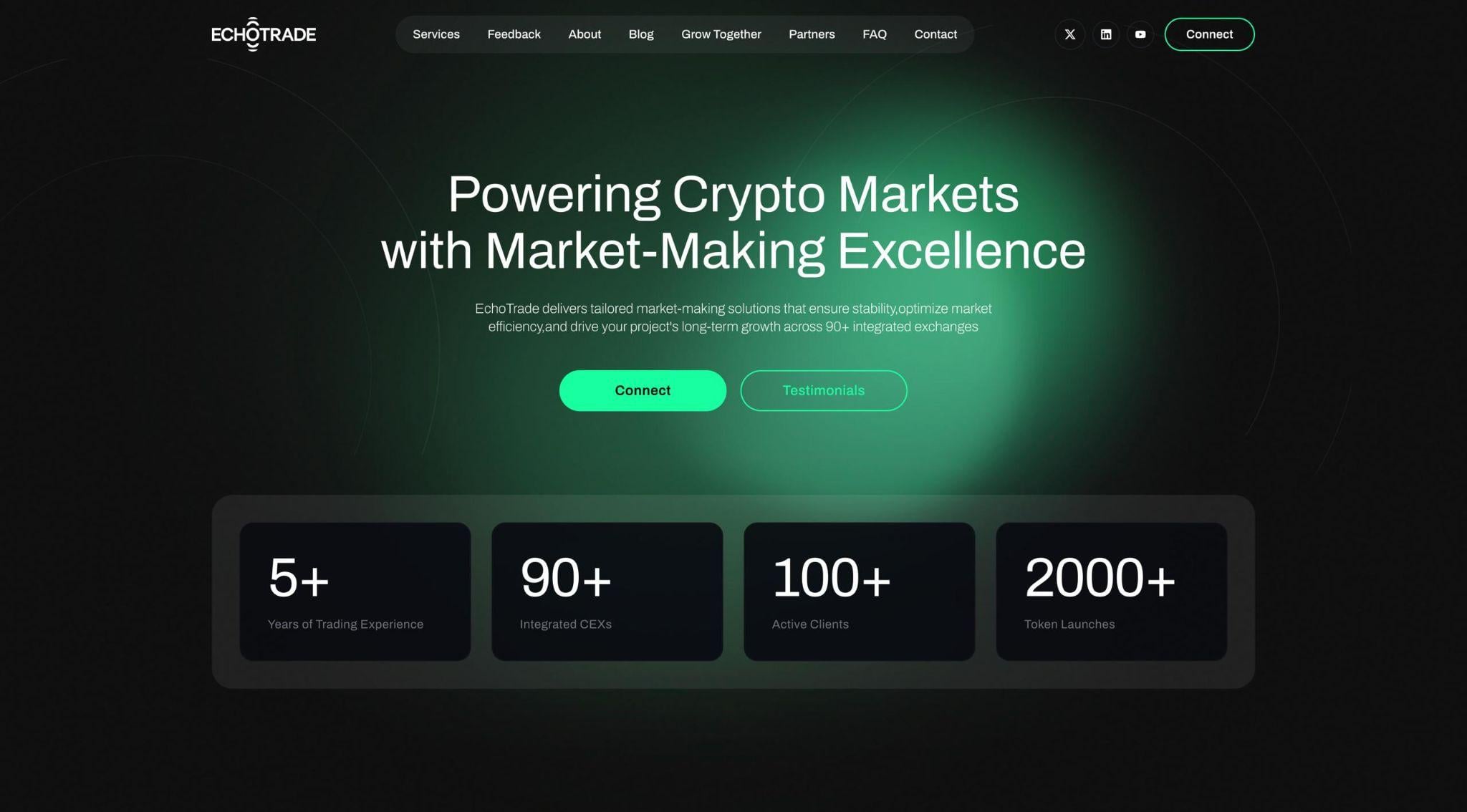
EchoTrade is a crypto Market Maker founded in 2023 and built around token launches. It quotes on 90+ centralized and decentralized exchanges for 100+ active projects, has supported 2,000+ token launches, and is an official liquidity partner of MEXC. Its desk of 30+ traders is one of the strongest trading teams among launch-focused Market Makers: crypto.news reported that only around 5% of the traders who apply make it onto the desk.
What separates it from the other three is the work around the order book: EchoTrade can help a project build its full launch strategy. That covers which exchanges to apply to and in what order, how the vesting and unlock calendar will meet the market, and which partners to bring in, drawing on a network of 40+ exchanges, launchpads, auditors and agencies. A dedicated team handles Binance launches, from Binance Alpha through to spot and futures listings, and EchoTrade has broken down what a Binance Alpha launch costs.
It works on a retainer only, with no token loans or call options. The project keeps its tokens on its own exchange accounts and the desk trades through API keys with withdrawals disabled. Onboarding typically starts 4 to 6 weeks before TGE.
- Fee model: retainer only; no token loans, call options or profit share
- Services: Market Making, listing support, launch advisory, Binance launch team, exchange compliance support, treasury building
- Best fit: first and second launches, Binance Alpha launches, mid-caps expanding to several exchanges, tokens flagged in an exchange compliance review
- Website: echo-trade.io
GSR: best fit for projects that want an investor and a Market Maker in one group
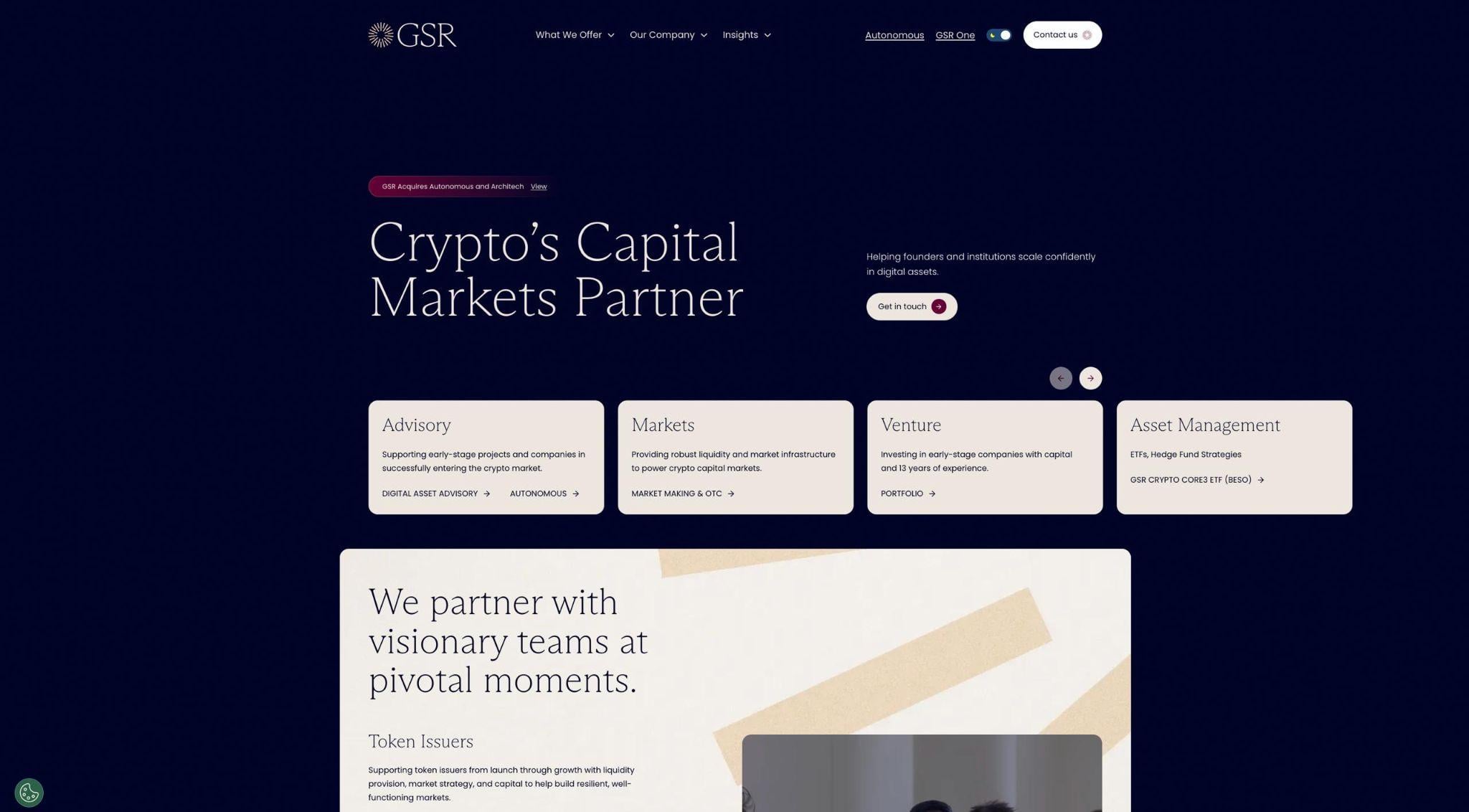
GSR has traded crypto markets since 2013 and describes itself as a capital markets partner: Market Making and OTC alongside venture investing, advisory and asset management. In March 2026 it acquired Autonomous and Architech for $57 million, adding launch operations for tokenized organizations.
Per its site, GSR Markets UK is registered with the FCA, GSR Markets Pte. Ltd. is licensed as a Major Payment Institution by the Monetary Authority of Singapore, and GSR Digital LLC is a registered money service business in the US. For a project raising a round, one group handling capital and liquidity can save time. Read the investment terms and the Market Making terms together before signing either.
- Fee model: not publicly itemized; request written pricing
- Regulation: UK FCA; Singapore MAS; US MSB
- Best fit: projects raising capital or seeking strategic backing, institutional products needing a licensed counterparty
- Website: gsr.io
Flowdesk: best fit for projects that need a regulated counterparty
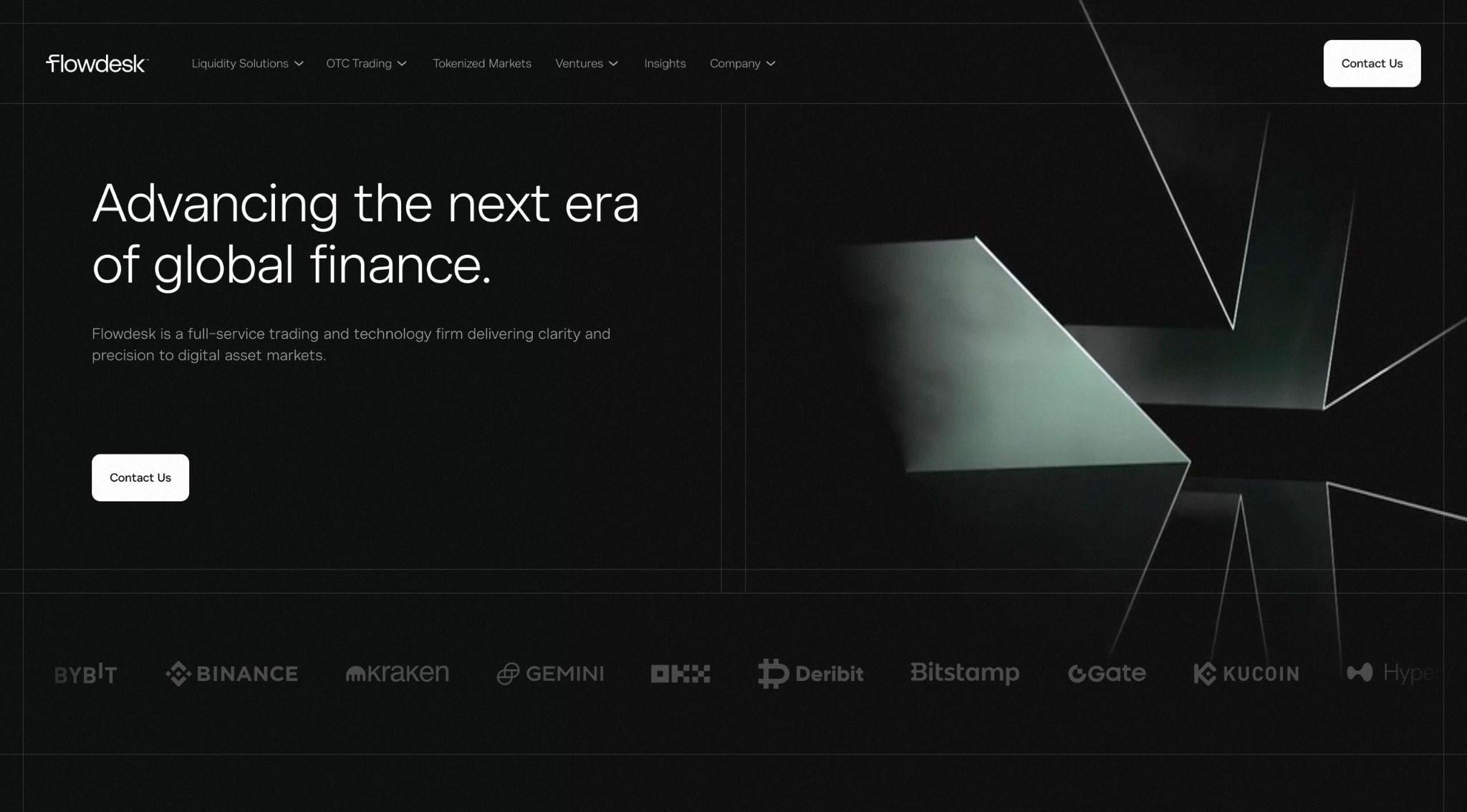
Flowdesk was founded in Paris in 2020 and calls itself a full-service trading and technology firm. Per its site, it covers 150+ exchange venues and 1,000+ asset pairs, with liquidity services for token issuers, stablecoins and exchanges. Backers listed on its site include BlackRock, Coinbase Ventures and Ripple.
Its licences are what set it apart. Flowdesk is regulated as a Crypto-Asset Service Provider under MiCA in the EU and holds a VARA licence in Dubai. For a project whose investors, banking partners or exchanges ask for a licensed counterparty, that can decide the choice before price does.
- Fee model: not publicly itemized; request written pricing
- Regulation: EU MiCA (CASP); Dubai VARA
- Best fit: EU and Dubai-based projects, stablecoins and tokenized assets, teams whose partners require MiCA or VARA coverage
- Website: flowdesk.co
Which crypto Market Maker should you choose?
Start from your situation, not from the firm’s size.
- Large-cap token, exchange, or institutional OTC needs: Wintermute
- Preparing a first launch, or launching through Binance Alpha: EchoTrade
- Raising capital and want an investor that also provides liquidity: GSR
- Need a MiCA or VARA-licensed counterparty: Flowdesk
A project can also combine two: for example, an institutional desk on its largest venue and a launch-focused desk covering the rest. That only works if each desk owns a clearly defined set of exchanges, so they never quote against each other on the same book.
Common questions
How do you choose a crypto Market Maker? Start with your stage, your exchanges, the fee model you want and any licence your partners require. Then shortlist firms built for that profile and ask each one for spread, depth and uptime commitments per exchange, in writing.
Which Market Maker is best for a first token launch? A launch-focused desk that also helps with exchange selection, listing requirements and launch timing. Of the four firms reviewed here, EchoTrade is built for first and second launches, including Binance Alpha, and works on a retainer only.
Which Market Maker should a large-cap token use? Large-cap tokens, exchanges and projects with institutional buyers usually look at desks with OTC and institutional coverage, such as Wintermute or GSR.
What is the difference between a retainer and a token loan? On a retainer the project pays a fixed monthly fee and keeps its tokens. On a token loan the desk borrows 0.5% to 2% of supply, usually with a call option, and earns from the spread and the option.
When should a project hire a Market Maker? Before the listing. Onboarding usually takes 4 to 6 weeks before TGE, because exchanges measure spread and depth from the first trading day.
How much does a crypto Market Maker cost? On a retainer, typically $2,500 to $10,000 per month depending on the number of exchanges and the depth required. On a token loan, 0.5% to 2% of supply, usually with a call option instead of a cash fee.
Can a Market Maker guarantee a token’s price? No. A legitimate Market Maker manages spread, depth and uptime. A firm that promises a price level or a volume figure is a red flag.
The post How to Choose a Crypto Market Maker in 2026: 4 Firms Compared appeared first on Blockonomi.