How to Find Crypto Setups Without Watching Charts All Day: 8 Terms That Do the Work
How to find crypto setups without watching charts all day gets easier once you share a vocabulary with yourself. A lot of wasted screen time comes from vague words: setup, signal,alert,breako
A
AnonymousCryptoCompass newsroom
November 6, 2026
3 min read
NEWS
CryptoCompass editorial visual for markets coverage.
How to find crypto setups without watching charts all day gets easier once you share a vocabulary with yourself. A lot of wasted screen time comes from vague words: setup, signal,alert,breakout.
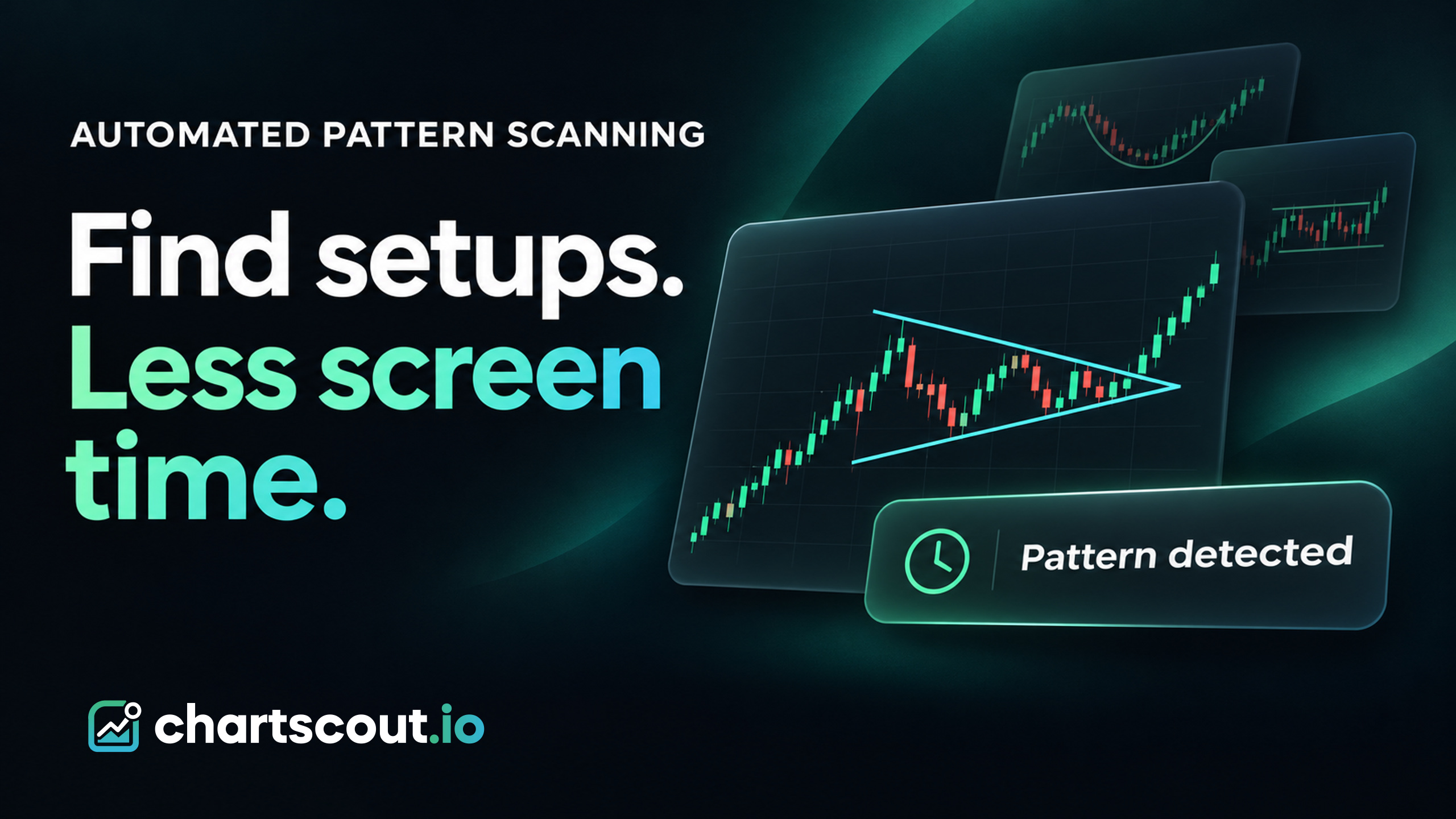
This glossary defines eight terms in the way they are used here, then shows how they fit into a low-screen-time routine.1. SETUPA setup is a chart situation you have defined in advance and can describe in plain words. It is not a prediction. If you cannot explain it in a sentence, you do not yet have a setup, only a feeling.2. PATTERNA pattern is a recognisable chart shape, such as a triangle, flag or wedge. Patterns help you organise what you look at. They do not guarantee what happens next.3. CANDIDATEA candidate is a chart that has been flagged but not yet reviewed. This is the most useful word on the list. A scanner produces candidates, and you decide which ones become anything more.4. STAGEStage describes where price is relative to a pattern: still forming, testing a boundary, or closed beyond it. Mixing up stages is a common reason traders feel they "missed" something that was never confirmed.5. INVALIDATIONInvalidation is the observation that would show your idea is wrong. Write it before you act. It lets you stop thinking about a chart once it fails, which is exactly what saves screen time.6. NOTIFICATIONA notification is a message that a condition you configured has occurred. It is a prompt to look, not a recommendation. Keeping that distinction clear stops notifications from turning into impulse decisions.7. SCREENERA screener is a tool that checks many markets for matches to criteria. ChartScout is a crypto chart pattern screener. Its Pattern Screener brings detected patterns into one view so you can browse and choose charts to review.8. WATCHERA watcher is something you set up to follow a chart or condition you chose. In ChartScout, Pattern Watchers are the feature that provide notifications, and you configure them yourself. Pattern Screener does not send notifications.PUTTING THE TERMS TO WORKA low-screen-time day might look like this. In one short session, you open the screener and collect candidates. You test each one by naming its pattern and stage. You keep only those where you can write an invalidation. For the few that remain, you decide whether a watcher fits your process.Then you close the charts. When a notification arrives, you reopen the chart, check its current stage, and either continue, wait, or drop it.WHAT THIS DOES NOT DOA routine like this reduces the time you spend looking. It does not reduce market risk, and it cannot make a pattern succeed. Patterns fail, and crypto can move sharply while you are away. Keep your own risk rules separate from any tool.Published by the ChartScout team. Educational content, not financial advice.Which of these eight terms do you find most often misused? Tell us in the comments.
TLDR The Labor Department’s crypto-linked retirement rule entered final White House review on November 5. The proposed regulation introduces a process-based safe harbor for retirement-plan fi
Crypto is again in “red” today, and this time XRP is taking one of the hardest hits among the largest assets. Bitcoin has fallen toward $75,300, Ethereum is near $2,220, and XRP has dropped t
The US labour market grew much faster than expected in October, and that is deepening fears in the crypto market of another rate hike by the Federal Reserve. Ethereum traded at around $2,236