Hydrex: The Omni-Liquidity MetaDEX Powering Base DeFi
Hydrex: The Omni-Liquidity MetaDEX Powering Base DeFi Most DEXs die in the noise. They launch, they farm, they fade. Hydrex on Base is different—not because it’s louder, but because it’s smar
A
AnonymousCryptoCompass newsroom
July 10, 2026
4 min read
NEWS
CryptoCompass editorial visual for defi coverage.
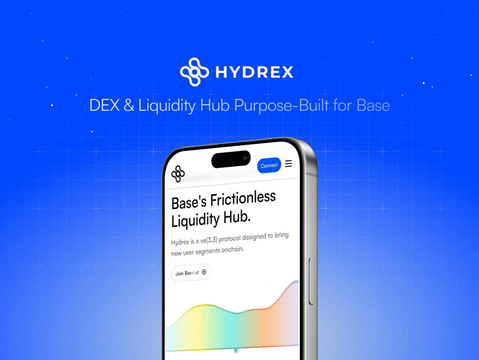
Hydrex: The Omni-Liquidity MetaDEX Powering Base DeFiMost DEXs die in the noise. They launch, they farm, they fade. Hydrex on Base is different—not because it’s louder, but because it’s smarter. It’s not just another swap interface; it’s an Omni-Liquidity MetaDEX designed to aggregate the entire Base ecosystem into one execution layer.We’re talking about a protocol that routes trades across multiple liquidity sources, integrates with lending protocols like Morpho, and even powers other applications (like Send.app) as a backend. That’s not a feature set—that’s infrastructure.The MetaDEX Architecture: Why Aggregation WinsTraditional DEXs are walled gardens. Your liquidity is only as deep as your own pools. Hydrex flips this by acting as a smart order router—scanning every available liquidity venue on Base to find the best price, lowest slippage, and deepest fills.This isn’t theoretical. By abstracting the complexity of multi-source routing, Hydrex gives users institutional-grade execution without needing to manually split orders across platforms. The result? Better fills for traders, higher capital efficiency for LPs.Core Platform: Four Pillars, One MissionHydrex’s interface is deceptively simple: Trade, Earn, Vote, Analytics. But each tab hides serious engineering.Trade is the front door—a swap interface powered by the MetaDEX engine. Earn is where LPs deposit assets and earn rewards, including unique “options tokens” that may offer asymmetric yield profiles. Vote signals a DAO governance model where HYDX holders steer protocol parameters. Analytics provides real-time on-chain data—TVL, pool APRs, volume—so users can make informed decisions without leaving the platform.This isn’t just UX polish. It’s a deliberate architecture that reduces friction for new DeFi users while giving power users the transparency they demand.HYDX Token: Incentives, Governance, and Real UtilityHYDX is the native governance token, but its real power lies in liquidity incentives. Historical data shows a HYDX/USDC pool offering 126.94% APR—far above the 24% for WETH/USDC. That’s classic liquidity mining, but executed with precision.The goal is clear: bootstrap deep liquidity for the native token pair, stabilize price, and reduce slippage. With a circulating supply of ~32M and a total supply of ~71M (no max cap), the tokenomics are designed for growth, not scarcity.Liquidity Pools: Where the Real Action HappensAt one point, Hydrex supported 336 pools. The top five by TVL tell a strategic story:- USDC (Morpho): $2.3M TVL, 12.43% APR—integrating lending yields.- WETH/cbBTC: $1.95M TVL, 22.16% APR—blue-chip trading.- HYDX/USDC: $1.89M TVL, 126.94% APR—native token incentives.- WETH/USDC: $1.01M TVL, 24.05% APR—core pair.- USDC/cbBTC: $920K TVL, 56.33% APR—Coinbase ecosystem play.This isn’t random. It’s a deliberate mix of stablecoin lending, native token bootstrapping, and high-volume pairs. Each pool serves a distinct strategic purpose.Ecosystem Integration: More Than Just a DEXHydrex isn’t just a standalone platform. It powers Send.app as a backend—a DEX-as-a-service model that signals technical maturity. It also ran a $20K trading competition sponsored directly by Base, proving strong alignment with the core team.When the L2 itself sponsors your events, you’re not just another project. You’re infrastructure.---Crynet’s Executive TakeHydrex’s Omni-Liquidity model is a direct response to the fragmentation problem in DeFi. For crypto projects, this means lower slippage and better execution for your token’s trading pairs—which directly impacts market depth and perceived liquidity. If you’re launching on Base, integrating with Hydrex could be the difference between a dead pool and a thriving market.---So, is Hydrex the liquidity layer Base needed? Or will it get lost in the noise of a thousand other DEXs? We’re watching the TVL and volume trends closely. What’s your take—does aggregation win in the end?<div style="text-align:center; margin-top:30px;"><a href="#rec555050898" style="background-color:#ffca00; color:#000; padding:15px 30px; text-decoration:none; font-weight:bold; border-radius:5px; display:inline-block;">Discuss Your Project with Us</a>Disclaimer: This content is for informational purposes only and does not constitute financial advice. Cryptocurrency investments carry high risk. Always do your own research before engaging with any DeFi protocol.
THORChain is facing a fresh dispute over its handling of stolen funds after Bitget and security researchers publicly asked the network to block addresses linked to the September 24 exploit. T
Citi and Coinbase have expanded their partnership with two new products designed to let businesses move between stablecoins and traditional dollars without building separate infrastructure, t
Recent discussions on X have reignited debate about the foundational structure of the XRP Ledger, especially regarding its smallest accounting unit, known as a ‘Drop.’ Each XRP coin is divisi