The use of stablecoins for corporate payments is gradually moving beyond small-scale technology demonstrations as multinational companies explore whether blockchain networks can improve the s
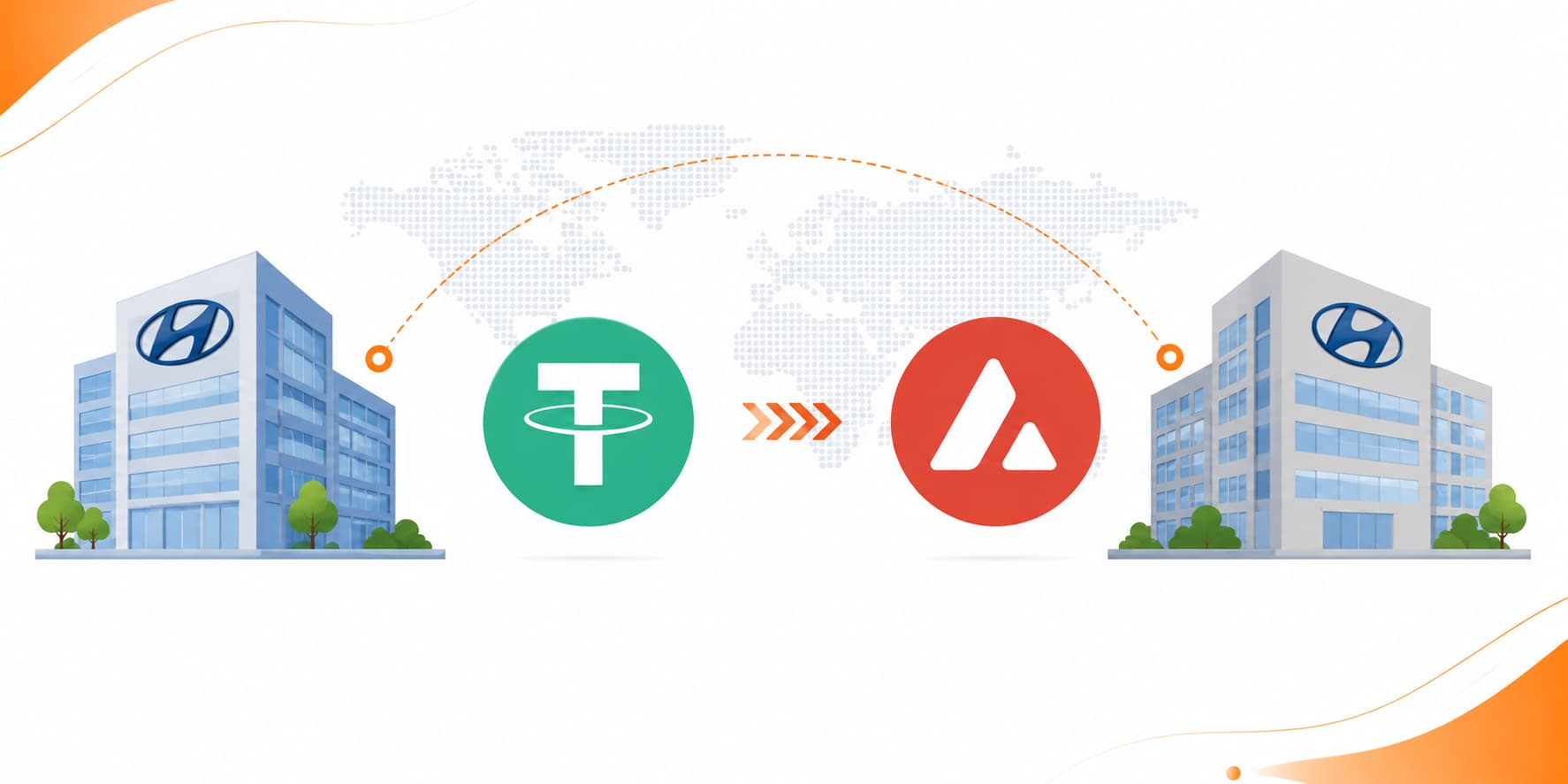
The use of stablecoins for corporate payments is gradually moving beyond small-scale technology demonstrations as multinational companies explore whether blockchain networks can improve the speed and efficiency of cross-border treasury operations. The latest example comes from South Korea, where Hyundai Card completed a live intercompany payment using USDT on the Avalanche blockchain, completing a transfer between Hyundai Motor’s U.S. and Mexican subsidiaries in around seven minutes.
While financial institutions have experimented with tokenized payments for years, most projects have remained confined to pilot environments or limited internal testing. Hyundai Card’s project differs because it processed an actual intercompany settlement rather than a simulated transaction, making it another sign that large corporations are beginning to evaluate stablecoins as part of treasury infrastructure rather than solely as digital assets.
Corporate treasury becomes the latest stablecoin use case
According to the company, Hyundai Motor America converted $20,000 into Tether’s USDT, transferred the funds across the Avalanche network and completed settlement with Hyundai Motor Mexico, where the payment was converted back into U.S. dollars. Hyundai Card said the end-to-end transfer averaged about seven minutes, compared with the several hours typically required for conventional bank transfers used for similar corporate settlements.
Rather than focusing only on blockchain technology, the pilot also examined whether stablecoin transfers could fit within existing corporate finance processes. Hyundai Card said it reviewed accounting, tax, legal and internal control requirements before executing the payment. Blockchain payments company Axiym participated in building the settlement infrastructure alongside Tether and Avalanche. The collaboration also underscores the growing adoption of the Avalanche ecosystem for enterprise-grade payment infrastructure.
Highlights of the pilot
- Live intercompany settlement between Hyundai Motor’s U.S. and Mexico operations
- $20,000 transferred using USDT on Avalanche
- Settlement completed in approximately seven minutes
- Payment infrastructure supported by Tether, Avalanche and Axiym
- Pilot evaluated operational and compliance requirements alongside payment speed
Europe will test multi-currency settlements
Hyundai Card plans to extend the project to Hyundai Motor entities in Europe later this month. Unlike the first phase, the next trial is expected to test stablecoin transfers involving local currencies instead of only U.S. dollars. The company said Visa and Circle, the issuer of USDC, will participate in the second phase as it evaluates whether blockchain-based settlements can reduce foreign exchange costs for international treasury operations.
The expansion reflects a broader shift in enterprise blockchain projects, where attention is increasingly turning from payment speed alone to practical issues such as liquidity management, foreign exchange efficiency and operational integration across multiple jurisdictions. Multi-currency settlements present a more complex test than a single dollar-denominated payment because they introduce additional regulatory and treasury considerations.
What the European pilot will evaluate
- Stablecoin settlements using multiple local currencies
- Foreign exchange cost efficiencies
- Integration with Visa and Circle
- Operational scalability across overseas subsidiaries
- Compliance across different regulatory jurisdictions
Enterprise adoption continues to broaden
Hyundai Card’s pilot follows a series of recent initiatives in which banks, payment providers and infrastructure companies have tested stablecoins for commercial payments instead of retail cryptocurrency transactions. The common objective has been to reduce settlement delays and improve capital efficiency in cross-border payments, an area where correspondent banking systems can still involve multiple intermediaries and extended processing times.
Although Hyundai Card’s project remains a proof of concept rather than a production deployment, its use of a live corporate payment provides another example of how stablecoins are increasingly being evaluated as financial infrastructure. The outcome of the planned European trial will offer a clearer indication of whether blockchain-based settlement can support routine treasury operations across multiple currencies and regions. The initiative also comes as AVAX price holds gains, reflecting continued market attention on Avalanche as enterprise blockchain adoption expands.