TLDR IBM stock rebounds 0.11% overnight to $220.76 after closing down 0.35% on Wall Street. DARPA advances IBM to Stage C for independent quantum hardware testing and review. IBM targets 2029
TLDR
- IBM stock rebounds 0.11% overnight to $220.76 after closing down 0.35% on Wall Street.
- DARPA advances IBM to Stage C for independent quantum hardware testing and review.
- IBM targets 2029 for its first fault-tolerant quantum computer, Quantum Starling.
- DARPA launched its quantum initiative to assess industrial computing by 2033.
- IBM expands quantum research through partnerships with over 340 organizations.
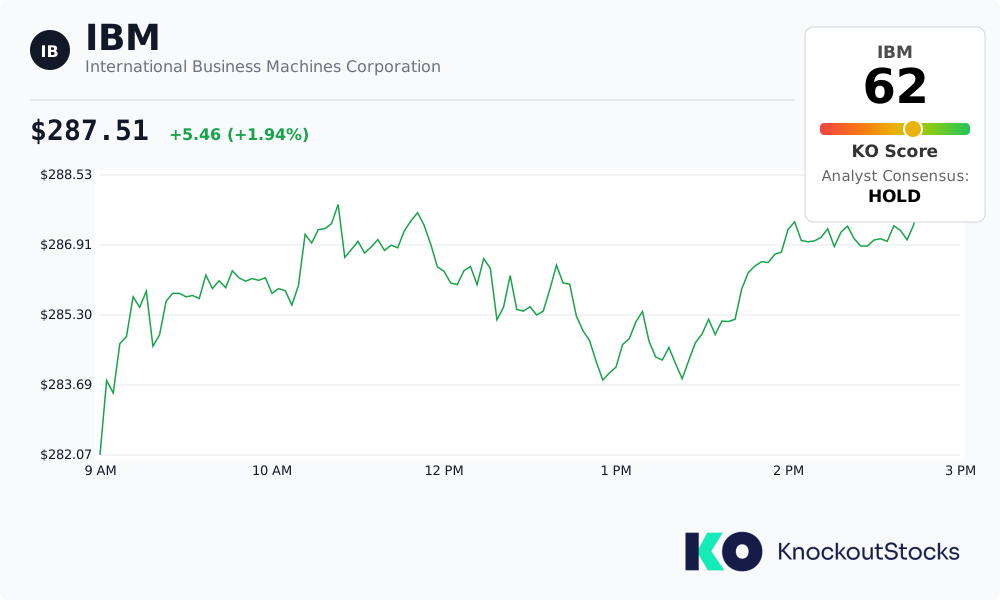
IBM (IBM) stock showed signs of recovery in overnight trading after DARPA advanced the company into its quantum testing phase. Shares closed at $220.51, down 0.35%, before recovering to $220.76, gaining 0.11% overnight. The selection moves IBM into independent testing of its technology for building fault-tolerant quantum computers.
International Business Machines Corporation, IBM
IBM Stock Recovers as DARPA Selects Company for Stage C
IBM secured a place in Stage C of the Quantum Benchmarking Initiative, which the Defense Advanced Research Projects Agency oversees. The selection allows IBM to advance beyond technical planning into independent hardware testing and system evaluation. DARPA will examine whether the company’s technology can support a reliable and commercially useful quantum computing system.
The agency launched the initiative in 2024 to assess the feasibility of industrial quantum computing by 2033. Its program focuses on machines that can deliver greater computational value than their operating and development costs. Consequently, participating companies must demonstrate technical progress, practical engineering plans, and clear approaches to managing development risks.
IBM completed the program’s earlier assessment stages before receiving approval for the third phase. Stage A examined technical concepts, while Stage B reviewed detailed research plans and risk management strategies. Stage C now introduces independent verification of hardware performance, engineering methods, and proposed computing architectures.
IBM Targets Fault-Tolerant Quantum Computing by 2029
IBM continues developing IBM Quantum Starling, a fault-tolerant quantum computer that the company expects to deliver in 2029. The system will combine advanced processors, error correction methods, and improvements in hardware engineering. IBM aims to reduce computational errors and support more complex operations through these developments.
IBM has demonstrated core hardware components that support its fault-tolerance plans. The company has also reported advances in error correction decoding, an important requirement for reliable quantum operations. These developments support its broader research program as DARPA begins evaluating technical performance.
IBM maintains a global network of quantum computing systems alongside its Qiskit software platform. More than 340 organizations use its quantum technology across research, healthcare, finance, materials science, and government operations. These partnerships support practical research and help organizations explore applications beyond conventional computing capabilities.
DARPA Testing Expands IBM’s Quantum Development Program
DARPA’s independent verification team will assess IBM’s technology against the program’s technical and economic requirements. The process examines whether participating companies can translate their development plans into working quantum computing systems. It also measures engineering challenges that could affect performance, reliability, and future expansion.
IBM will continue working with government agencies, academic institutions, and commercial partners throughout its quantum development program. These collaborations provide research support and technical expertise across different computing applications and engineering requirements. Meanwhile, DARPA’s evaluation will provide another independent assessment of IBM’s progress toward fault-tolerant computing.
The Stage C selection represents another development in IBM’s long-term quantum computing strategy. However, the testing phase still requires the company to demonstrate its technical capabilities through independent examination. IBM maintains its 2029 target as DARPA works toward assessing industrially useful quantum computing by 2033.
The post IBM (IBM) Stock: Rebounds as DARPA Advances IBM to Quantum Testing Stage appeared first on Blockonomi.