Traditional exchange executives rarely praise a crypto-native venue as a superior competitor. So when ICE CEO Jeff Sprecher drew a direct line from Hyperliquid to Nasdaq—calling the decentral
Traditional exchange executives rarely praise a crypto-native venue as a superior competitor. So when ICE CEO Jeff Sprecher drew a direct line from Hyperliquid to Nasdaq—calling the decentralized derivatives platform operationally larger with just 11 employees—the remark landed as both a compliment and a pointed challenge to regulators. The comments, made at the Bernstein Conference and reported by the original report, suggest that the market structure conversation has moved beyond speculation. Established financial infrastructure operators are now openly acknowledging that lean, crypto-native teams can match or exceed the throughput of century-old institutions.
The 11-Person Operation That Stunned Wall Street
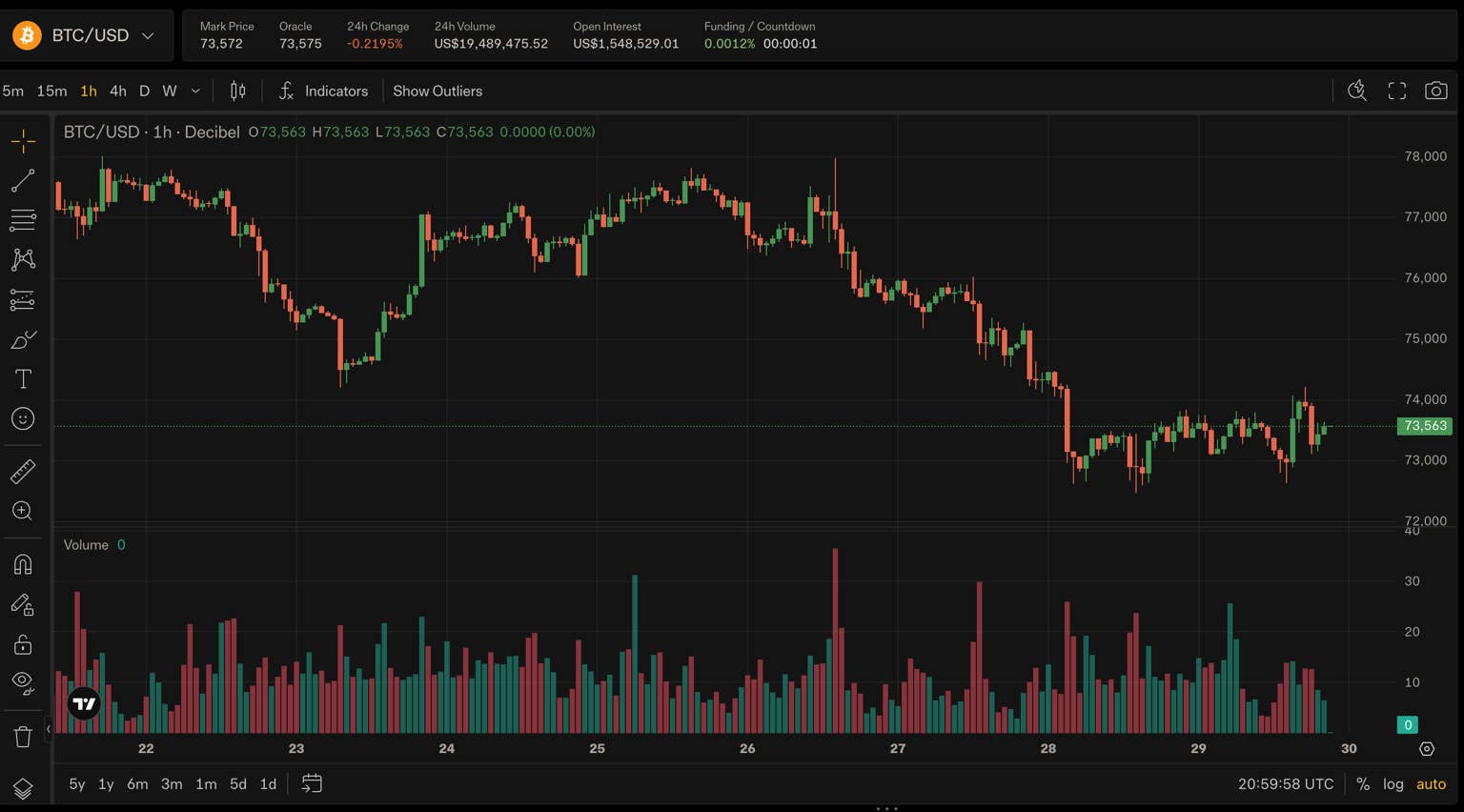
Sprecher did not mince words. “It’s bigger than Nasdaq,” he said, referring to Hyperliquid’s trading volumes and activity. He revealed he has met with the team several times, calling them “very, very smart people.” The headcount detail—just 11 individuals—underscores a shift that traditional exchanges have struggled to internalize: software and tokenized incentives can replace whole floors of legal, compliance, and operational staff. Hyperliquid’s automated market maker and perpetual futures engine now handles volumes that rival major centralized venues, and it does so without the legacy cost structure that ICE and Nasdaq carry.
The dynamic mirrors a broader pattern. While institutional staking from Nasdaq-listed firms is driving token rallies like SUI’s 18% surge, platforms built outside the regulatory perimeter are quietly capturing order flow. The ICE chief’s acknowledgment signals that traditional market operators view Hyperliquid not as a curiosity but as a structural force they cannot ignore.
SpaceX Derivatives Could Overshadow the IPO
Sprecher zeroed in on one product that distills the regulatory tension. Hyperliquid offers a SpaceX derivatives market tied to the upcoming IPO scheduled for June 11. He predicted that derivatives volume on this contract could become “bigger than the IPO itself.” The statement is extraordinary: it suggests that synthetic exposure to a pre-public company, traded on a lightly regulated venue, could attract more capital than the primary equity listing on national exchanges. That flips the traditional sequence of capital formation on its head.
For exchanges like ICE, which operates the New York Stock Exchange, the math is uncomfortable. Listing fees, market data, and clearing revenues flow from primary issuance and secondary trading. If permanent swaps and perpetuals siphon away interest before shares even begin trading, the value chain fractures. Crypto-native platforms would capture the speculative premium without shouldering the same reporting, governance, and capital requirements.
The Regulatory Disconnect Sprecher Pointed To
Sprecher did not stop at admiration. He questioned why regulators allow products like Hyperliquid’s perpetual futures while restricting traditional exchanges from offering functionally similar instruments. Under traditional financial rules, he noted, these perpetuals would be treated as swaps, bringing a host of registration and clearing mandates. Yet crypto venues operate with a far lighter touch. The asymmetry is not new, but having a figure of Sprecher’s stature articulate it at an institutional conference sharpens the debate.
This regulatory double standard is increasingly central to Washington’s crypto legislation fights. Four days before a Senate vote on what could be the biggest crypto bill in US history, banks are aggressively pushing amendments that would protect their turf. Meanwhile, tokenized real-world assets have crossed $20 billion on-chain, and institutions like JPMorgan are settling Treasury transactions via Ondo, as detailed in BlockchainReporter’s tokenization roundup. The gap between regulatory frameworks and market reality is widening by the day.
Hyperliquid’s case encapsulates the impasse. Its team built a global derivatives venue without the compliance overhead that ICE shoulders. If regulators clamp down, the innovation migrates. If they don’t, traditional exchanges face existential pressure on their core business lines. Sprecher’s comments may be read as an invitation to regulators to level the playing field—or at least to acknowledge that the field exists.
What remains uncertain is whether lawmakers can draft rules that encompass perpetual swaps without driving activity underground or offshore entirely. The ICE CEO’s remarks will almost certainly be cited in upcoming hearings. For traders, the immediate implication is that SpaceX derivatives volumes will be closely watched as a bellwether. Hyperliquid’s lean model succeeds or fails on liquidity, and the market will test that thesis when the IPO date approaches.