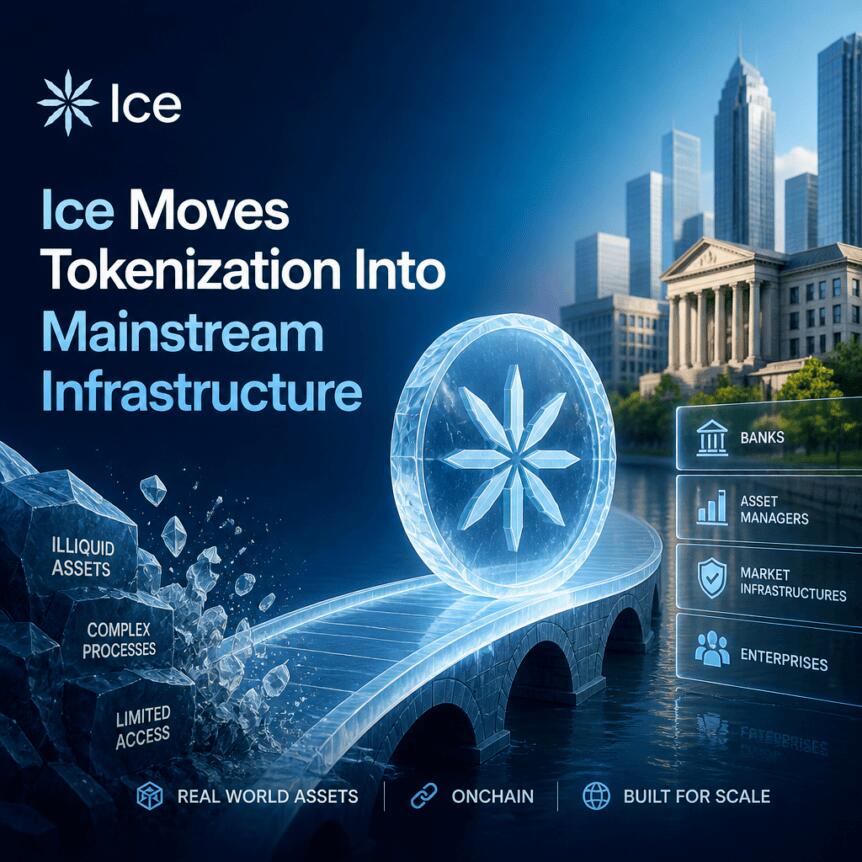
ICE’s stake in tZERO signals a shift toward tokenized securities as core market infrastructure, linking blockchain settlement with established financial markets. ICE’s investment in tZERO poi
ICE’s stake in tZERO signals a shift toward tokenized securities as core market infrastructure, linking blockchain settlement with established financial markets.
ICE’s investment in tZERO points to tokenization becoming part of mainstream securities infrastructure rather than a separate crypto market.
Key Highlights
- ICE’s tZERO investment signals a major shift toward tokenized securities infrastructure.
- Tokenization is moving closer to established exchanges and regulated markets worldwide.
- ICE will use tZERO technology to support future on-chain securities settlement.
- The deal connects blockchain rails with traditional transfer and brokerage systems.
- Market infrastructure could become faster and more automated through tokenization.
Bitcoin traded at about $79,442 on September 8, while ICE advanced plans for tokenized securities infrastructure. The move strengthens the link between blockchain technology and established financial markets.
Intercontinental Exchange has agreed to invest in tZERO and support its latest financing round. The agreement also gives ICE access to tZERO’s blockchain patent portfolio.
The companies also signed a memorandum covering infrastructure for public tokenized securities markets. Under the plan, tZERO will help design digital transfer-agent and broker-dealer infrastructure.
The infrastructure will support on-chain settlement for transactions on ICE’s planned NYSE-affiliated digital trading platform. Therefore, the initiative connects blockchain settlement with systems used across traditional capital markets.
The move changes how tokenization fits into the financial system. Instead of operating separately, tokenized securities can connect directly with established market structures.
ICE’s involvement also gives the sector stronger institutional backing. The company operates major financial infrastructure and owns the New York Stock Exchange.
TZERO Provides The Technology Layer
tZERO already operates infrastructure covering issuance, trading, custody, settlement, and investor services. Its regulated platform supports secondary trading for digital securities in the United States.
The company also operates an SEC-registered transfer agent and broker-dealer. These capabilities give tZERO a direct role across several stages of the securities lifecycle.
Moreover, tZERO offers blockchain-based systems for equities, debt, funds, and other real-world assets. Its infrastructure can also support automated transfers, reporting, distributions, and settlement.
That existing structure helps explain ICE’s interest in the company. The partnership can combine established exchange infrastructure with blockchain-based securities technology.
The agreement also includes licensing for tZERO’s blockchain patents. The portfolio covers areas including compliant transfers, smart contracts, and corporate actions.
Tokenization Could Reshape Market Operations
The broader signal concerns how financial markets could process securities in coming years. Tokenization can place ownership records and transaction rules directly onto blockchain networks.
That structure could reduce manual processes across issuance, transfers, settlement, and corporate actions. It could also allow markets to operate with faster settlement while maintaining regulatory controls.
tZERO already promotes T+0 settlement through its proprietary technology. ICE’s involvement could therefore push faster settlement concepts toward larger financial markets.
Deepankar Kapoor, Chief Growth Officer for Global Markets at eXchange1, sees the deal as a significant infrastructure signal. His view places the emphasis on settlement efficiency, lower costs, and more efficient market operations.
The development also shows that traditional exchanges can treat tokenization as infrastructure rather than a separate crypto trend. That distinction could influence how other exchanges and financial institutions approach blockchain technology.
ICE’s strategy also comes as tokenized securities gain attention across financial markets. Several firms now explore blockchain-based versions of equities, funds, bonds, and other assets.
The industry still needs strong compliance, custody, trading, and settlement systems before tokenized markets can scale. ICE and tZERO are targeting those core functions rather than focusing only on digital assets.
As a result, the partnership could mark a broader change in financial market design. Blockchain technology may increasingly operate behind regulated markets without changing their basic investor protections.
The direction also creates pressure for other exchanges to develop compatible infrastructure. Firms that delay adoption could face higher costs when tokenized securities become more widely integrated.
For ICE, the tZERO investment therefore represents more than exposure to blockchain technology. It places the company closer to the infrastructure that could support future tokenized securities markets.
The next stage will depend on regulatory approvals, platform development, and market adoption. However, the agreement already shows that tokenization has entered a more established phase within financial infrastructure.
This article was originally published as Ice Moves Tokenization Into Mainstream Infrastructure on Crypto Breaking News – your trusted source for crypto news, Bitcoin news, and blockchain updates.