Key Takeaways Intel’s Q2 earnings per share reached $0.42, crushing the $0.21 consensus estimate, while revenue of $16.1B surpassed the $14.4B forecast Year-over-year revenue surged 25%—marki
Key Takeaways
- Intel’s Q2 earnings per share reached $0.42, crushing the $0.21 consensus estimate, while revenue of $16.1B surpassed the $14.4B forecast
- Year-over-year revenue surged 25%—marking Intel’s strongest sales expansion in approximately 15 years
- The company’s Foundry division generated $5.8B in revenue, representing 31% growth compared to last year and exceeding projections
- Management’s Q3 outlook projects $0.38 EPS with revenue ranging from $15.8B to $16.8B, surpassing analyst expectations
- Shares have skyrocketed 172% year-to-date in 2026, despite trading roughly 29% beneath the record high of $140.94
Intel’s second-quarter performance exceeded expectations across the board, sending shares soaring 12% in extended trading Thursday. By Friday’s premarket session, the stock had moderated to approximately 4% gains, trading at $100.23.
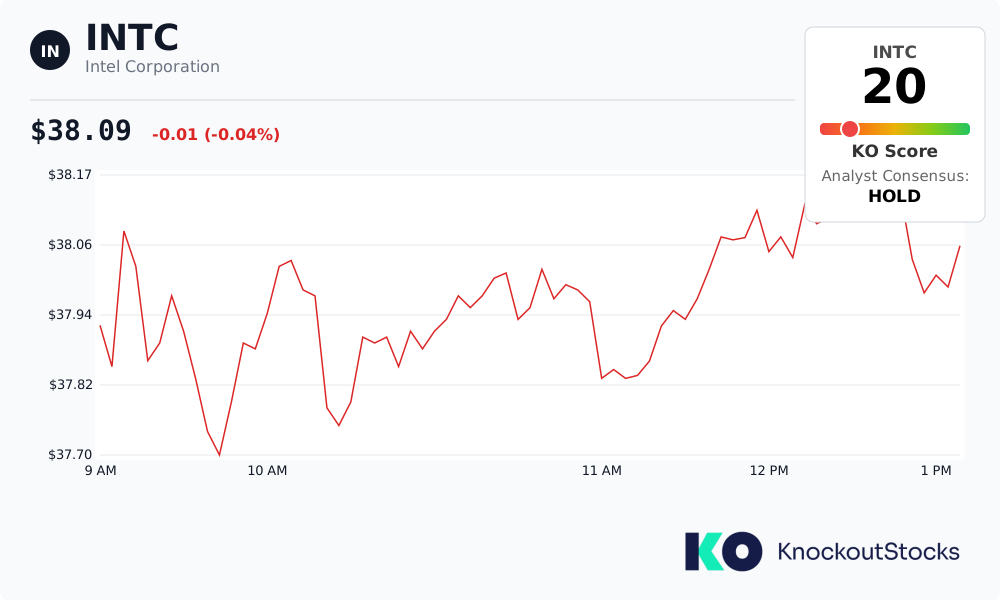 Intel Corp., INTC
The chipmaker’s adjusted earnings per share landed at $0.42—precisely double the Street’s $0.21 projection. Total revenue reached $16.1 billion, significantly outpacing the anticipated $14.4 billion. This represents a remarkable turnaround from the same period last year when Intel reported a $0.10 per share loss on $12.9 billion in sales.
Chief Executive Lip-Bu Tan attributed the strong performance to artificial intelligence tailwinds. “AI is driving unprecedented demand for compute,” Tan stated, emphasizing that Intel is “well-positioned to capture sustainable growth” throughout its CPU operations, ASIC development, and foundry services.
The Intel Foundry segment delivered $5.8 billion in quarterly revenue, representing 31% year-over-year expansion and surpassing the $5.6 billion analyst consensus. The division also announced Fortinet as a new customer, bolstering investor optimism about the manufacturing arm’s trajectory.
Breaking Down the Financials
Intel’s data center and AI segment experienced explosive 59% year-over-year revenue growth. Company-wide sales accelerated 25%—the fastest expansion rate in approximately 15 years. These metrics represent a significant validation for a company many market observers had dismissed.
Looking ahead to Q3, Intel provided guidance calling for $0.38 in earnings per share alongside revenue spanning $15.8 billion to $16.8 billion. Both figures exceed Wall Street’s consensus projections of $0.27 EPS and $15.1 billion in sales.
Management also disclosed intentions to “meaningfully increase” capital expenditures on equipment, clean room infrastructure, and substrate capacity to accommodate anticipated expansion through 2027.
Wall Street Remains Divided
Notwithstanding the impressive quarterly results, the analyst community maintains a neutral stance on INTC with a consensus Hold rating and $102.77 price target. Current coverage breaks down to 15 Buy ratings, 29 Hold ratings, and 3 Sell ratings, with an additional 2 analysts at Strong Buy.
Raymond James elevated Intel to “moderate buy” status in April. Freedom Capital assigned a “strong buy” rating. Robert W. Baird increased its price objective from $50 to $75 while maintaining a neutral stance. Conversely, KGI Securities downgraded from outperform to neutral with a $71 target.
Among institutional investors, Mizuho Markets Americas dramatically reduced its INTC holdings by 99% during Q1, liquidating 841,355 of its 850,000 shares and retaining only 8,645 shares valued at approximately $382,000. Meanwhile, other institutions expanded their positions, with iA Global Asset Management increasing its stake by 17% in Q4.
Year-to-date, INTC has climbed 172% in 2026, though shares remain approximately 29% below the June 22 all-time closing peak of $140.94. The stock currently trades within a 52-week range of $18.97 to $142.35.
Wall Street analysts project full-year 2026 earnings per share of $0.65 for Intel.
The post Intel (INTC) Stock Surges 12% After Crushing Q2 Earnings Expectations appeared first on Blockonomi.