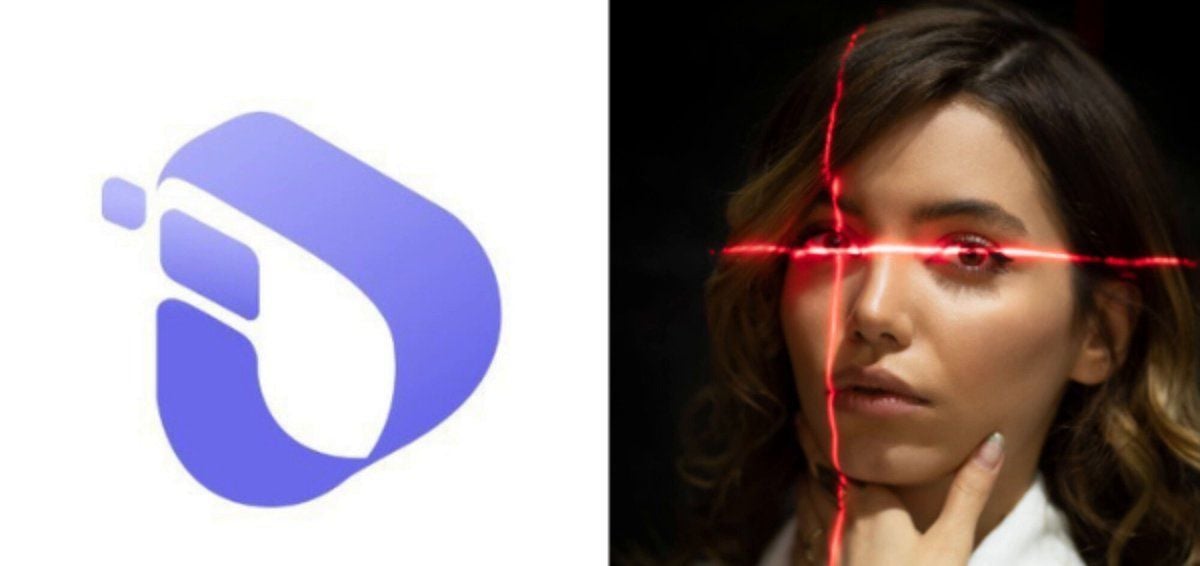
Most identity systems store what they scan. InterLink ID, the verification layer built by @inter_link, is designed to do the opposite: confirm a person is real without keeping any record of w
Most identity systems store what they scan. InterLink ID, the verification layer built by @inter_link, is designed to do the opposite: confirm a person is real without keeping any record of what their face looks like.
How the verification process works
Verification begins with a face scan. Before anything is recorded, an AI model runs a deepfake and liveness check to ensure the scan is coming from a real, present person rather than a photo or video replay. At the heart of the system is InterLink ID, a biometric-based verification tool where users scan their face via the app and AI algorithms check for liveness to prevent spoofs like photos or videos.
Once the liveness check passes, the face is converted into a feature vector, a numerical string describing facial geometry rather than an image. That vector is then scrambled and hashed, making it impossible to reconstruct the original face from the data. What gets stored is not the hash itself but a cryptographic commitment to it, a sealed record that can be checked against during future verification but cannot be read or reverse-engineered. According to InterLink's whitepaper, those commitments are held across a decentralized node pool rather than a central server.
Later verifications work by proving a fresh scan matches the sealed record without revealing either the new scan or the original commitment. InterLink Network is a decentralized platform that connects real human identities using biometric verification and zero-knowledge proof, and InterLink ID uses face recognition, liveness detection, and zero-knowledge proofs to verify a user's identity without revealing any personal data.
NIST submission and broader context
The matching algorithm underpinning the system was submitted to NIST's face recognition evaluation in November 2024. InterLink Labs was among the new developers submitting to the FRTE 1:1 evaluation run by NIST.NIST evaluations are considered critical for assessing algorithm readiness for real-world deployment, and unlike benchmark tests on public datasets, NIST uses sensitive operational datasets not available in the public domain, with developers submitting algorithms for third-party testing to ensure unbiased, standardized evaluation.
The privacy-by-design approach addresses a growing problem in Web3. InterLink has emerged as a blockchain project focused on verifying human identities through facial scanning and liveness detection, with the network aiming to create a decentralized system where each participant is confirmed as a unique person, addressing issues like bot interference and Sybil attacks in Web3 environments.The broader InterLink Chain is described as a blockchain network built for humans, powered by decentralized identity verification and Sybil resistance.
The one-person-one-identity model has practical implications beyond security. The network seeks to enable fair participation in areas like airdrops and staking, where fake accounts often skew outcomes.The project secured $20 million in seed funding, backed by investors including Google for Startups and Monad.
Sources:Biometric Update: InterLink Labs submits to NIST FRTE 1:1 evaluationYahoo Finance: InterLink Labs unveils its Real Human NetworkBitrue: What is Interlink Network