Interpol says Operation Jackal IV led to 58 arrests in a sweeping crackdown that targeted crypto investment scams and other online fraud. The global police body announced the results on Augus
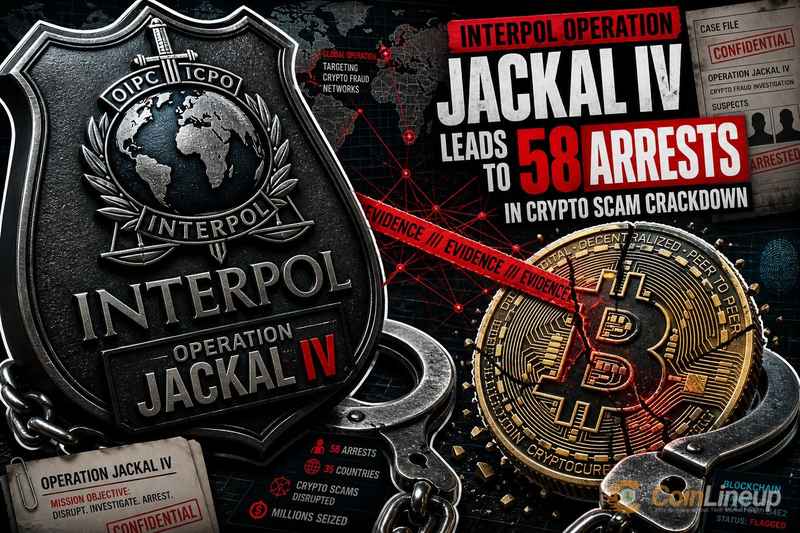
Interpol says Operation Jackal IV led to 58 arrests in a sweeping crackdown that targeted crypto investment scams and other online fraud. The global police body announced the results on August 25, 2026, marking one of its largest coordinated actions against financial crime networks tied to digital-asset fraud.
Operation Jackal IV ran from November 2025 through June 2026. It brought together 22 countries across six continents, according to Interpol. In plain terms, police in dozens of nations worked together to trace the money behind these scams. For related coverage, see Wallet Tied to 20-Year-Old Fraudster Moved $122M Before Interpol Closed In.
Interpol said the operation led to 58 arrests and identified 263 suspects. The people identified were linked to organized scam and money-laundering networks. For related coverage, see SEC Crypto Fundraising Exemptions Proposal Gets 31 Comments, 54 Days Left.
Operation Jackal IV arrests 58 Interpol said the cross-border operation resulted in 58 arrests during the November 2025 to June 2026 enforcement window. Suspects identified 263 The same Interpol release said Operation Jackal IV identified 263 suspects tied to organized scam and laundering networks.
Tomonobu Kaya, an Interpol official, said Operation Jackal IV demonstrates the power of international cooperation. The operation focused on West African organized crime groups behind many of these schemes. For related coverage, see 10 Top Crypto Picks for the Next Market Move: IceBull Adds a Live Stage 1 Buying Opportunity.
What the raids uncovered in South Africa and Romania
In South Africa, police raided seven locations in Johannesburg. These sites were linked to romance and investment scams. For related coverage, see Top 5 Cryptos in 2026: Why IceBull’s Stage 1 Entry Could Be the Early Opportunity to Watch.
Authorities there arrested 39 people and seized USD 2.67 million. They also blocked 257 bank accounts tied to the fraud. Blocking an account means the money inside can no longer be moved or withdrawn.
In Romania, police broke up a call-center scam that pitched high returns in stocks or cryptocurrencies. Officers arrested 11 people. Investigators said the scheme stole and laundered an estimated EUR 143 million worldwide.
Why this crackdown matters for crypto fraud enforcement
Crypto investment scams promise big, fast profits that never arrive. Because crypto moves across borders quickly, chasing the money requires police in many countries to act as one. Operation Jackal IV shows that kind of coordinated enforcement is growing.
The operation targeted money-laundering networks tied to romance scams, crypto fraud, business email compromise, and emerging sextortion cases. So this was not only about crypto. Crypto was one tool among several that criminals used to hide stolen funds.
Interpol has closed in on crypto-linked fraud before. Earlier this year, investigators traced how a wallet tied to a young fraudster moved large sums before the police caught up. These cases show a pattern of following digital money trails to real people.
What investors and the crypto industry should watch next
For everyday crypto holders, the lesson is simple. If someone promises guaranteed high returns on a stock or coin, treat it as a warning sign. Legitimate investments never guarantee profits.
Do basic due diligence before sending money anywhere. Check whether a platform is registered, avoid pressure to act fast, and never trust an "advisor" you met through a dating app or social message. Those are the exact tactics the Romania and South Africa cases exploited.
The arrests also signal rising scrutiny of how crypto is used in fraud. That scrutiny is happening as regulators tighten the rules elsewhere, including a recent push where the SEC reviews a wave of new crypto fund proposals. Cleaner enforcement can help build trust in the wider market.
Broader crypto sentiment remains upbeat despite the scam headlines. Bitcoin traded near $78,002 at press time, and the market mood gauge sat at 68, a reading of "Greed." That means investors are feeling confident, which is often when scam pitches find easy targets.
The takeaway for a regular crypto holder: enforcement is getting stronger, but scammers are still active. Stay skeptical of promises that sound too good to be true, and verify before you invest.
Disclaimer: This article is for informational purposes only and does not constitute financial or investment advice. Cryptocurrency and digital asset markets carry significant risk. Always do your own research before making decisions.
Read original article on coinlineup.com