Invesco, one of the largest asset managers globally, has filed with the U.S. Securities and Exchange Commission to launch a tokenized fund targeting the stablecoin reserve market, signaling g
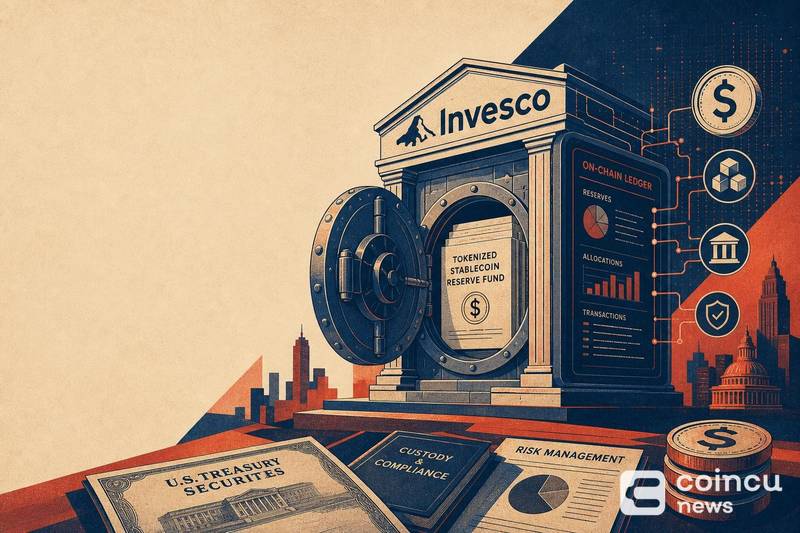
Invesco, one of the largest asset managers globally, has filed with the U.S. Securities and Exchange Commission to launch a tokenized fund targeting the stablecoin reserve market, signaling growing institutional interest in blockchain-based financial infrastructure.
The filing, submitted to the SEC under Invesco's Short-Term Investments Trust, outlines plans for a reserve-style product that would use tokenization to provide on-chain access to traditional money market instruments. The SEC filing indicates the fund would be structured to serve as backing infrastructure for stablecoin issuers and institutional treasury operations. For related coverage, see Coinbase to List Cap (CAP): What the Listing Announcement Means.
The move is notable because it pairs a regulated, traditional fund wrapper with blockchain-native distribution rails. Rather than issuing a stablecoin directly, Invesco appears to be positioning itself as a reserve layer, offering the kind of short-duration, high-quality asset portfolio that stablecoin issuers need to maintain their pegs. For related coverage, see 5 Online Casino Platforms Readers Commonly Compare in 2026.
What a Tokenized Reserve Fund Actually Means
A tokenized reserve fund takes a conventional money market or short-term bond fund and represents its shares as digital tokens on a blockchain. This allows for near-instant settlement, 24/7 transferability, and programmable interactions with other on-chain protocols. For related coverage, see Bitcoin Rebounds Above $60,000 as 24-Hour Loss Hits 1.7%.
The distinction between this product and a consumer-facing stablecoin is important. A stablecoin like USDC or USDT is a payment instrument designed for end users. A reserve fund, by contrast, is a backend product, one that stablecoin issuers or institutional treasuries would use to park and manage the assets that back those stablecoins. For related coverage, see The DATA Foundation Launches to Tackle AI’s Multi-Billion Dollar Training Data Bottleneck.
By targeting the reserve layer rather than the consumer layer, Invesco avoids direct competition with established stablecoin issuers while tapping into the infrastructure demand that supports them. This is consistent with Invesco's broader push into tokenized treasury products, which has included acquisitions in the on-chain fund space.
Why Invesco Is Moving Into This Space Now
Several factors make the timing logical. Stablecoin total supply has grown substantially, and every dollar of stablecoin in circulation requires backing assets held in reserve. That creates a large and growing addressable market for institutional-grade reserve management.
Traditional asset managers have been exploring tokenization as a way to modernize fund distribution, reduce settlement friction, and access new pools of capital. A reserve fund is a practical entry point because the underlying assets, typically U.S. Treasuries and money market instruments, are familiar, low-risk, and well-understood by regulators.
Invesco's significant assets under management give it the scale and credibility to attract institutional counterparties who need reliable, auditable reserve partners. Settlement efficiency and on-chain transparency are key selling points for this type of product.
Market Implications and Competitive Pressure
A major asset manager entering the tokenized reserve space lends legitimacy to the broader category of real-world asset tokenization. It signals that the infrastructure around on-chain finance has matured enough for regulated firms to participate directly.
The symbolic weight of the Invesco brand may matter as much as the product itself in the near term. Institutional allocators and corporate treasurers often wait for a recognized name to enter a category before committing capital. This filing could serve as that benchmark event.
If the fund launches successfully, it could pressure other large asset managers to develop competing tokenized reserve or treasury products. BlackRock, Franklin Templeton, and others have already made moves in the tokenized fund space, and Invesco's entry raises the competitive stakes further.
The difference between symbolic impact and measurable market impact will depend on the fund's actual size, distribution partners, and the blockchain networks it chooses to deploy on, none of which are confirmed in the current filing.
Open Questions on Custody, Compliance, and Operations
Several material details remain unspecified. The filing does not clarify which blockchain or blockchains will host the tokenized shares, what custody arrangements will be used, or how redemption mechanics will work for on-chain holders.
Tokenized financial products raise regulatory questions around investor access, anti-money laundering compliance, and the legal treatment of on-chain fund shares. Whether the fund will be available only to qualified institutional buyers or open to a broader investor base has not been disclosed.
Reserve transparency is another critical area. Stablecoin reserve products face heightened scrutiny around audit frequency, asset composition, and real-time reporting. How Invesco addresses these expectations will influence institutional confidence in the product.
The absence of a confirmed launch date, jurisdiction-specific details, or named distribution partners means that firm conclusions about the fund's impact are premature at this stage.
FAQ About Invesco's Tokenized Stablecoin Reserve Fund
Is Invesco launching a stablecoin? No. The product is a reserve fund, not a consumer-facing stablecoin. It is designed to hold the kind of short-term, high-quality assets that back stablecoins, rather than function as a payment token itself.
What does "tokenized" mean in this context? Tokenization means representing fund shares as digital tokens on a blockchain. This enables faster settlement, programmable transfers, and integration with decentralized finance protocols.
Who is the likely target user? The fund appears aimed at institutional participants: stablecoin issuers needing reserve management, corporate treasuries seeking on-chain yield, and digital asset firms looking for regulated counterparties.
What details remain unconfirmed? The blockchain network, custody provider, redemption mechanics, investor eligibility criteria, fund size, and launch timeline have not been publicly specified as of the initial SEC filings.
Disclaimer: This article is for informational purposes only and does not constitute financial or investment advice. Cryptocurrency and digital asset markets carry significant risk. Always do your own research before making decisions.
The post Invesco Plans to Launch Tokenized Stablecoin Reserve Fund: What It Means was initially published on Coincu.