Key Highlights Apple’s fiscal Q2 revenue reached $111.2 billion, representing a 17% year-over-year increase, while EPS grew 22% to $2.01 iPhone sales achieved a March-quarter milestone, fuele
Key Highlights
- Apple’s fiscal Q2 revenue reached $111.2 billion, representing a 17% year-over-year increase, while EPS grew 22% to $2.01
- iPhone sales achieved a March-quarter milestone, fueled by robust iPhone 17 adoption
- Services revenue reached unprecedented levels, bolstered by App Store, advertising, cloud services, and subscription offerings
- The company approved a massive $100 billion share repurchase initiative and increased its quarterly dividend by 4%
- Analyst sentiment reflects a Moderate Buy rating with a consensus price target around $314.85
Apple delivered impressive fiscal second-quarter results, posting revenue of $111.2 billion—a 17% jump compared to the prior-year period. Earnings per share on a diluted basis reached $2.01, marking a 22% improvement, while the company generated over $28 billion in operating cash flow.
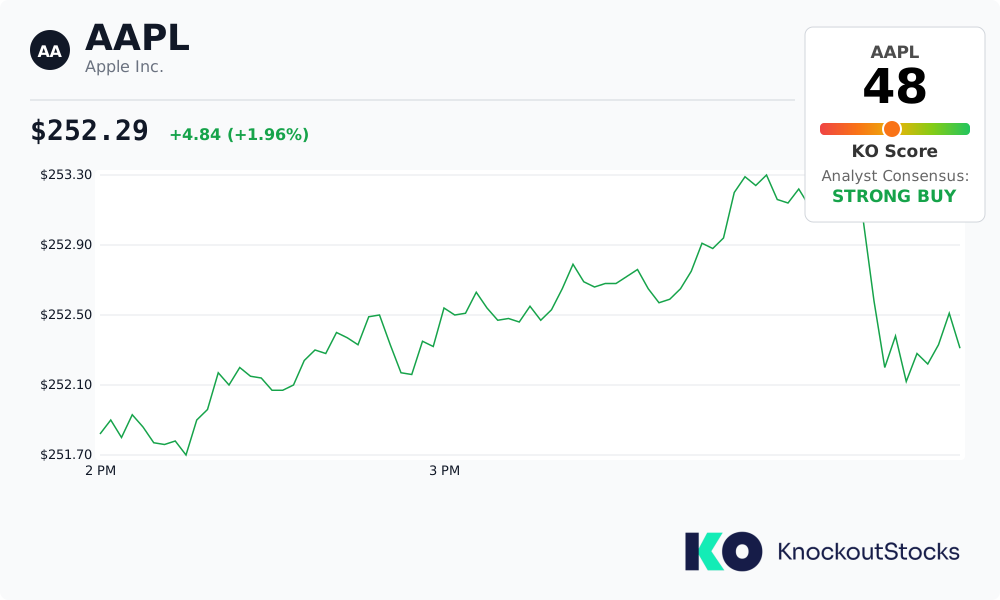 Apple Inc., AAPL
The iPhone business set a new March-quarter revenue benchmark, propelled by considerable consumer appetite for the iPhone 17 series. Meanwhile, Apple’s active device ecosystem expanded to record levels across all primary product lines and geographical markets.
Achieving double-digit revenue expansion at this magnitude is exceptional. It demonstrates an ecosystem that continues attracting new customers rather than merely monetizing its current user base more aggressively.
Services Business Maintains Momentum
The Services division sustained its impressive trajectory. Income generated through the App Store, advertising platforms, cloud infrastructure, payment systems, and subscription offerings provides Apple with a stable, recurring revenue foundation that expands alongside its hardware footprint.
Apple’s global active device count now stands at approximately 2.5 billion units. Each device represents an ongoing revenue opportunity extending well beyond the original purchase.
Services also enhances profitability metrics. Digital offerings and subscriptions yield superior economics compared to physical hardware, making this segment a critical driver of analyst optimism surrounding the stock.
Apple greenlit a substantial $100 billion stock buyback authorization and lifted its quarterly dividend payment by 4%. The company’s robust cash generation capabilities make this level of shareholder return feasible on a consistent basis.
Share repurchases gradually decrease outstanding shares, which bolsters EPS metrics even during periods of modest revenue growth. The dividend increase, though conservative, demonstrates ongoing confidence in future cash flows.
The counterargument is that buybacks provide diminished returns when shares trade at elevated valuation multiples. Apple ultimately requires fundamental growth momentum to justify its current valuation.
AI Development and China Exposure Present Notable Challenges
Artificial intelligence remains the most significant uncertainty. Apple has progressed at a slower pace than Google, OpenAI, and similar competitors in building sophisticated AI capabilities and conversational interfaces.
The company possesses a theoretical advantage through its direct relationship with billions of personal computing devices. An enhanced Siri that integrates seamlessly with messages, schedules, and photo libraries could become a powerful competitive advantage—yet this product remains incomplete.
Delayed Siri enhancements have attracted negative attention. Should Apple fail to narrow the competitive divide, it may forfeit mindshare in a technology category positioned to fundamentally alter device interaction paradigms.
China showed improvement in early 2026, with strengthened iPhone demand benefiting the region. Nevertheless, competition from Huawei and domestic manufacturers continues applying pressure, while potential supply chain disruptions stemming from trade policies could impact both revenue and profit margins.
Regulatory concerns surrounding App Store commission structures and payment processing requirements persist. An unfavorable legal determination regarding Apple’s existing business model could materially reduce Services profitability.
Analyst consensus stands at Moderate Buy based on assessments from 35 analysts, comprising 22 Buy recommendations and 11 Hold ratings.
The average price target for the next 12 months is positioned at $314.85, approximately aligned with current trading levels, indicating analysts anticipate modest near-term appreciation from present valuations.
The post Is Apple (AAPL) Stock a Buy After Strong iPhone Sales Rebound? appeared first on Blockonomi.