TLDR Manchester United (MANU) opened at $20.86 on Thursday, down from a $21.90 close, and later traded near $20.73. The club posted a Q1 loss of $0.10 per share and revenue of $193.8 million,
TLDR
- Manchester United (MANU) opened at $20.86 on Thursday, down from a $21.90 close, and later traded near $20.73.
- The club posted a Q1 loss of $0.10 per share and revenue of $193.8 million, both worse than expected.
- Coach Michael Carrick was fired last Thursday, with the club in 18th place in the Premier League.
- Total return since the IPO is 73%, versus 594% for the S&P 500.
- One investor sees a possible $7 billion sale price, or about $40 a share, roughly double today’s price.
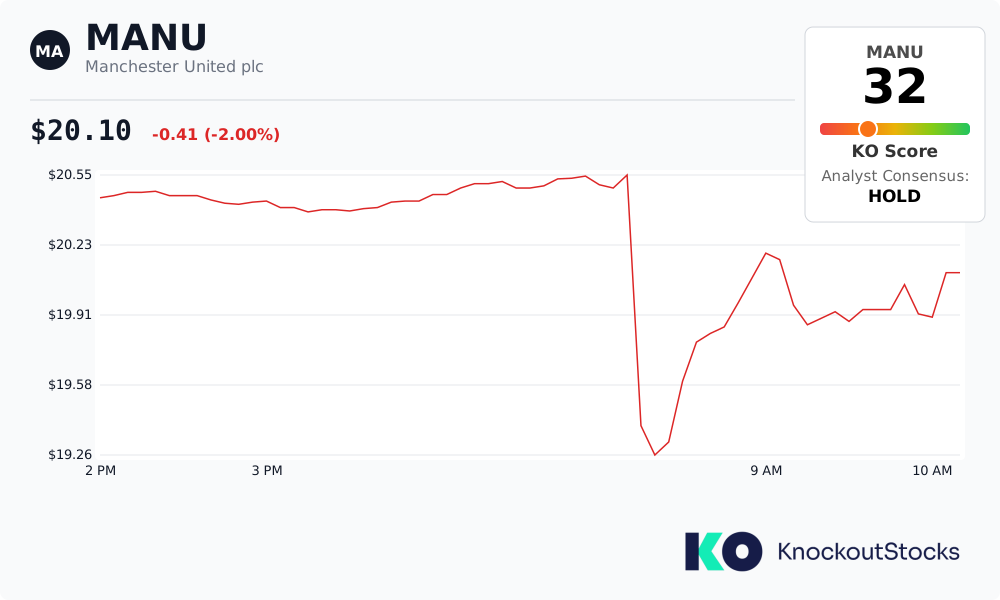
Manchester United (MANU) opened Thursday at $20.86 after closing the prior session at $21.90. The stock later traded near $20.73, down about 4.5%.
 Manchester United plc, MANU
The drop followed the club’s first-quarter report. It showed a loss of $0.10 per share against a consensus estimate of $0.08.
Revenue came in at $193.8 million, short of the $200.24 million analysts expected. Net margin stood at negative 6.36%.
Return on equity was negative 12.22%. The stock also carries a P/E ratio of negative 63.20.
A Coach Out and a Family Under the Microscope
The report landed in the same week the club fired coach Michael Carrick. Mauricio Pochettino, the U.S. men’s national team coach, was named his replacement.
Carrick was the seventh permanent coach shown the door in a decade, so the revolving door keeps spinning. United sits 18th in a 20-team Premier League table.
The bottom three teams are relegated, which has not happened to United since 1974. The club last won the league in 2013.
Attention has turned to the Glazer family, which bought the club in 2005 and listed it in August 2012. The family holds just under 50% of the economics and about 67% of the votes.
That control comes from Class B stock, which carries 10 votes each. Class A stock gets one vote.
Debt is part of the debate. The club reported $775 million in noncurrent borrowings as of Sept. 30.
The BBC reported about $1 billion paid out in interest, bank fees and debt repayments. Sportico estimates the family has taken more than $1.3 billion out through dividends, fees, loans and stock sales.
Alec Boccanfuso, co-manager of the Gabelli Opportunities in Live & Sports ETF (GOLS), says United’s payroll ranks 11th among European clubs. Arsenal and Manchester City hold first and third place in the league table.
Avram Glazer, executive co-chairman, recently said on-field results do not hurt the club’s commercial power. A club spokesperson declined to comment, citing an earnings blackout.
Price Versus Private Value
Total return since the IPO is 73%, compared with 594% for the S&P 500. Revenue has grown 5.5% a year, while operating profit has declined.
Forbes valued the club at $3.69 billion in 2017 and puts it at $6.6 billion now. United has slipped from third to 24th among the most valuable sports teams.
Tim Fidler of Ariel Investments, which has a 9.2 million-share position, puts the public market discount near 30%. Boccanfuso sees a possible sale price near $7 billion, or $40 a share, about double the current price.
He is more focused on a planned 100,000-seat stadium, due around 2030 or 2031. The Glazers would need to raise $1 billion to $3 billion to build it.
Market cap sits at $3.61 billion, with a beta of 0.76 and a debt-to-equity ratio of 3.84. The current ratio is 0.33.
The 50-day moving average is $21.01, and the 200-day is $20.24. MarketBeat lists a consensus Sell rating, including a “sell (d-)” from Weiss Ratings.
The post Is Manchester United (MANU) Stock Worth Owning With the Club 18th in the Table? appeared first on Blockonomi.

 Revenue: £146.1M vs £152M est.
 Player-sale gains: £20.7M vs £45M YoY
 FY27 revenue guidance held at £740–760M