A critical discussion has emerged over the decentralized nature of the XRPL and its capability to resist a state-level attack. Ripple CTO Emeritus is confident that the blockchain will evolve
- A critical discussion has emerged over the decentralized nature of the XRPL and its capability to resist a state-level attack.
- Ripple CTO Emeritus is confident that the blockchain will evolve with anonymity as a key part of the changes.
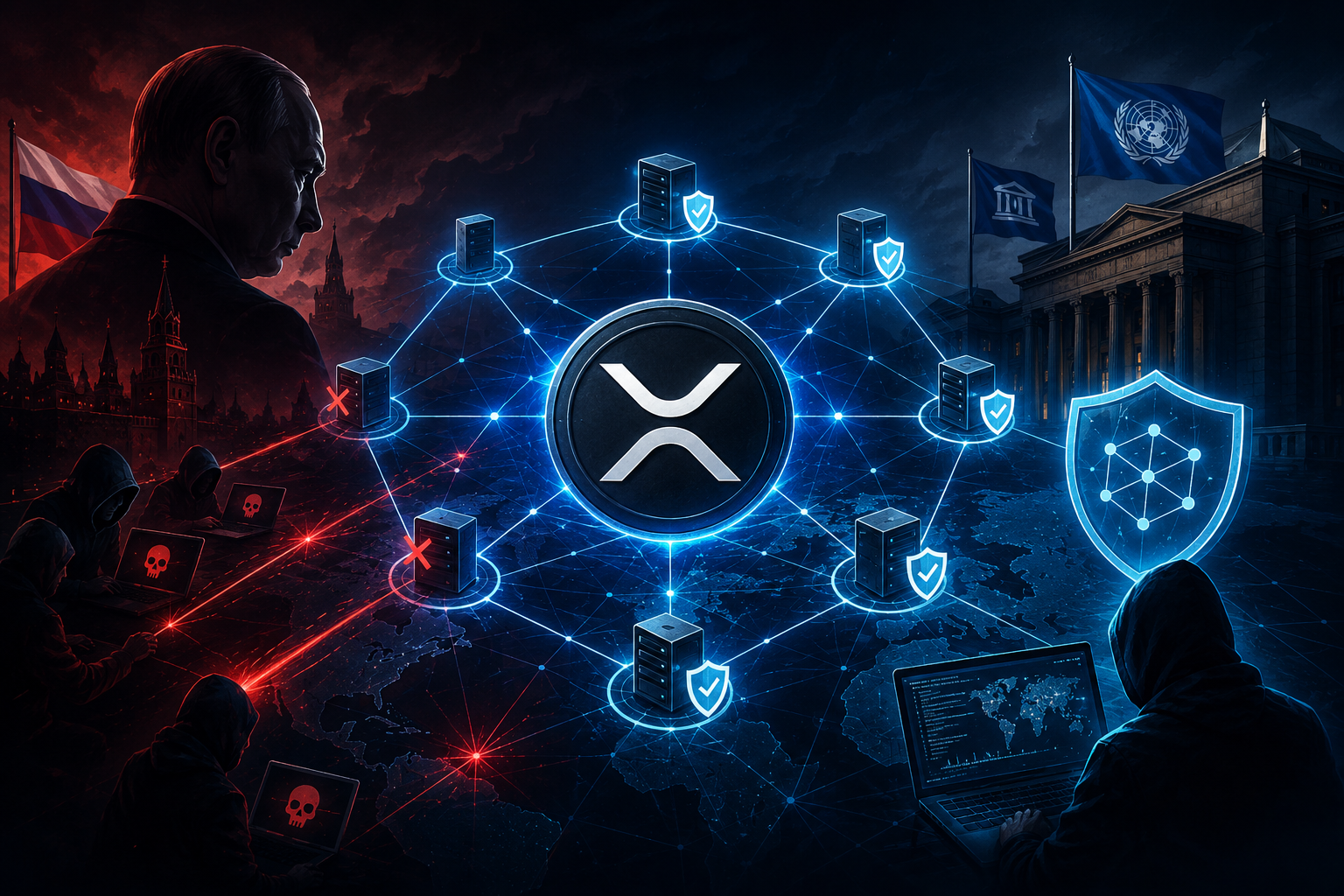
The Ripple community has engaged in a conversation that seeks to better understand the state of the XRP Ledger (XRPL) in the event of an attack. Specifically, one XRP enthusiast using the name BallChinnian on the X platform called on Ripple CTO Emeritus David Schwartz to explain his thoughts on the ethical dilemma of authoritarian regimes, like Putin’s Russia, using the network to bypass traditional systems.
By nature, the XRPL is decentralized, meaning it’s permissionless. This means that anyone can build, participate, and transact on the network without the permission of any central authority. The XRP enthusiast posed that this leaves it at the risk of being exploited by authoritarian regimes, stating, “How resilient is the XRPL consensus mechanism against state-level interference?”
To this, Schwartz admitted that it was possible for such bad actors to try to exploit it. However, he was confident that this would not lead to any long-term damage. He explained that weaknesses or bugs they exploit can be fixed because software can always be changed.
Another user went further, posing a scenario where they could be targeting UNL members to kill them, since they are not many? Eventually, they should become very hard to locate or too powerful to be killed (governments, institutions).
XRPL Could Evolve to Become Anonymous
David Schwartz pushed back against the idea that attacking XRPL validators directly would be an effective long-term strategy, arguing that disruption alone does not equal control. According to him, validators could become anonymous, relocate operations, or run through privacy-focused infrastructure such as Tor, making replacements possible if operators stepped away.
Schwartz suggested that the bigger risk would not be permanently breaking the network but creating enough disruption to discourage people from participating. However, he framed that scenario as something that could drive future protocol changes rather than expose a permanent weakness.
He further outlined a possible evolution of consensus design built specifically to resist validator-targeting attacks. His example involved a two-layer consensus structure where an outer layer would only activate when changes to the inner validator set (UNL) were needed. In that model, attacking core validators becomes less useful because they could be replaced automatically, while outer validators remain harder to target due to their lighter, less frequent role and ability to operate through anonymizing networks.
AI could also play a role in securing the XRPL in the future. As ETHNews reported, Ripple is using AI to identify vulnerabilities on the network. At the time of writing, XRP is trading at $1.30 after a 3% drop in the last 24 hours. This sees the coin extend its weekly loss to nearly 5%.
The post Is XRPL Built to Survive State-Level Attacks? Here’s What Chief Architect Says appeared first on ETHNews.