JPMorgan CEO Jamie Dimon has warned that stablecoins could "blow up" under the proposed CLARITY Act, adding high-profile banking opposition to the ongoing congressional debate over how to reg
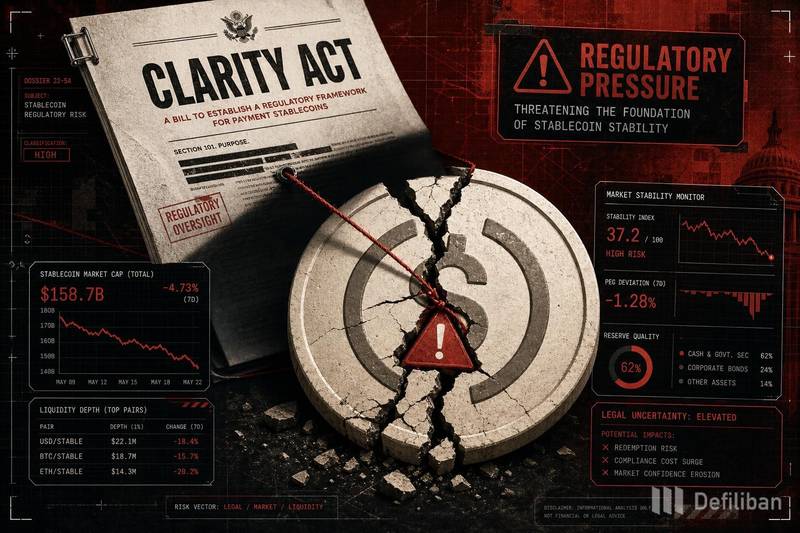
JPMorgan CEO Jamie Dimon has warned that stablecoins could "blow up" under the proposed CLARITY Act, adding high-profile banking opposition to the ongoing congressional debate over how to regulate dollar-pegged digital assets.
The warning comes as the Senate Banking Committee advances digital asset market structure legislation, putting stablecoin oversight at the center of a broader regulatory push in Washington.
Dimon's comments, reported by Fox Business, frame stablecoins as a potential systemic risk if the regulatory framework under the CLARITY Act fails to impose sufficient safeguards on issuers.
Why Jamie Dimon Says Stablecoins Could "Blow Up"
Stablecoins are digital tokens designed to maintain a 1:1 peg to fiat currencies like the U.S. dollar. They serve as the primary settlement layer across crypto exchanges and DeFi protocols, with major issuers like Tether holding hundreds of billions in reserves.
Dimon's "blow up" framing points to issuer risk, the possibility that a stablecoin's reserves could prove insufficient or illiquid during a market stress event. A de-pegging scenario at scale would ripple across every trading pair denominated in that token.
The concern also carries a systemic dimension. If stablecoins grow large enough to function as shadow banking instruments without bank-level capital and liquidity requirements, a failure could transmit losses beyond crypto markets into the broader financial system.
The warning is notable precisely because of who is making it. As CEO of the largest U.S. bank by assets, Dimon's public skepticism carries weight with legislators drafting stablecoin rules, and it signals that major banks may push for tighter issuer requirements as legislation moves forward.
What the Proposed CLARITY Act Could Change
The CLARITY Act is a proposed legislative framework that would establish federal oversight for stablecoin issuers, including reserve requirements, audit obligations, and compliance standards.
Supporters argue the bill would bring transparency and consumer protection to a market segment that has largely operated outside traditional banking regulation. The legislation would set rules for what qualifies as acceptable reserve assets and how issuers must report their holdings.
Critics, Dimon among them, contend that the proposed rules may not go far enough. The gap between bank-level regulatory scrutiny and the lighter-touch framework envisioned for stablecoin issuers is a central point of contention. Banks face strict capital adequacy requirements, regular stress testing, and FDIC oversight, none of which apply to stablecoin issuers under most current proposals.
For large institutions like JPMorgan, there is also a competitive dimension. Banks that issue their own tokenized deposits or payment tokens would operate under heavier regulation than non-bank stablecoin issuers, creating what some view as an uneven playing field.
Why This Warning Matters for Crypto Markets
Regulatory uncertainty remains one of the largest overhangs on the stablecoin market. When senior banking figures publicly question the viability of proposed rules, it can shift the legislative conversation toward stricter requirements, potentially slowing adoption or raising compliance costs for issuers.
The timing also matters. Recent large-scale stablecoin movements, such as Bitfinex transferring 241.5 million USDT to Tether's treasury, highlight the scale of capital flowing through these tokens daily. Any regulatory disruption would affect not just issuers but every exchange and protocol that depends on stablecoin liquidity.
Institutional commentary from figures like Dimon can influence market sentiment well before any rules take effect. His previous skepticism toward crypto assets has historically drawn media attention and shaped public perception of digital asset risk, even as institutional players like Strategy continue accumulating Bitcoin.
Three key takeaways: Dimon's warning frames stablecoins as a systemic risk under the proposed CLARITY Act; the legislation's reserve and compliance requirements may tighten further in response to banking industry pressure; and the outcome of this debate will directly shape how stablecoin issuers operate in the U.S. market.
Disclaimer: This article is for informational purposes only and does not constitute financial or investment advice. Cryptocurrency and digital asset markets carry significant risk. Always do your own research before making decisions.
Read original article on defiliban.io