When the Most Powerful Man in AI Lost Everything this past week, the most powerful man in artificial intelligence lost everything. not because of a bad product. not because a competitor outsm
When the Most Powerful Man in AI Lost Everything
this past week, the most powerful man in artificial intelligence lost everything.
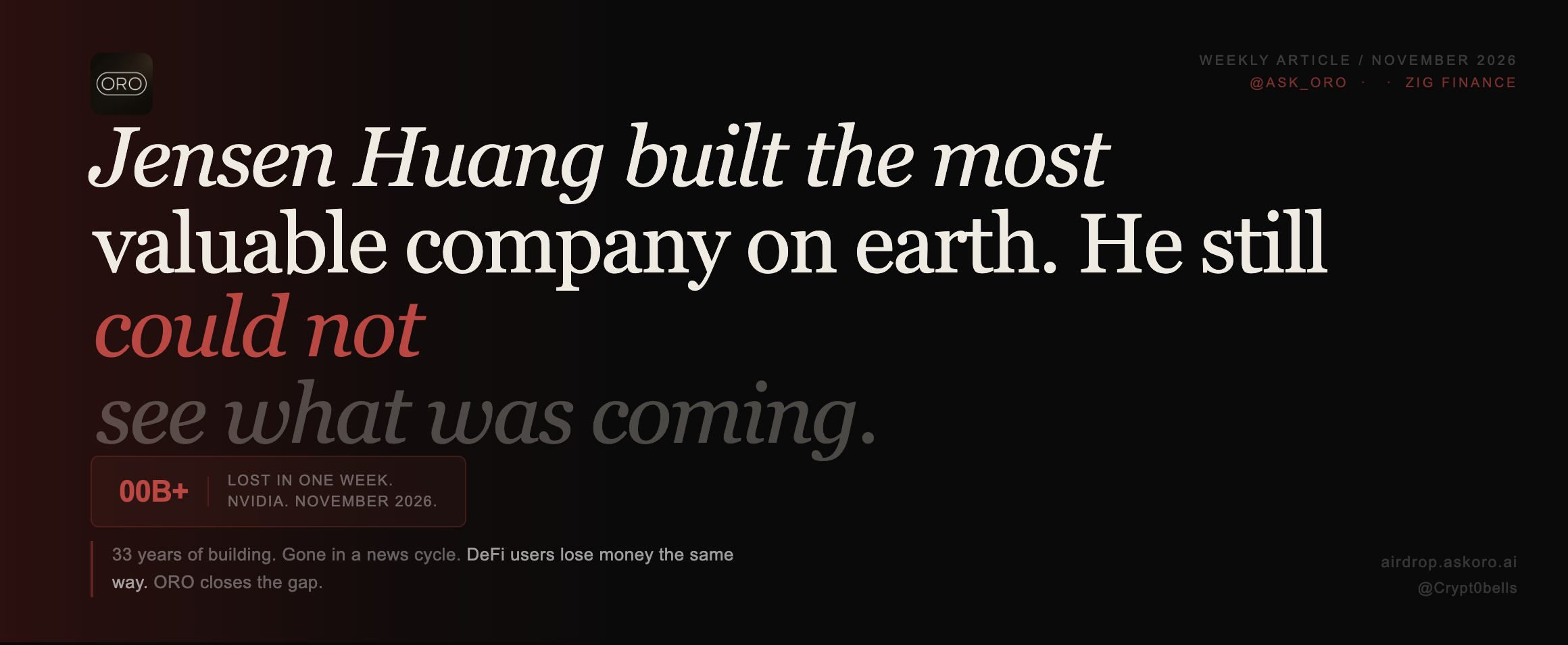
not because of a bad product. not because a competitor outsmarted him. not because the technology failed. Jensen Huang, the founder who built Nvidia from nothing into the most valuable company on earth, resigned as CEO on November 12 after a New York Times report detailed a second extramarital affair. Nvidia stock dropped over 13%. the company is on track to lose more than $700 billion in market cap in a single week. 33 years of building, gone in a news cycle.
i am not writing this to pile on. i am writing it because of what it reveals about the moment we are in.
The Gap Between What You Know and What Is Happening
we are living in a time where information moves faster than decisions. where things that were private become public before you have time to respond. where the gap between what is happening and what you know is happening is constantly shrinking.
and most people in DeFi are still operating like that gap is wide.
they see a swap screen that says "Max slippage 0.5%" and either open another tab to look it up, or guess. they deposit into a vault because the APY looks good without reading the curator fee that comes directly out of their yield. they interact with protocols they do not fully understand because the interface does not explain itself, and asking feels like admitting you do not belong.
that is not a user problem. that is a design problem.
What ORO Was Built to Solve
ORO was built around a different premise. your first step in DeFi does not have to be scary. neither does your tenth, or your hundredth.
talk to ORO the way you would talk to a friend who actually knows what they are talking about. ask what Max slippage means and get a plain answer before you sign. ask where the yield in a vault comes from and get a real response, not a docs link. ask ORO to find you the best route across 15+ protocols and it does the work, then prepares the transaction for you to review before you ever touch the confirmation button.
that last part matters more than most people realise. ORO never holds your funds. ORO never holds your signing authority. it finds the route, it explains what is happening, and then it waits for you.
Four Layers of Protection on Every Single Transaction
the Shield Engine runs four layers of checks on every transaction: pre-flight validation, intent analysis, a full simulation before you sign, and post-execution verification that the outcome matched what you asked for.
you are always the one who decides. ORO just makes sure you actually understand what you are deciding.
this is not a small thing in an industry where $1.5 billion left Bybit in a single hack, $351 million drained from Bitget in 20 minutes, and October 2026 was named the worst month for crypto hacks in recorded history. the question is never whether the threat is real. the question is whether the tool you are using was built with that threat in mind.
ORO was.
The Lesson This Week Is Not About Nvidia
the lesson from this week is not about Jensen Huang. it is about what happens when the gap between what you know and what is actually happening gets too wide. in his case it was personal. in DeFi it is financial. the outcome in both cases is the same: you lose something you did not have to lose.
3.78 million wallets are already connected to the airdrop portal. the team is in final conversations with tier 1 exchanges. the snapshot fires 72 hours before TGE and the balance at that moment is permanent.
ORO closes that gap. one conversation at a time.
the only question left is whether you are on the right side of it before the moment passes.
airdrop.askoro.ai | @Ask_ORO Follow
@crypt0bells for more