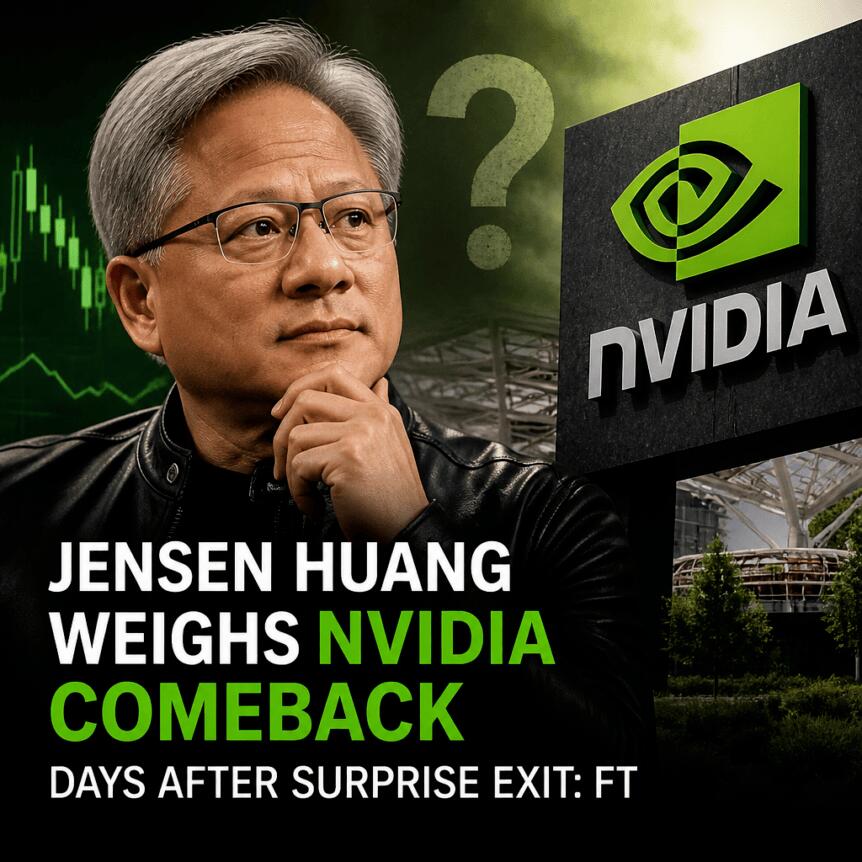
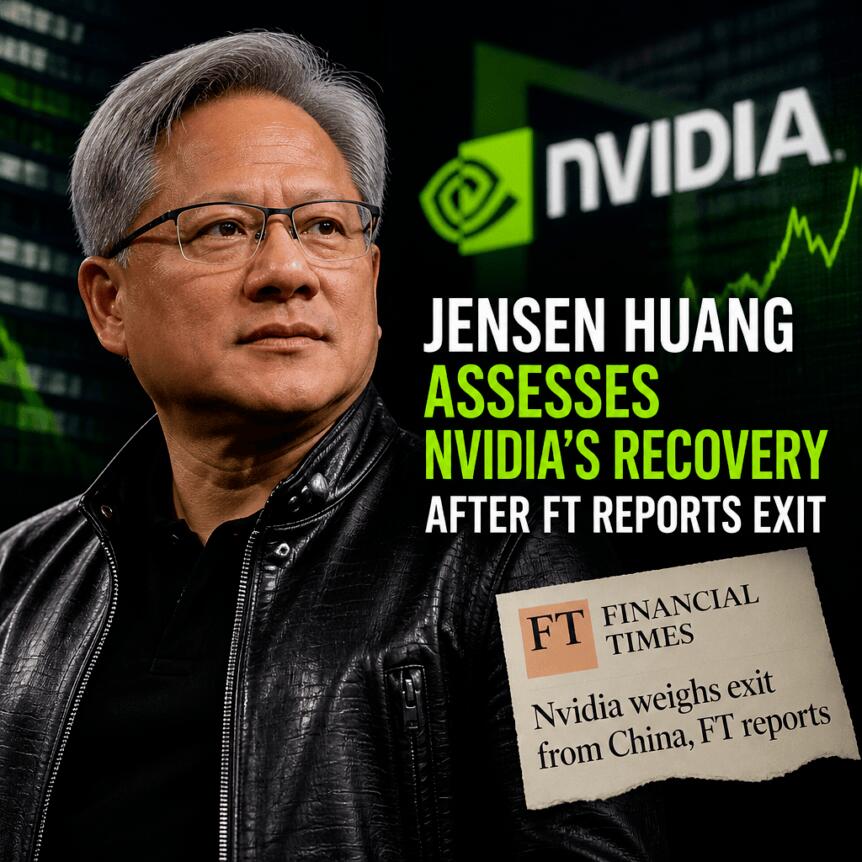
Jensen Huang, who resigned as CEO of Nvidia just days ago amid reports involving alleged extramarital affairs and intelligence-related concerns, is reportedly considering a return to the comp
Jensen Huang, who resigned as CEO of Nvidia just days ago amid reports involving alleged extramarital affairs and intelligence-related concerns, is reportedly considering a return to the company, according to the Financial Times. The possibility of his comeback is being backed by a small internal push among Silicon Valley executives—and echoed by a growing public campaign to “Bring Jensen Back.”
At the same time, calls for major leadership changes from US political figures have intensified scrutiny of Nvidia’s governance and its conduct related to US restrictions on AI chip sales to China. Nvidia’s stock reacted sharply to the resignation news, reflecting continued uncertainty over who will ultimately steer the company through regulatory and compliance challenges.
Key takeaways
- Multiple people familiar with the matter told the Financial Times that Jensen Huang has discussed returning to Nvidia.
- One account describes a “war room” effort among Silicon Valley executives, reportedly seeking support that could include the White House.
- A public “Bring Jensen Back” campaign has drawn more than 161,000 signatures, including claims of support from current and former Nvidia employees.
- US officials have publicly urged Nvidia to pursue a “dramatic shake-up” of leadership, including hiring a CEO from outside the company.
- Nvidia is facing ongoing independent board investigation and heightened attention to whether its chip sales comply with US China-related restrictions.
Comeback talks and a campaign to reverse the resignation
According to the Financial Times, Huang has discussed the possibility of returning to Nvidia with confidants. The report also says that those supporting his return are assembling a “war room” of technology executives in Silicon Valley to lobby for Huang’s comeback.
One of the people cited by the Financial Times claimed the group is looking to build support beyond the company itself, including from the White House, arguing that the tech establishment “outside the frontier labs” still strongly favors Huang. The claim points to a broader narrative conflict: while some insist Huang’s leadership remains irreplaceable, other voices are pushing for a clean break in leadership at a moment of regulatory scrutiny.
Separately, a public online campaign titled “Bring Jensen Back” has reportedly gathered more than 161,000 signatures, as stated by the campaign organizers. The campaign’s website claims thousands of signatures from current and former Nvidia employees and lists high-profile names such as Elon Musk and Epic Games CEO Tim Sweeney as supporters.
Political pressure calls for outside leadership
The reported comeback pitch runs counter to recent comments by senior US officials. US Treasury Secretary Scott Bessent, speaking on Sunday, called for a “dramatic shake-up” of Nvidia’s leadership and urged the company to hire a CEO from outside the organization.
President Donald Trump also weighed in, suggesting earlier that former Apple CEO Tim Cook could take the role. The juxtaposition is notable: as Huang’s potential return becomes a live topic inside the tech sector, the political stance from Washington has shifted toward replacing existing leadership rather than restoring it.
For investors, the tension matters because it signals that regulatory and political considerations may influence board decisions about succession—even if internal constituencies prefer continuity.
Resignation fallout, board investigation, and China chip compliance
Nvidia announced Huang’s resignation following reports of alleged extramarital relationships. One of the allegations referenced in earlier reporting involved a woman that US intelligence officials reportedly suspected of having ties to Chinese intelligence.
While the personal controversy is central to the resignation narrative, it has also triggered parallel concerns about Nvidia’s compliance posture. The controversy has raised questions about whether Nvidia’s AI chip sales to customers in Asia—especially where there are potential ties to China—align with US restrictions.
The reporting around the resignation also includes mention of an independent board investigation. That matters because succession decisions may be shaped by how the board resolves both governance questions and any compliance findings tied to export controls.
Market reaction underscores uncertainty
Investor reaction to Huang’s exit was immediate. Nvidia shares fell as much as 14% on Thursday before recovering slightly to close 4.3% lower, highlighting the market’s uncertainty about how the company’s leadership transition could intersect with regulatory risk.
The stock move can be read as a reflection of two competing uncertainties: first, how quickly Nvidia can stabilize executive leadership after the resignation; and second, how potential enforcement or compliance outcomes related to China-linked chip restrictions could affect the company’s near-term business.
Cointelegraph reports that it reached out to Nvidia for comment.
What to watch next
Readers should watch for signals from Nvidia’s board on the status of the investigation and any concrete discussion around succession—especially whether the company moves toward the “outside CEO” approach urged by US officials or entertains the reported possibility of Huang returning. How those decisions evolve could determine whether uncertainty fades or deepens across both governance and China-related compliance concerns.
This article was originally published as Jensen Huang weighs Nvidia comeback days after surprise exit: FT on Crypto Breaking News – your trusted source for crypto news, Bitcoin news, and blockchain updates.