Jumper Token: Presale, JUMP Utility & Cross-Chain Function The Jumper Token sale has just closed, and the numbers stand out. The hard cap was $3 million. Reported demand ran several times hig
Jumper Token: Presale, JUMP Utility & Cross-Chain Function
The Jumper Token sale has just closed, and the numbers stand out. The hard cap was $3 million. Reported demand ran several times higher.
So what is JUMP, and what did participants apply for? The Jumper-Token belongs to a cross-chain finance app splitting from its infrastructure parent, LI.FI. The app already has users and volume.
This article distinguishes confirmed facts from claims made by the project, based on information from the official Jumper website and its live sale page. The launch date and contract address have not yet been officially confirmed.
What Is a Jumper, and Why Does It Matter?
Jumper-is an on-chain finance app. It began as a tool for moving assets between blockchains. Think of a bridge that carries tokens from one network to another.
Its engine compares many bridges and exchanges, then picks a route. That makes it an aggregator.
The team now says the app also covers swaps, yield, perpetual futures, and tokenized stocks. Those are blockchain tokens that track share prices, part of the real-world assets trend.
The project reports $40 billion in lifetime volume and over 100,000 monthly active users. These are company figures, not independent audits.
Jumper also sits inside the wider DeFi protocols space, where smart contracts replace banks and brokers.
How Does the Jumper-Token Presale Work?
The sale ran on the Legion launchpad from 29 September to 2 October 2026. Participants applied with USDC, a stablecoin pegged to the US dollar, on Ethereum.
Legion does not use first-come, first-served. Applications are reviewed, and a request is not a guarantee. Unused funds can be claimed back on the official Legion sale page. The United States and the United Kingdom are excluded.
Presale Detail
Stated Figure
Last Presale Price
$0.075
Tokens offered
40,000,000 (4% of supply)
Target / hard cap
$2 million / $3 million
Implied FDV
$75 million
Public vesting
50% at TGE, 50% over four months
Total Presale Fund Raise
$25225505
The $75 million FDV is simple math: $0.075 times one billion maximum supply. FDV means fully diluted valuation, the value if every token existed today. It is not market cap, which counts only circulating tokens.
How Big Was the Demand for the Jumper Token Sale?
Reports during the sale window put requests between $16 million and above $25 million. Against a $3 million cap, that is roughly eight times demand or more.
These requests are not final allocations, and no verified final figure had been published at the time of writing.
The presale price should also not be treated as a future market price. The current crypto presale provides a clearer view of the ongoing demand for JUMP.
What Does the Jumper Token Tokenomics Model Look Like?
Tokenomics describes how a supply is split and released. Total supply is fixed at one billion JUMP.
Allocation
Share
Release Terms
Community
33.33%
Schedule not detailed
Investors
26.07%
12-month cliff, linear to month 24
Treasury
21.90%
Ecosystem and growth reserve
Team
14.70%
24-month cliff, linear to month 36
Public
4.00%
50% at TGE, 50% over four months
The public slice is small. If all 40 million tokens are allocated, 20 million unlock at TGE. That is about 2% of supply.
A cliff is a waiting period before any tokens unlock. The team's 24-month cliff eases early selling pressure, though it does not remove it.
One detail deserves a closer look. The company calls the sale its first raise, yet 26.07% sits with investors. The material reviewed does not name them or explain their terms.
The community holds the biggest share with no clear release plan. Initial circulating supply cannot be worked out yet.
What Is JUMP Used For, and What Is Unclear?
Early materials point to swap fee discounts and reward multipliers for Jumper-Token holders inside the app. Staking, governance, and revenue sharing have not been confirmed.
CEO Marko Jurina describes a token-first model. In his view, JUMP should be the only way users, contributors, and investors share in the business. No separate equity round is planned.
That needs care. A token is not company equity. Legal rights depend on final documents.
What Role Does the Jumper Token Play Across Chains?
Jumper is becoming a standalone company. LI.FI keeps building routing infrastructure. Jumper focuses on the consumer app.
In that structure, the Jumper Token links users, builders, and backers. Its value depends on whether the app keeps growing. Nobody can promise that.
The CEO also says a perpetual venue is due within weeks. That is a stated plan, not a shipped product. Rival apps are adding perps too, so competition is close.
When Will JUMP Launch, and Will It List?
TGE stands for token generation event, the moment tokens are created and claimable. The project points to Q4 2026. No exact date is confirmed.
No exchange listing is confirmed either. Readers can follow exchange listing announcements as they appear.
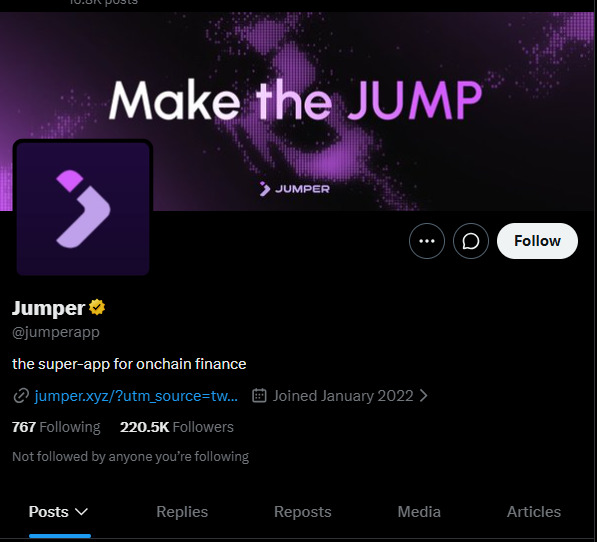
The contract address had not been published in the sources reviewed. Updates should come through the official @jumperapp account.
What Are the Main Risks to Consider?
The TGE has a quarter, not a date, so tokens may stay locked for weeks.
Allocation is not guaranteed, and heavy demand can mean far smaller fills.
The Jumper Token's FDV is a calculation, not a promise of future value.
Investor, team, and community unlocks will add supply over time.
LI.FI disclosed a smart contract exploit in 2024, with about $11.6 million stolen.
No audit of the JUMP contract is confirmed.
Fake sale pages and contract addresses are common around launches.
Is the Jumper Token Worth Watching Right Now?
Jumper is a working cross-chain app becoming independent. The Jumper Token is meant to be its single-ownership vehicle, priced at $0.075 with a $75 million FDV.
What stands out is the product base and the demand. What remains uncertain is the TGE date, circulating supply, investor terms, audit status, and final utility.
Next, researchers should read the final token documents and verify any contract address. The outcome stays uncertain.
Disclaimer:
This article is for information only and is not financial, legal, or tax advice. Crypto presales carry high risk, including total loss of funds. Terms and dates can change, so readers should verify details through official sources and do their own research.