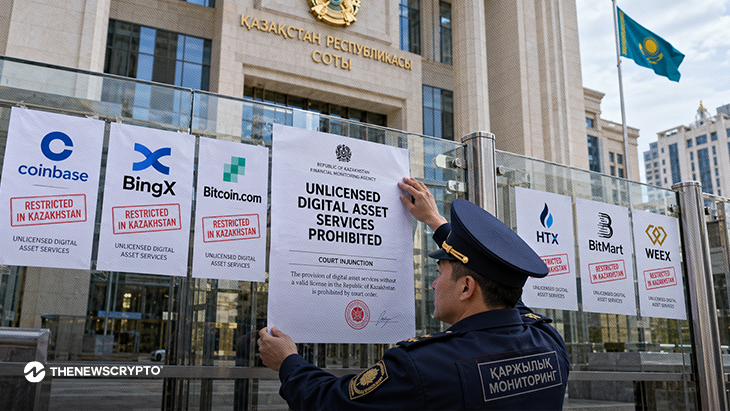
Six crypto platforms face Kazakhstan’s court injunctions and are barred from providing, offering, or advertising digital asset services within the AIFC without the required licence. On Septem
- Six crypto platforms face Kazakhstan’s court injunctions and are barred from providing, offering, or advertising digital asset services within the AIFC without the required licence.
- On September 18, the court amended its September 15 judgment after LBank independently blocked Kazakhstani users from accessing its services.
Kazakhstan’s Astana Financial Services Authority (AFSA) has secured court injunctions against six of the world’s most recognisable crypto platforms, and the order carries teeth.
On September 15, 2026, the AIFC Court granted AFSA’s claims and issued a judgment prohibiting the provision, offering, or advertising of digital asset services within the Astana International Financial Centre without the required licence.
On September 18, the court amended its order to remove LBank after the exchange took independent action to block Kazakhstani users from accessing its services. The injunctions now apply to six platforms: BingX, Bitcoin.com, HTX, BitMart, Coinbase, and WEEX. Significantly, the regulator spent 2025 issuing written warnings to more than 20 crypto platforms, explaining AIFC regulatory requirements and giving them time to comply.
Nine of those platforms responded by voluntarily restricting app access in Kazakhstan through Google Play and the Apple App Store; AFSA withdrew its claims against all nine. Seven more signalled an intention to apply for an AFSA licence.
In addition, for the remaining six that continued operating without a licence, AFSA initiated formal proceedings in early 2026. The September 15 judgment was the outcome of that process.
What the Court Actually Said?
Operating without authorisation undermines the integrity of the AIFC regulatory framework and creates unfair competition for licensed participants who bear the costs of AML/CFT compliance, customer due diligence, and regulatory supervision. Unlicensed platforms carry none of those costs while competing in the same market.
The order extends beyond the platforms themselves. Google and Apple, as operators of the major app stores, are also covered; both are required to geographically restrict access to the listed platforms’ applications within the AIFC’s jurisdiction.
AFSA CEO Evgeniya Bogdanova confirmed the action was the result of sustained effort by the regulator’s Supervision and Enforcement teams, carried out since May 2026 in close cooperation with the National Bank of the Republic of Kazakhstan.
What This Means for Users?
AFSA has been clear: unlicensed platforms operate outside regulatory supervision. Users on those platforms have no access to the protections that licensed firms must provide, including asset safeguarding, transparent disclosure, complaints handling, and formal dispute resolution. Moreover, a full list of AFSA-licensed digital asset service providers is available in the Public Register on the AIFC regulator’s official website.
Crypto Market Highlights
Bitcoin (BTC) Weekly Close Below $82.2K Sets Up a Bearish Resistance Retest