South Korean payment processor KG Inicis is exploring whether stablecoins can become a practical payment method for everyday online commerce through a new partnership with the Solana Foundati
South Korean payment processor KG Inicis is exploring whether stablecoins can become a practical payment method for everyday online commerce through a new partnership with the Solana Foundation, signaling growing interest among traditional financial companies in blockchain-based payment infrastructure.
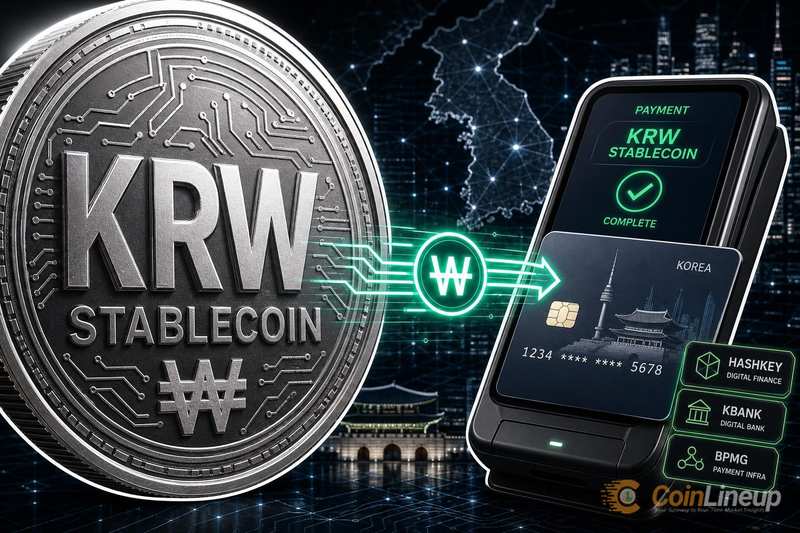
KG Inicis has entered into a partnership with the Solana Foundation to evaluate digital asset payment infrastructure, including stablecoin-based checkout, merchant settlement systems, and blockchain-powered loyalty programs. The initiative will be developed alongside affiliate KG Financial, which has been conducting proof-of-concept work focused on stablecoin issuance and payment services using Solana’s blockchain network.
The agreement represents one of the most significant attempts by a major South Korean payment company to evaluate how stablecoins could function within an established merchant network rather than a crypto-native ecosystem.
The
announcement highlights increasing convergence between traditional payment providers and blockchain networks as stablecoins attract attention as a potential settlement layer for digital commerce. Industry participants are increasingly exploring whether such systems can operate alongside existing payment rails rather than replace them. As interest in
Stablecoin Payment Infrastructure continues to grow, industry participants are increasingly exploring whether such systems can operate alongside existing payment rails rather than replace them.
While stablecoins have become a key part of cryptocurrency markets, financial institutions increasingly view them as potential payment tools capable of reducing settlement times and simplifying cross-border transactions.
KG Inicis processes payments for a large share of South Korea’s e-commerce sector. Together with KG Financial, the group has access to a network of approximately 220,000 merchants and hundreds of thousands of prepaid card users. That scale could provide a meaningful testing ground for digital asset-based payments if regulatory conditions permit broader adoption.
According to details released by the companies, the project will examine several use cases:
- Stablecoin payments at online checkout
- Subscription and recurring billing services
- Merchant settlement infrastructure
- Split-payment transactions involving multiple businesses
- Blockchain-based loyalty and rewards programs
Digital Tokens Considered for Merchant Incentive Programs
The agreement also covers the potential use of digital tokens within merchant incentive programs. According to the companies, they will examine whether rewards associated with payment activity can be represented on blockchain infrastructure and integrated with existing payment systems.
The inclusion of merchant incentives reflects a broader trend in the payments industry, where companies are evaluating blockchain technology for functions beyond transaction settlement. However, token-based incentive models remain largely experimental, with regulatory requirements and commercial viability still under review in many jurisdictions.
Solana Expands Its Payments Strategy
The partnership adds to Solana’s broader effort to position its blockchain as infrastructure for payments rather than solely a platform for decentralized finance and token trading. The network has recently expanded its presence in South Korea through payment and banking initiatives, including the Toss Bank Partners With Solana collaboration, as financial institutions explore stablecoin and blockchain-based settlement systems. Over the past year, stablecoin activity on Solana has increased significantly as payment companies, fintech firms, and financial institutions have sought alternatives to traditional settlement rails. The network’s low transaction costs and high throughput have made it a frequent choice for payment-focused experiments involving stablecoins.
The collaboration with KG Inicis suggests that blockchain adoption in payments may increasingly come from established financial companies integrating digital assets into existing systems rather than building entirely new consumer-facing platforms.
South Korea Emerges as a Stablecoin Testing Ground
The move comes as South Korea becomes an increasingly active market for stablecoin-related initiatives. Banks, fintech firms, and payment providers have accelerated research into digital asset settlement systems amid growing global interest in regulated stablecoins. Policymakers are also evaluating frameworks that could allow broader participation in the sector while maintaining oversight of financial stability and consumer protection.
Similar developments are emerging globally, including initiatives linked to Stablecoin Payments Africa, as financial institutions and fintech companies explore blockchain-based payment and settlement infrastructure.
Rather than signaling immediate mainstream adoption, the KG Inicis-Solana partnership reflects a wider industry trend: traditional payment providers are preparing for a future in which stablecoins may become another settlement option alongside cards, bank transfers, and digital wallets. Whether that future materializes will depend less on blockchain technology itself and more on regulation, merchant demand, and consumer willingness to use digital assets for everyday transactions.